Dream of diving but don't know where to start? This guide takes you through every step — from choosing a course, through equipment, to your first dives in Poland.
How to Start Diving? The Simplest Way Without Mistakes.
Intro – Start with a Trial Dive
If you're thinking about diving, your first thought is usually: "I'll take a course".
And that's where most people make a mistake.
👉 Start with a one-day trial dive under an instructor's supervision (intro dive).
It's a short underwater descent with an instructor who guides you from zero:
- you learn to breathe underwater
- you get to know the basic equipment
- you see how you react to diving
The cost of such an intro is usually around400 PLN(depending on the location and school).
And now the most important part:
👉 either you'll love it right away
👉 or you'll feel it's not for you
Both are okay. Better to check it out on an intro than after spending money on a course.
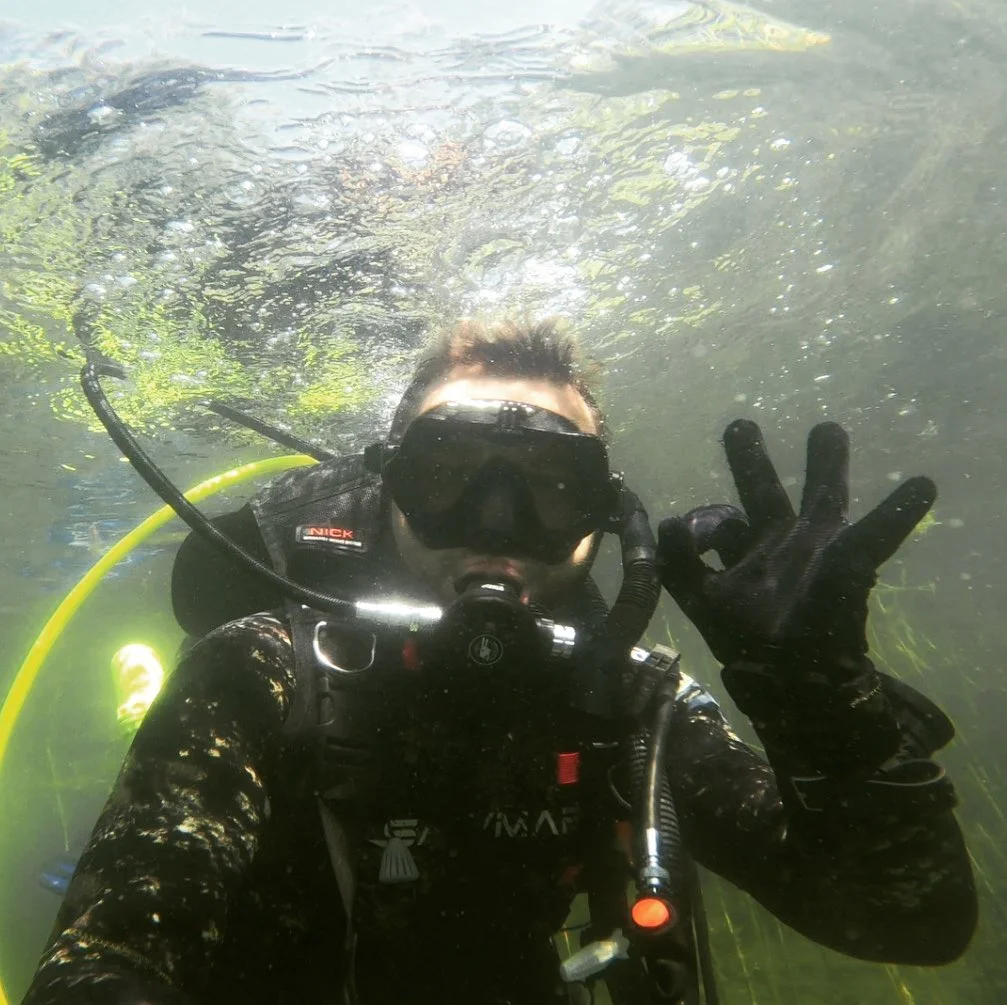 One of my first photos right after my OWD course.
Choose a Good School and Instructor.
This is key.
You can dive in a beautiful location, on new equipment — and still have a poor experience if you end up with a bad instructor.
A good instructor:
- explains calmly
- gives you time
- responds to stress
- doesn't push you further by force
👉 The best courses are done individually or in very small groups (2–3 people).
Why?
- the instructor has time for everyone
- you catch mistakes faster and correct them
- less stress underwater
The larger the group:
- the less attention for you
- the more chaos
- the greater the chance you'll skip over something instead of learning it properly
A bad instructor:
- runs the course "against the clock"
- looks at the plan, not at you
- treats people like just another certification to tick off
👉 Don't choose the cheapest option. This is about safety and your first experience underwater.
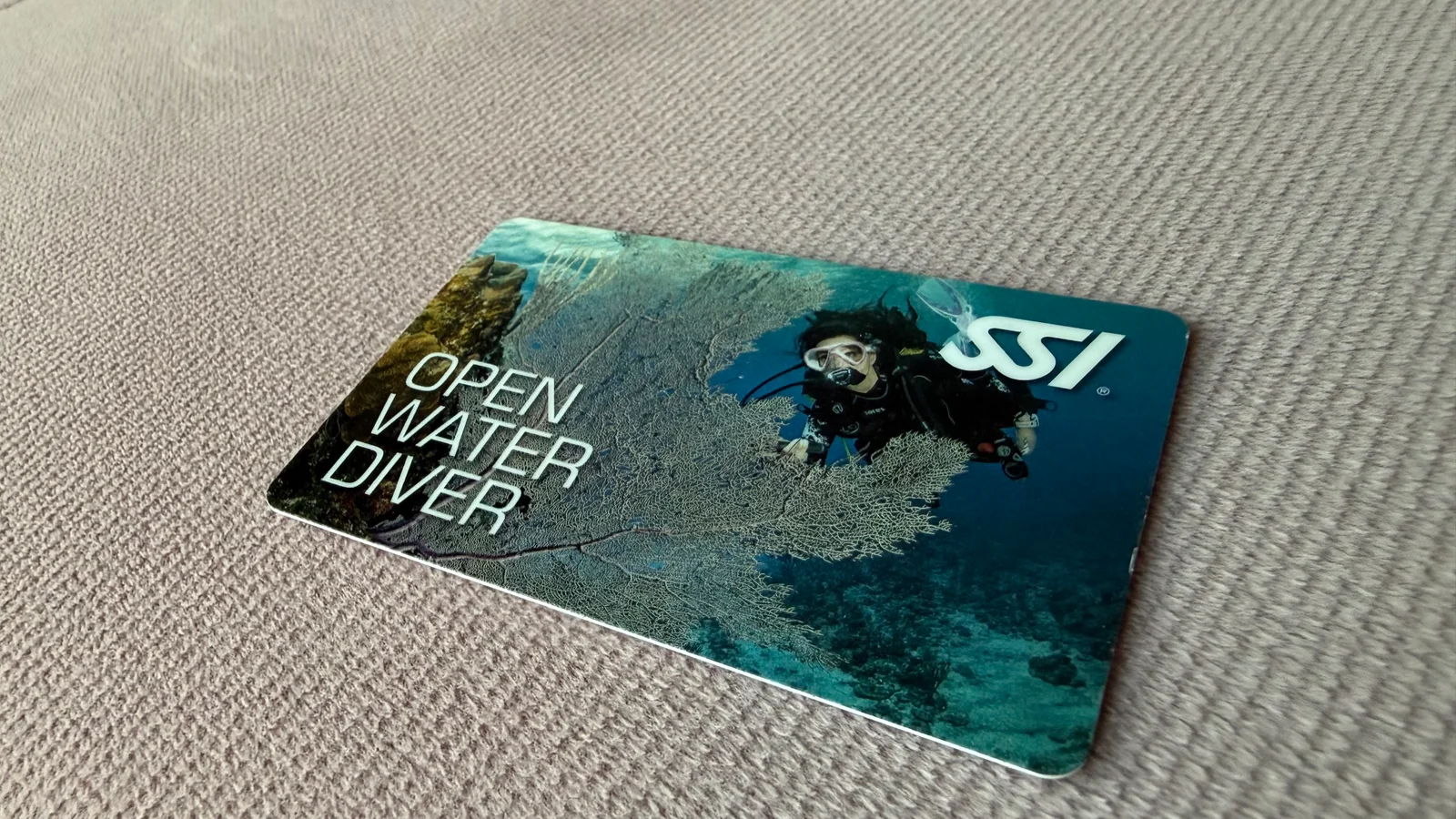
OWD course – what comes next after intro.
If after intro you feel this is it, the next step is:
👉 Open Water Diver
It's the basic course that allows you to dive anywhere in the world.
In practice:
- you learn the theory (equipment, safety)
- you do exercises in calm water
- you descend on your first "real" dives
After the course:
- you can dive to approximately 18 metres
- you dive with a partner (you cannot dive alone!)
- you can rent equipment
The course cost is usually 2500–3000 PLN, and you get the equipment for the duration of training.
But remember — the course is the beginning, not the end of learning.
Diving federations – does it matter?
You'll most often encounter:
- SSI – Scuba Schools International
- PADI – Professional Association of Diving Instructors
- CMAS – Confédération Mondiale des Activités Subaquatiques
- IDF – International Diving Federation
And honestly?
👉 for a beginner it practically doesn't matter
The programs are similar, the standards too.
👉 What matters most is who teaches you.
For clarity — I work in the SSI system, but not because "others are worse", but because I work well in it.
👉 A better instructor in any federation > a poor instructor in the "most popular" federation.
Logos of the most popular diving federations. My federation is SSI - Scuba Schools International.
Poland vs abroad – where to take a course?
Poland
Pros:
- harder conditions = better proficiency
- you learn to cope "for real"
- after such a course you'll manage practically anywhere
👉 I definitely recommend doing a course in Poland.
You also have various options, depending on the location and school:
- some courses start in a pool, then you move to lakes
- there are courses done right in open water
- there are also schools that train even in the Baltic Sea
So:
👉 everything depends on where you are and how a given school operates
Cons:
- cold
- poor visibility
Abroad
Pros:
- warm water
- good visibility
- bigger "wow" effect to start with
Cons:
- often rushed courses
- less time to master the basics
👉 If you're taking a course abroad, watch out for one thing: no rushing and a good instructor.
REMEMBER!
According to course standards:
👉 you get certification to dive in conditions the same as or harder than those in which you trained
That means:
- if you learn in difficult conditions → easier ones will be simple for you
- if you only learn in easy conditions → difficult ones may surprise you and you should take additional training
👉 To sum up:
Poland = harder at first, but better for the future.
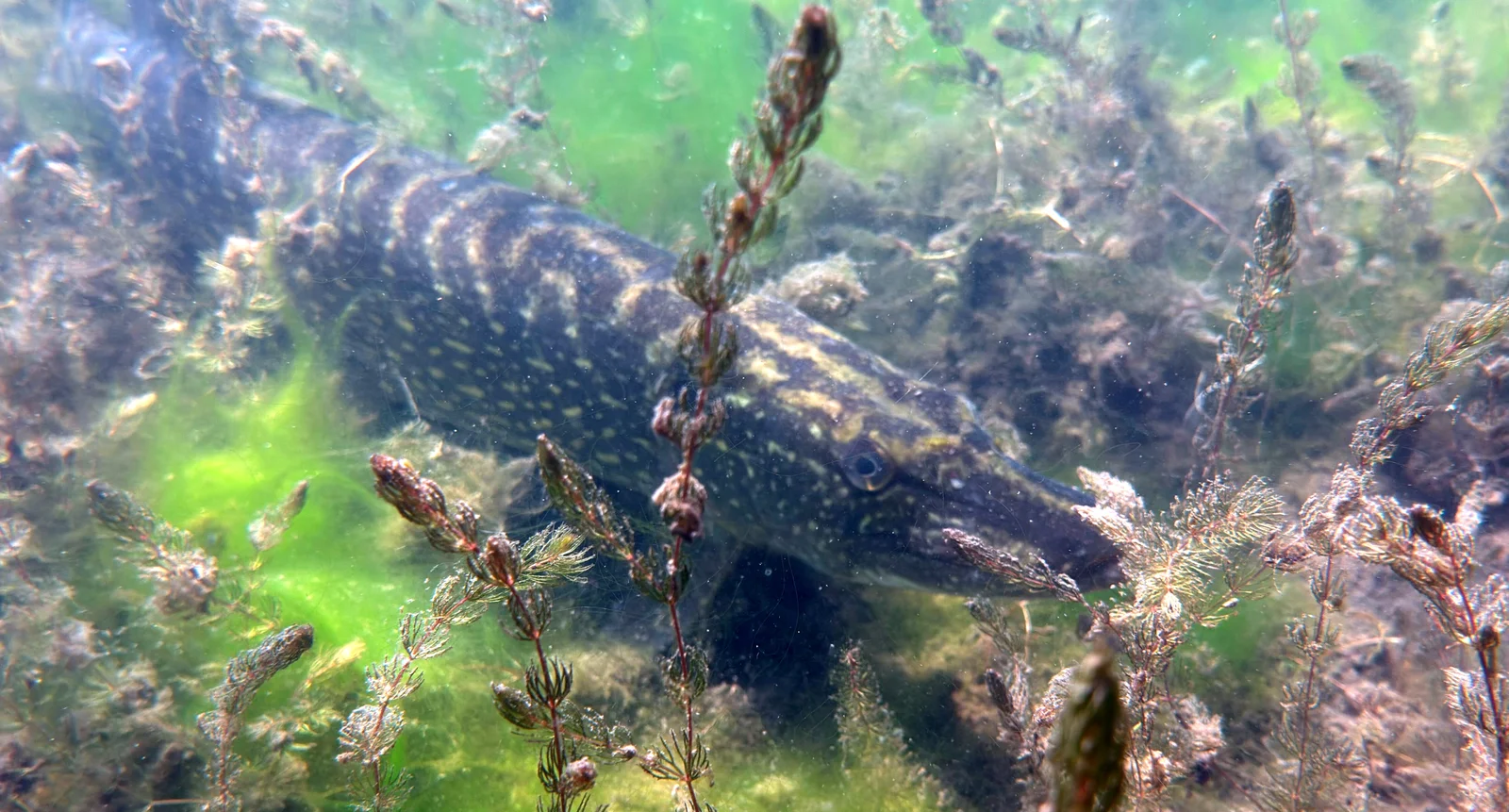
A pike camouflaged in vegetation. Waiting for prey.
Don't buy equipment right away.
This is one of the most common mistakes.
After the first few dives, people often:
- buy all the gear
- spend several thousand
- and then dive sporadically
At the start:
- rent
- try different configurations
- see what works for you
👉 Equipment is bought after trying it on and testing it, not "blindly".
👉 Don't buy equipment online if you haven't worn it in person beforehand.
Each piece:
- fits differently
- works differently underwater
- adjusts differently
Equipment is bought when you have experience, not on a whim.
Summary
If you want to start diving and do it well, without wasting time and money:
1. Do an intro – check if it's even for you
2. Choose a good instructor (preferably a small group or one-on-one)
3. Take a course Open Water Diver
4. Build experience in different conditions
5. Buy equipment only after time and testing
Most important:
👉 instructor > location > equipment
Because the way you learn at the beginning stays with you for a long time.
Materials on this topic:
Check out the channel!
Watch YouTube channel →