
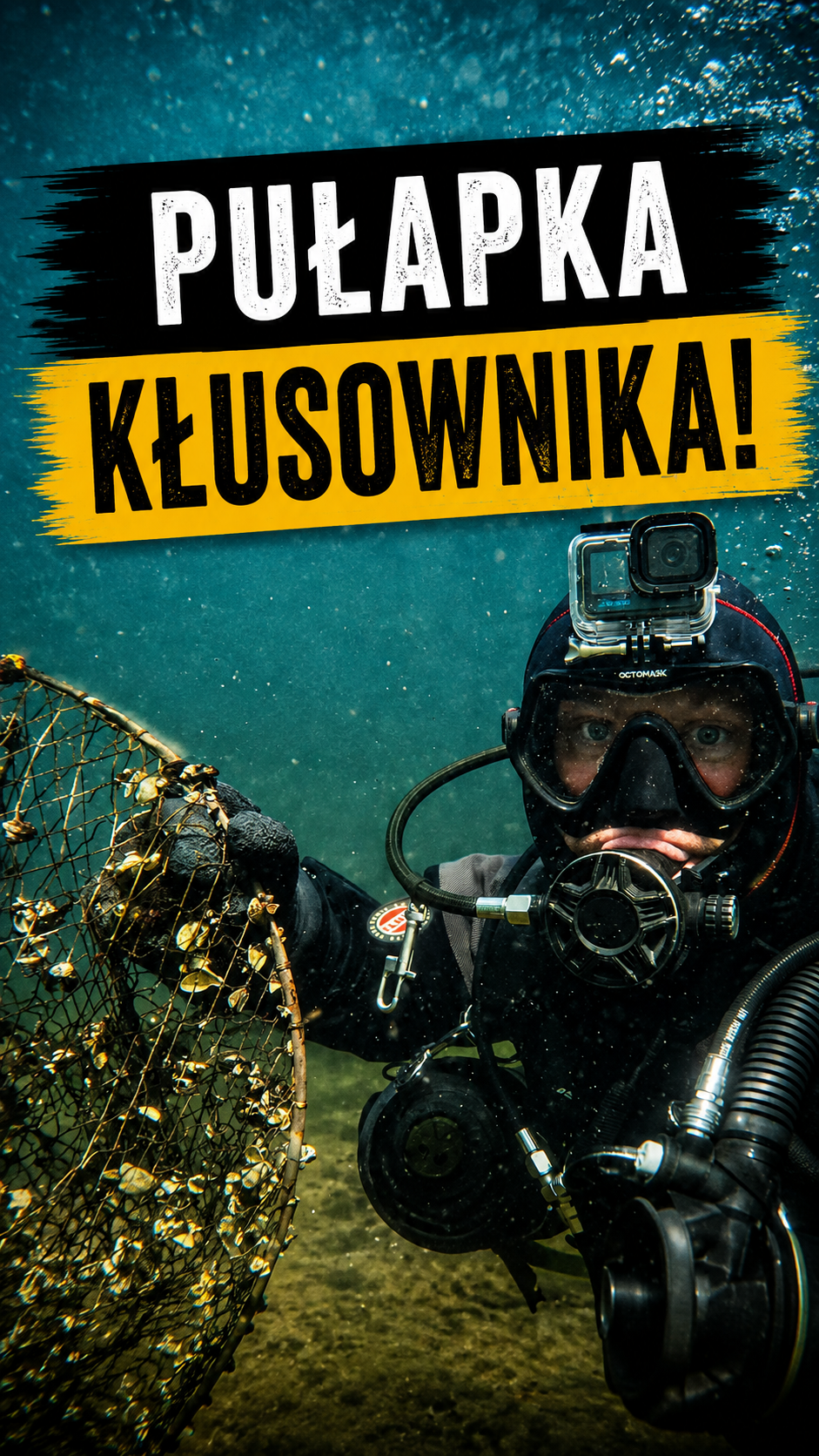
Lake Dąbie is my favourite diving spot in Szczecin. For years, I have regularly conducted seabed cleaning operations here, removing ghost nets and reporting and eliminating signs of poaching.
Lake Dąbie – Wrecks, Nature and Underwater Secrets
Lake Dąbie is one of those bodies of water that on the surface don't seem to have much to offer a diver. It's shallow, visibility can be poor, and conditions change quickly. Yet underwater, you can find surprisingly much here.
I have been diving on Dąbie regularly for years. I also conduct seabed cleaning operations here, removing ghost nets and other waste. Thanks to this, I've had the opportunity to get to know this lake very well – both in summer and in winter.
SHALLOW, BUT FULL OF LIFE
The underwater bottom is dominated by sandy and hard surfaces, stones and boulders overgrown with bryozoans. In summer, there is abundant vegetation, creating vast meadows where fish hide.
You can encounter, among others:
- pike
- perch
- tench
- roach
- minnows
- ruffe
- sticklebacks
- gobies
- crayfish
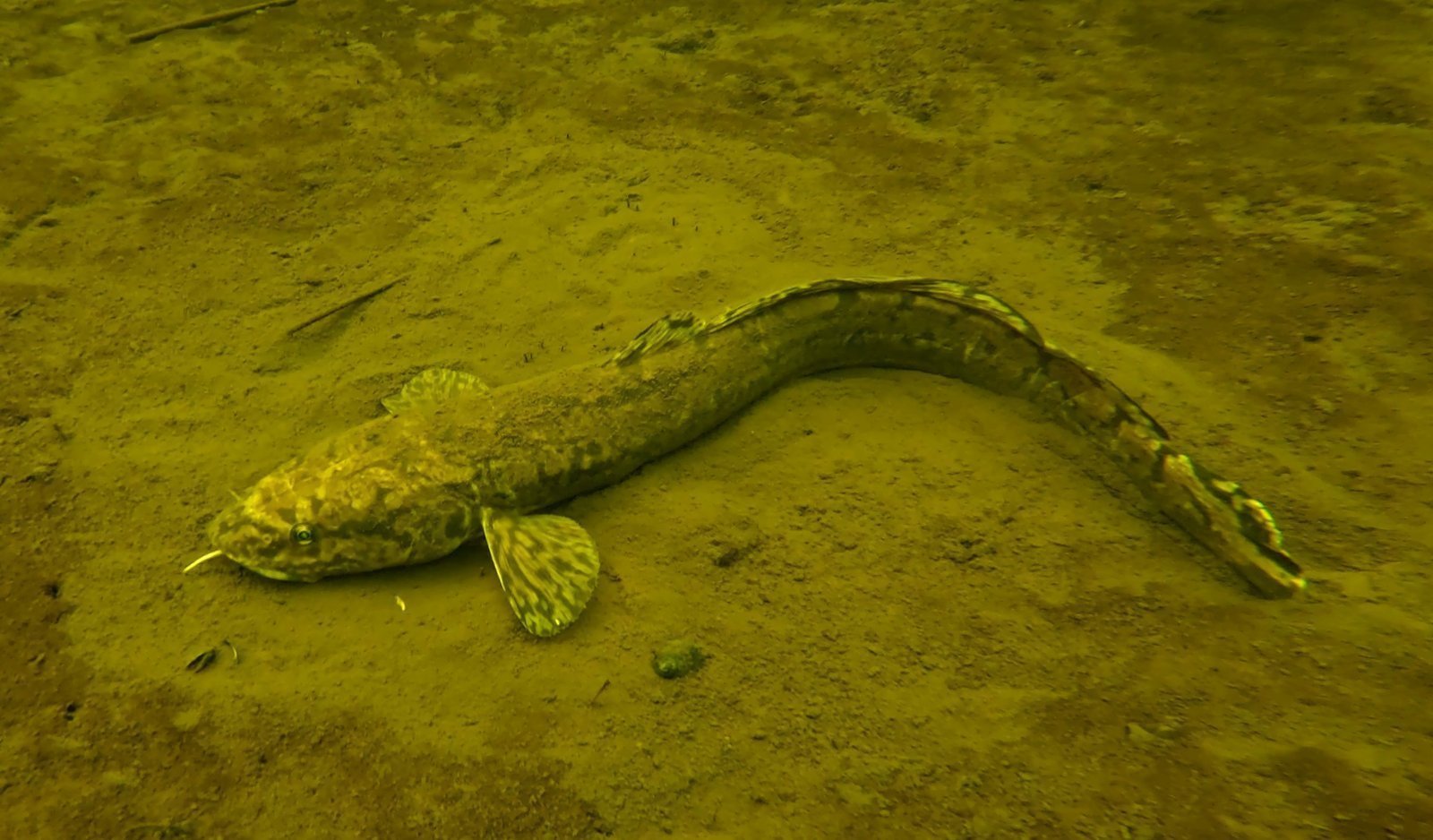
Minnow from Lake Dąbie.
Dąbie is very shallow. Outside of the shipping channels it's hard to find places deeper than2–3 metres.
And that's exactly why it's not a typical spot for deep diving. Its greatest value is exploration, nature and what you can find on the bottom.
CONDITIONS? WEATHER IS HUGELY IMPORTANT HERE
Dąbie can change within a few hours.
Stronger wind can quickly worsen water clarity, so diving conditions are heavily dependent on the weather.
👉 The best conditions are usually found in winter, when there is much less plant life underwater and the water can be much more transparent.
In summer it's the opposite – the vegetation is very impressive, but visibility is often much worse.
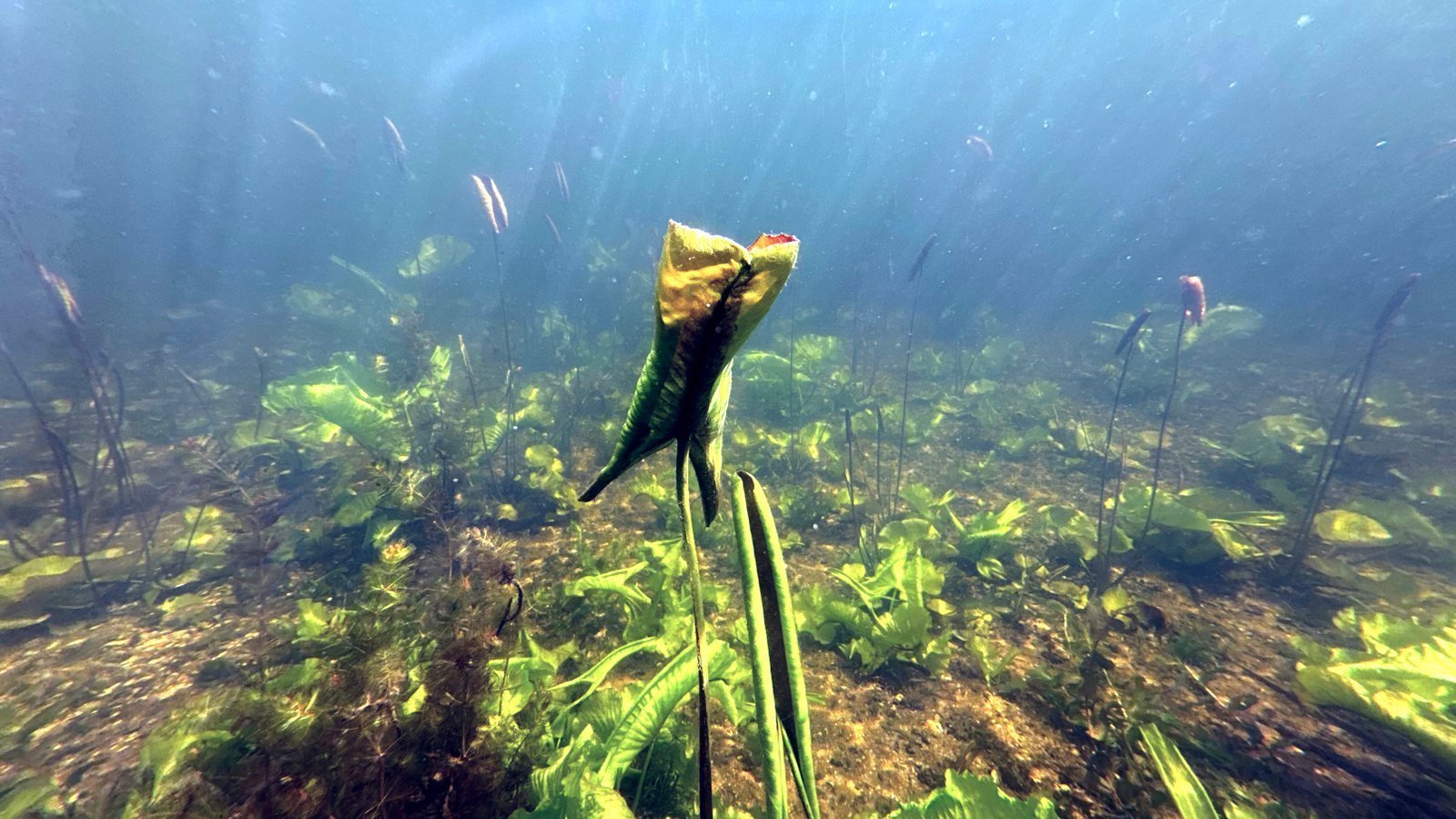
Vegetation of Lake Dąbie.
DĄBIE IS NOT JUST NATURE
Beneath the surface you can also find many traces of human activity.
Tyres, bottles, waste, ghost nets, remnants of poaching, as well as wrecks and other submerged objects mean that practically every dive can bring something new.
One of the most characteristic objects is Concrete barge D-62.
Underwater, you can see the drive shaft with a propeller hub, an overgrown stern, and numerous concrete fragments that have broken away from the reinforced concrete hull over the years and now rest on the bottom around the wreck.
This is one of those objects that shows what an interesting history Lake Dąbie has.
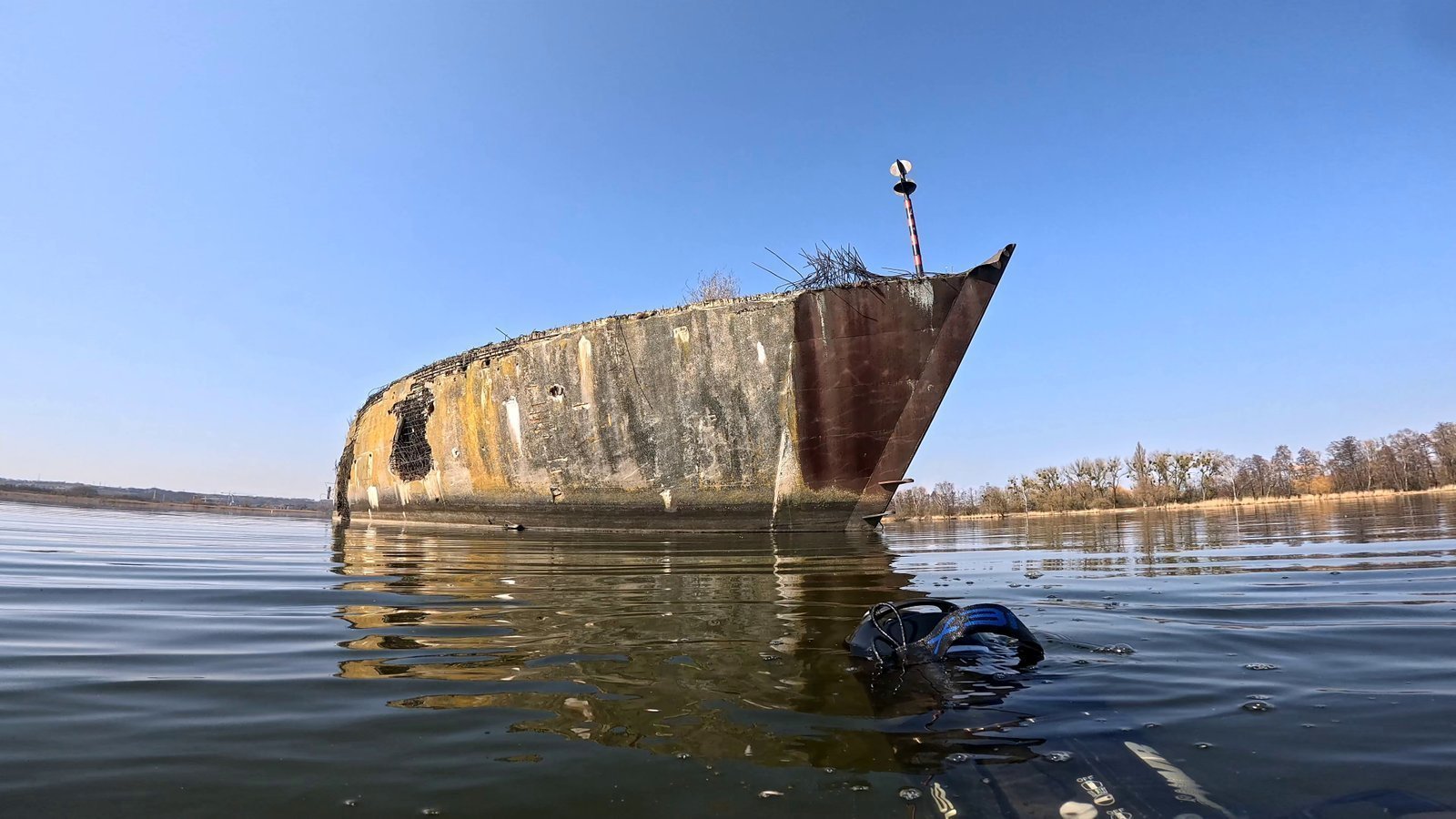
Concrete barge D-62, view from the water surface.
CZARNA ŁĄKA – WOODEN WRECK AND UNDERWATER ATTRACTIONS
The beach in Czarna Łąka is one of the more interesting places to enter the water.
The bottom is sandy and slopes gently, and in good conditions, visibility here can be surprisingly good.
The main attraction is the wreck of a long wooden boat, resembling an old German fishing boat. In its vicinity, you can also find large tires and a massive anchor.
This is a place where you can combine observing underwater nature with the exploration of sunken objects.
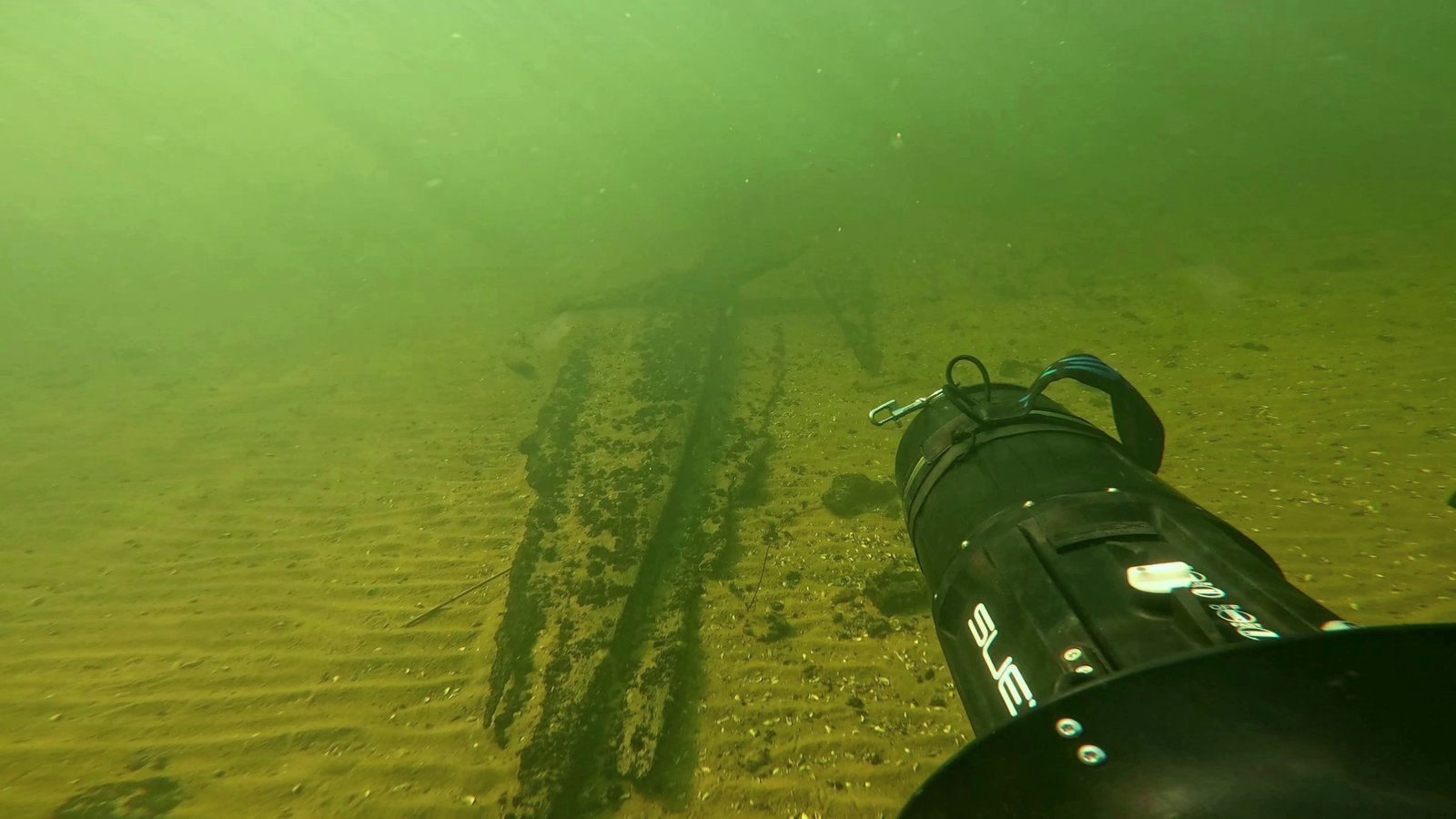
Wooden boat wreck, Czarna Łąka.
LUBCZYNA – A GOOD PLACE FOR RECREATIONAL DIVING
The beach in Lubczyna is one of the best places to start diving on Dąbie.
A wide, sandy beach and gently sloping bottom make entering the water easy. Further out, the sandy bottom transitions into extensive underwater meadows.
This is precisely where you can particularly well observe the lake's life – pike, perch, tench, roach, crayfish and many other species.
I have been diving regularly in Lubczyna for years and conduct cleanup operations here.
Tires, bottles and other waste can still be found on the bottom. But with each successive operation, there is less of it.
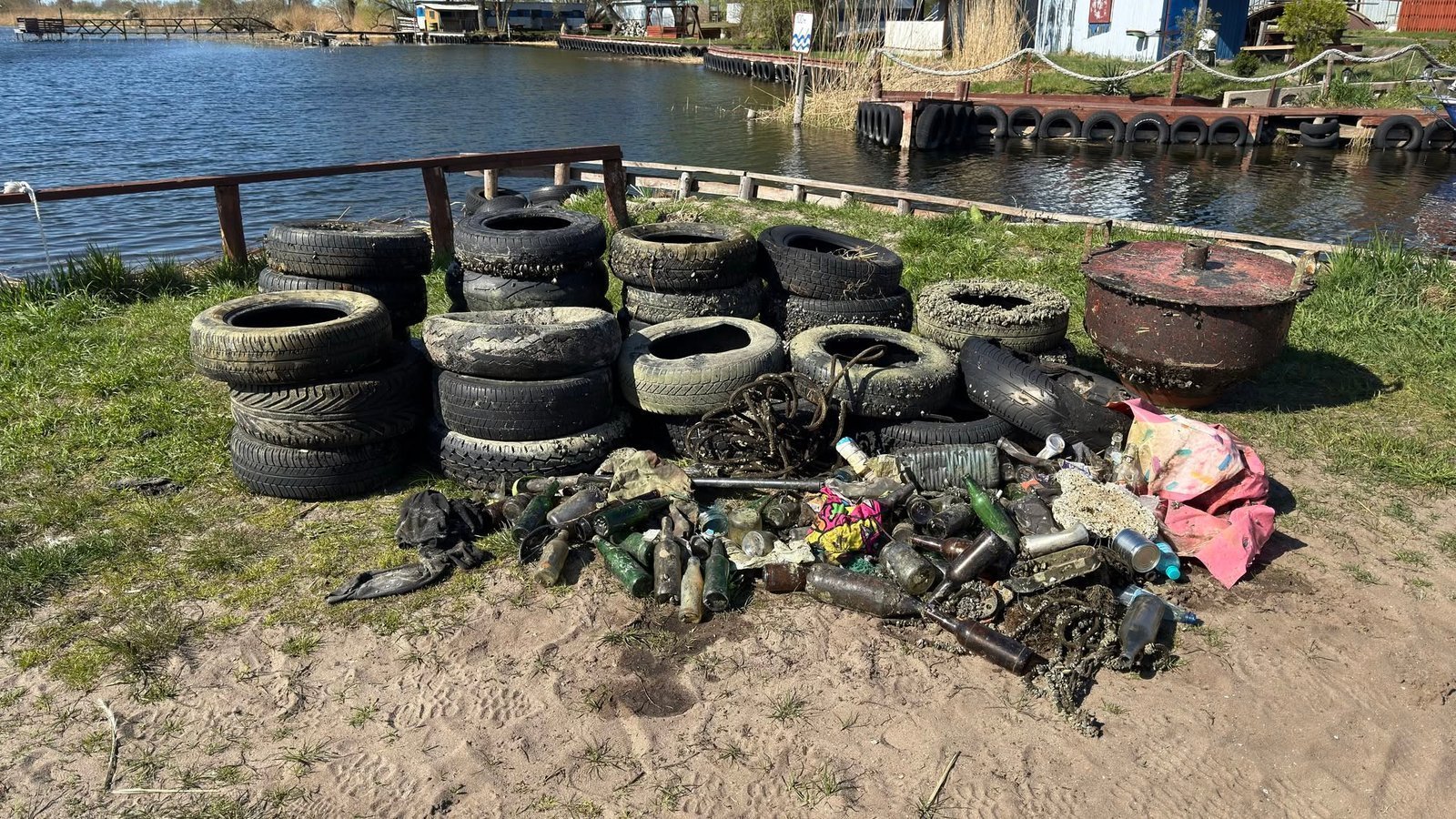
Trash retrieved from Lubczyna.
"FLOATING ECOLOGICAL LABORATORY"
Dąbie also has a history of people who wanted to do more for the water.
On a shoal in the Lubczyna area, there is a wreck of a vessel belonging to Jacek Kwiatkowski, creator of the "Save the Baltic" campaign.
The 28-meter ship was simultaneously his home, laboratory and centre for ecological education. Kwiatkowski sold his apartment and invested his life's work in realizing his mission to protect the Baltic Sea.
In 2010, the vessel was towed from the port in Lubczyna and ran aground on a shoal in Lake Dąbie, where it remains to this day.
After Jacek Kwiatkowski's death in 2018, the wreck remained a symbol of his tremendous passion for environmental protection.
Access to the wreck and boarding its deck is possible, but can be difficult and depends, among other things, on the current water level. You can reach it from the cycling path side or sail to it in a shallow-draft boat.
It's a shame that such a place has still not been properly developed and documented.
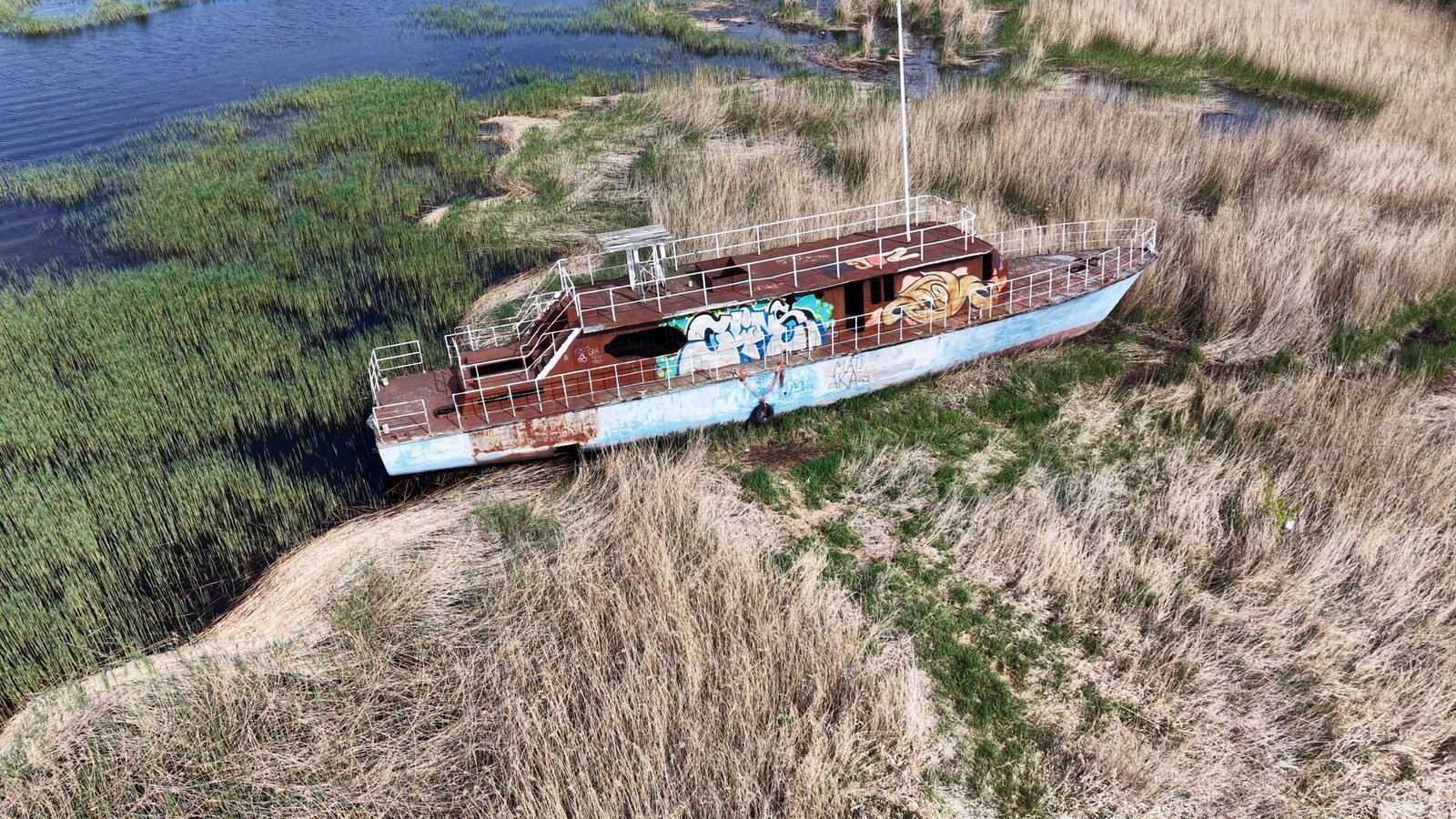
Floating Ecological Laboratory - wreck.
LAKE UNDER CONSTANT CARE
Lake Dąbie is also one of the water bodies that remain under my constant care. I dive here regularly over the years, observe changes happening underwater and engage in cleaning the lake and removing waste accumulated on the bottom.
It was during successive dives that I got to know Dąbie from different angles and at different times of the year. Thanks to this, I can not only document its underwater world, but also respond when I find litter, ghost nets or other problems requiring intervention.
DĄBIE NEEDS ATTENTION
Lake Dąbie has enormous potential, but it also has its problems.
Pollutants enter the water, and waste and traces of human activity remain on the bottom. Water quality is such an important problem that in recent years special monitoring of water parameters has also been conducted.
From a diver's perspective, however, there is something more to see.
This lake is alive.
Underwater meadows, fish, crayfish, wrecks, submerged objects and places that can still be discovered mean that Dąbie is always able to reveal something new.
That is why despite all the challenges it is one of my favourite diving spots in Szczecin.
I regularly return here – both to dive and explore, and to retrieve from the bottom what should never have ended up there.
Lake Dąbie is really worth seeing not only from the shore, but also beneath the surface.
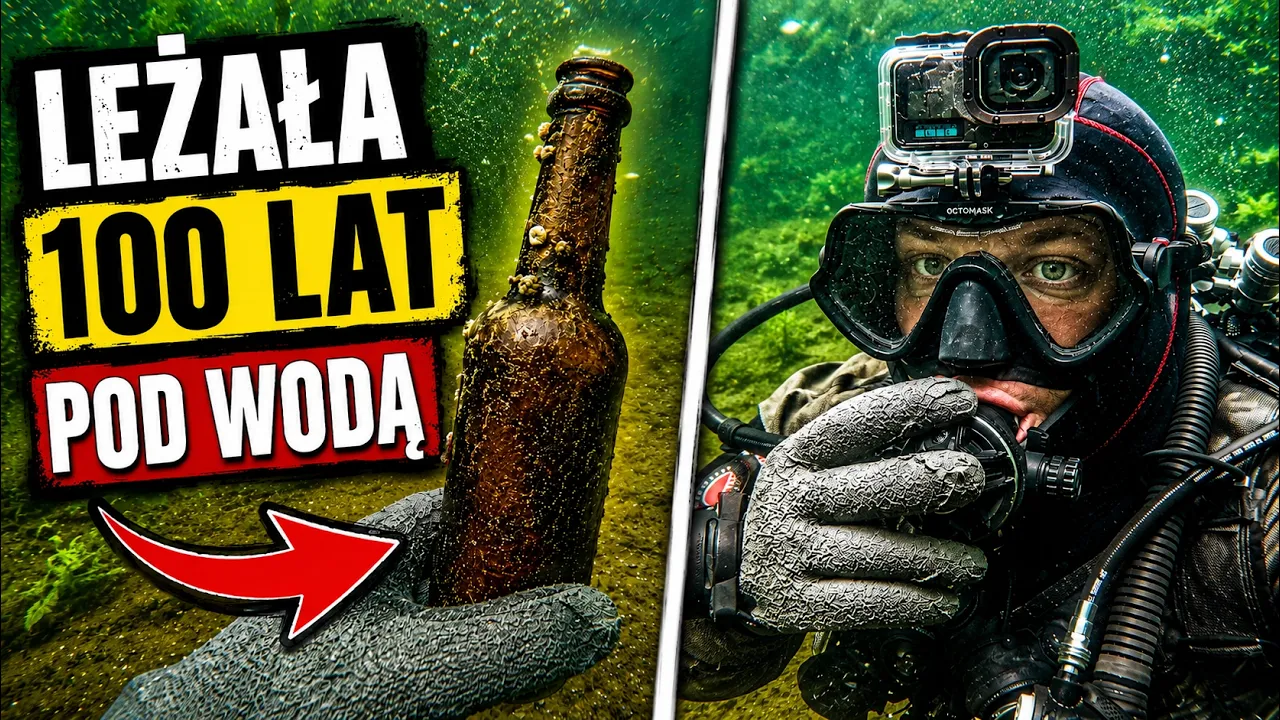
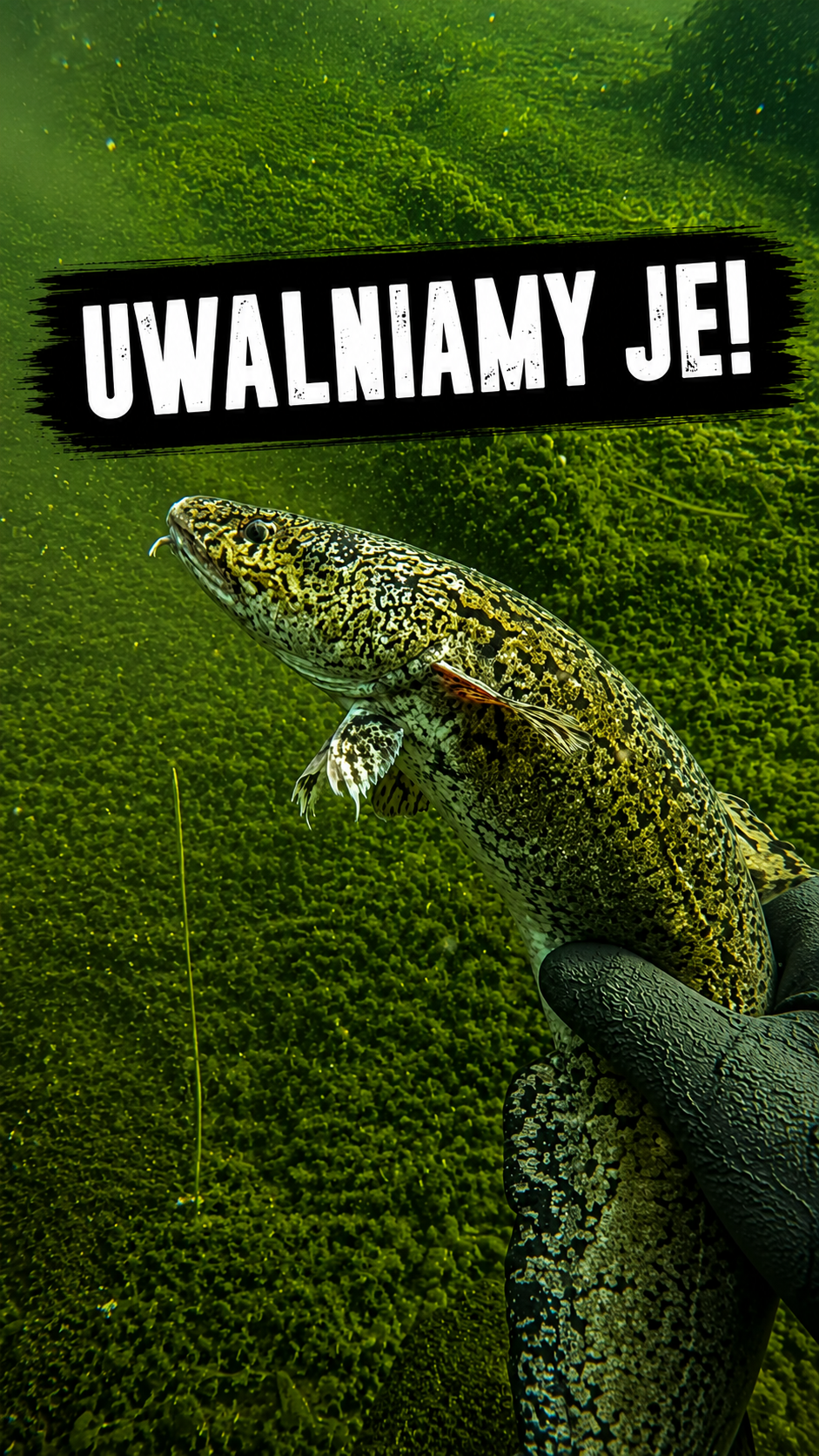
Materials from Lake Dąbie:
Support me on Suppi!
Support on Suppi →