Search and exploration diving is much more than simply observing the underwater world. It's about reaching places where few divers have been before or where no one has gone, and thoroughly checking what the bottom holds. The less visited a body of water, the harder and shallower the bottom, and the better the visibility, the greater the chance of finding something interesting.
SEARCH AND EXPLORATION DIVING – DISCOVERING WHAT THE BOTTOM HOLDS
Search and exploration diving differs significantly from ordinary recreational diving, where we simply swim forward and watch fish. What matters most here is reaching places where divers haven't been before or have been very rarely. That's exactly where we have the best chance of finding something interesting.
I SEARCH WHERE OTHERS HAVEN'T REACHED
When planning such dives, first and foremost I think about where other divers probably haven't reached before.
I avoid heavily dived lakes and popular spots where the bottom has already been searched many times. Much more interesting to me are less known places, harder to access, and those that have remained outside divers' interest for years.
The fewer people who have been there before me, the greater the chance I'll find something interesting underwater.
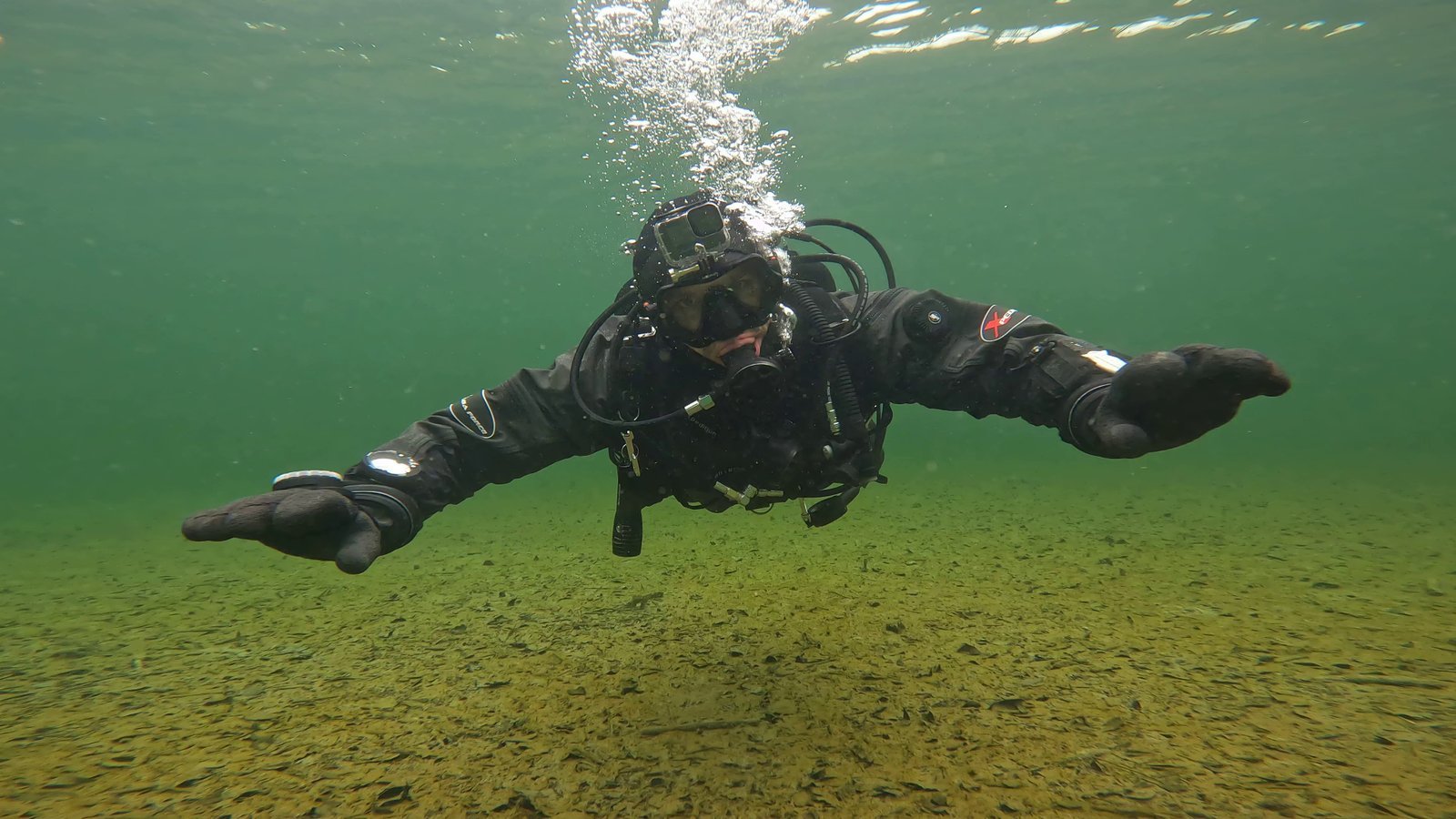
Search and exploration diving, winter, good visibility, hard bottom. There are no better conditions.
WHAT BOTTOM IS BEST?
For search purposes, the best options are shallow areas with hard bottom and minimal vegetation.
I avoid mud and dense vegetation above all. Such a bottom is difficult to search, and additionally significantly limits movement possibilities and object discovery.
That's why if I have a choice, I definitely prefer hard, clean bottom. The deeper, the further from shore, the more mud and fewer finds. Greater depth also shortens diving time.
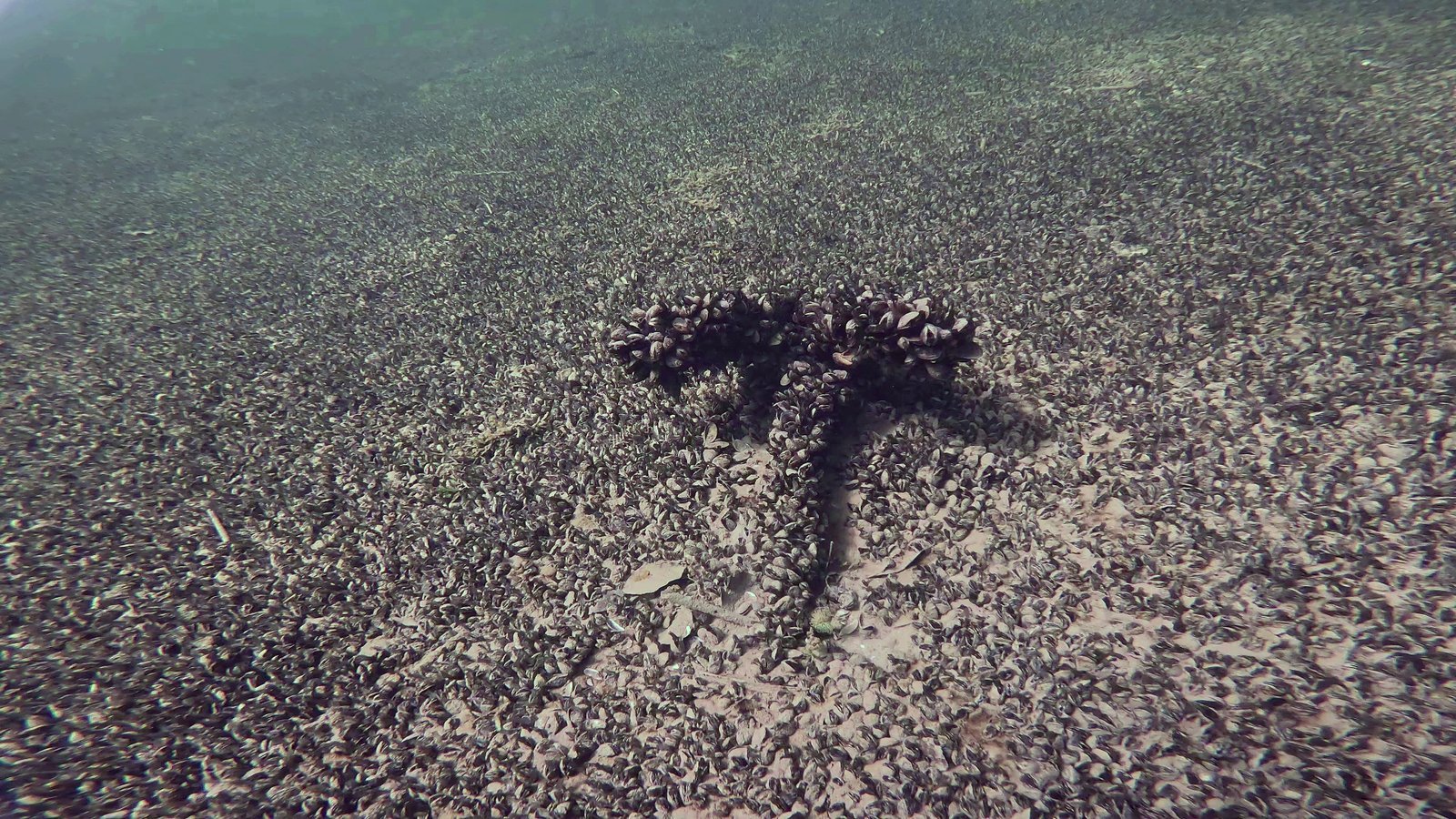
An anchor on hard bottom without vegetation, plus good visibility. You can see it from far away. An easy find.
WINTER BEST, SUMMER WORST
The best time of year for this type of search for me is winter.
The water is usually more transparent then, and vegetation doesn't hinder movement and observing the bottom as much.
The worst period, on the other hand, is summer. Developed vegetation and poor visibility can make exploration very difficult.
Winter also has its drawbacks – there's no rich underwater life then, everything freezes over, fish escape to the depths. It's not a good period for filming underwater life.
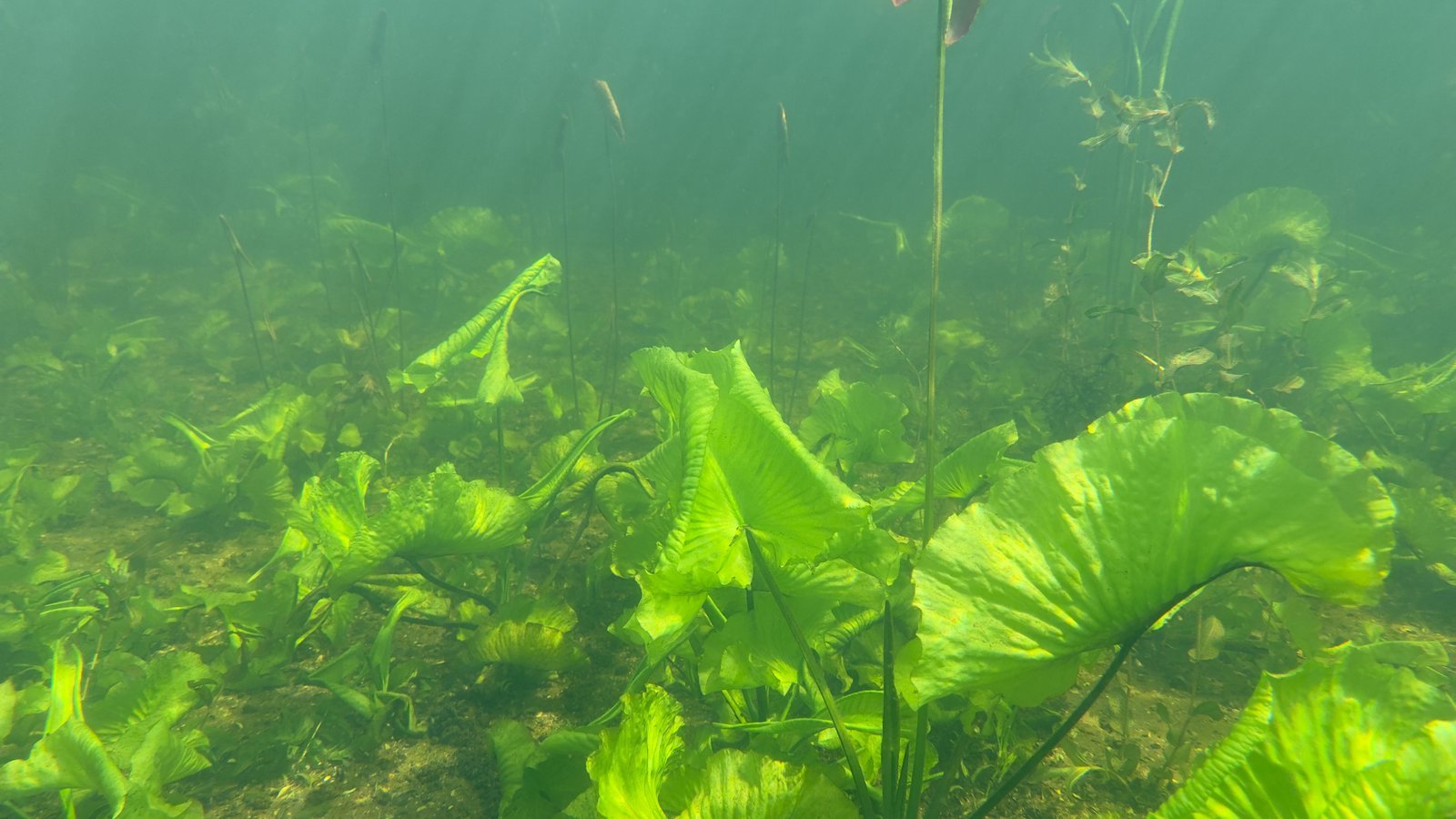
Rich underwater vegetation. In winter all of this will disappear and there will be an empty, clean bottom in this place.
DIVE SCOOTER
During searches, very useful isa diver propulsion vehicle with a large, high-capacity battery.
For me, it's important that at high speed it allows swimming for a minimum of 2–2.5 hours. Thanks to this, in a single dive you can search a really huge area.
With such exploration, a scooter gives a huge advantage over swimming using only fins. With a scooter I'm able to cover about 6 kilometres underwater. Results unattainable by swimming with fins.
However, one thing must be remembered – using a scooter requires good visibility. In poor water clarity, there's a risk of collision with an obstacle underwater. The scooter also has a downside – its sound scares away fish.
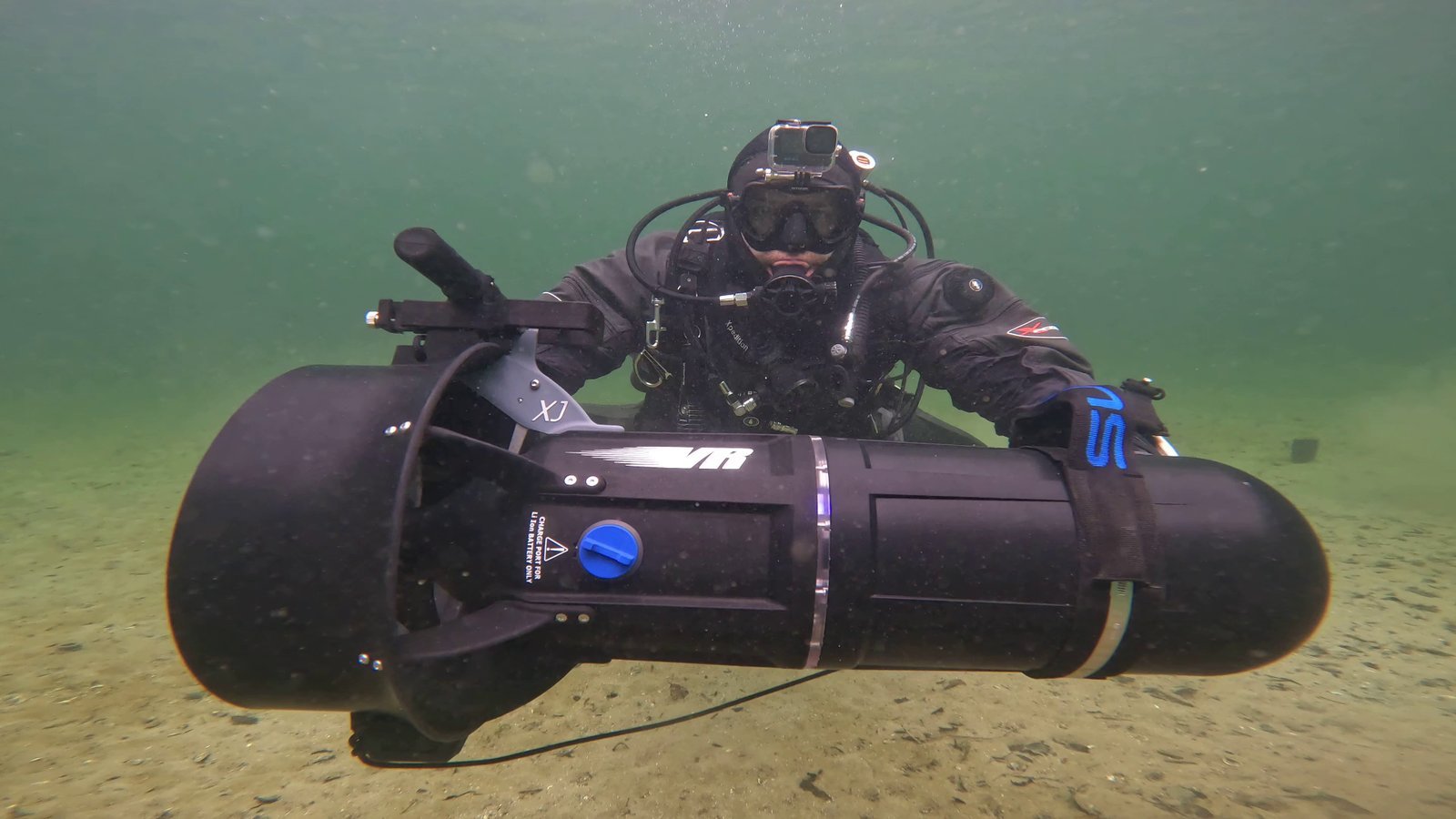
The scooter I use is a SUEX VRX. It has a custom enlarged battery.
GPS AND UNDERWATER NAVIGATION
The second very important piece of equipment is a dive computer with GPS and navigation.
The best dive computer on the market and the model I use myself is Suunto Nautic.
GPS is especially useful when exploring new locations. If I find an interesting object, a wreck or a specific point, I can surface and save its GPS position.
Thanks to this, I can later return exactly to the same place. You can also add waypoints to the computer at home and it will guide us to them in the field.
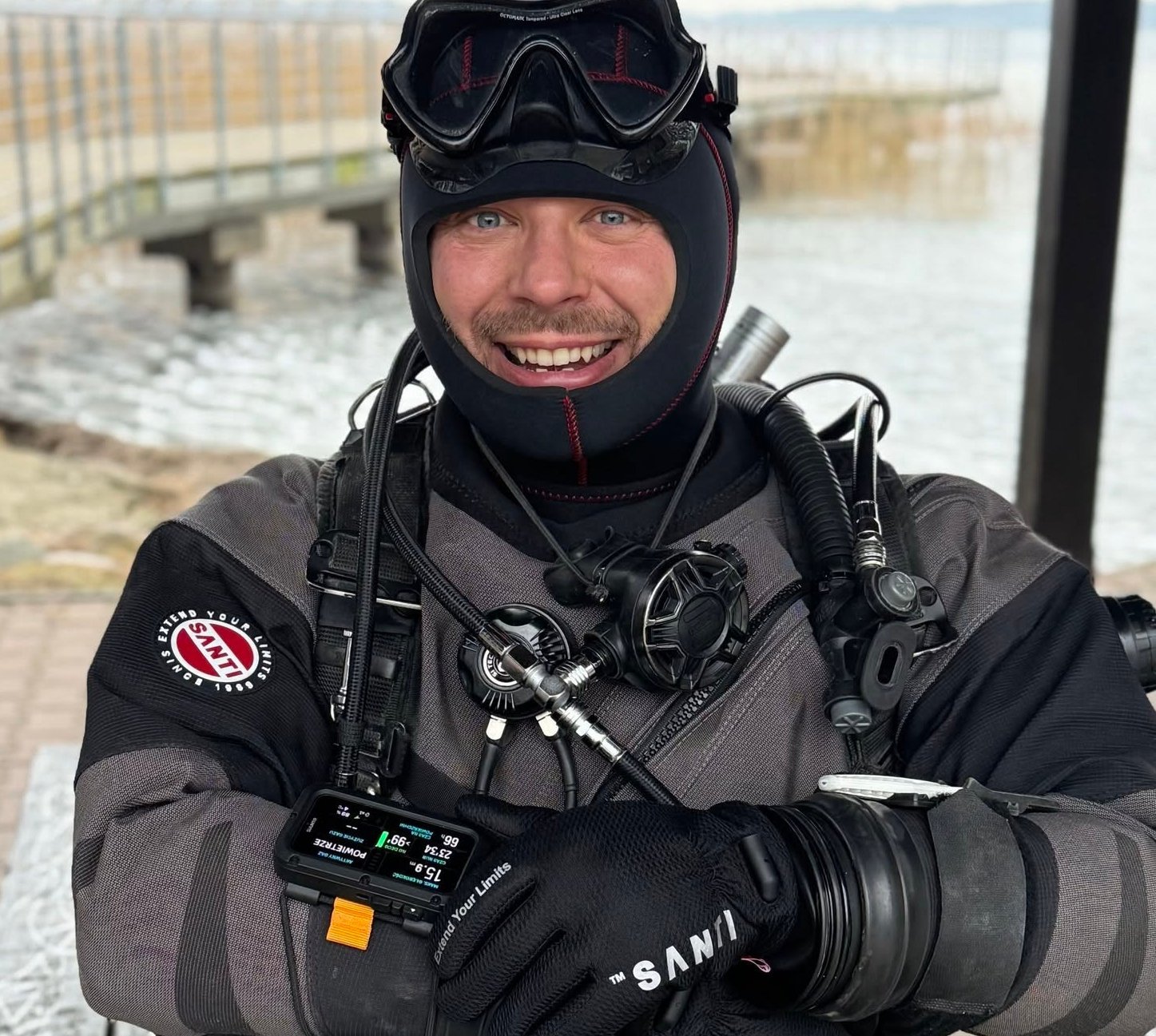
Suunto Nautic – there's no better computer for what I do. GPS, navigation, huge battery, large colour and legible screen. Reliability.
GPS IS ALSO USEFUL FOR REPORTS
Exact location is very important also when I find something that needs to be reported.
It could be unexploded ordnance, ghost nets, nets or poaching traps.
Instead of describing the location approximately later, I can provide an exact position. This makes it much easier for the relevant authorities to find the object. Without GPS, searches don't make sense at all.
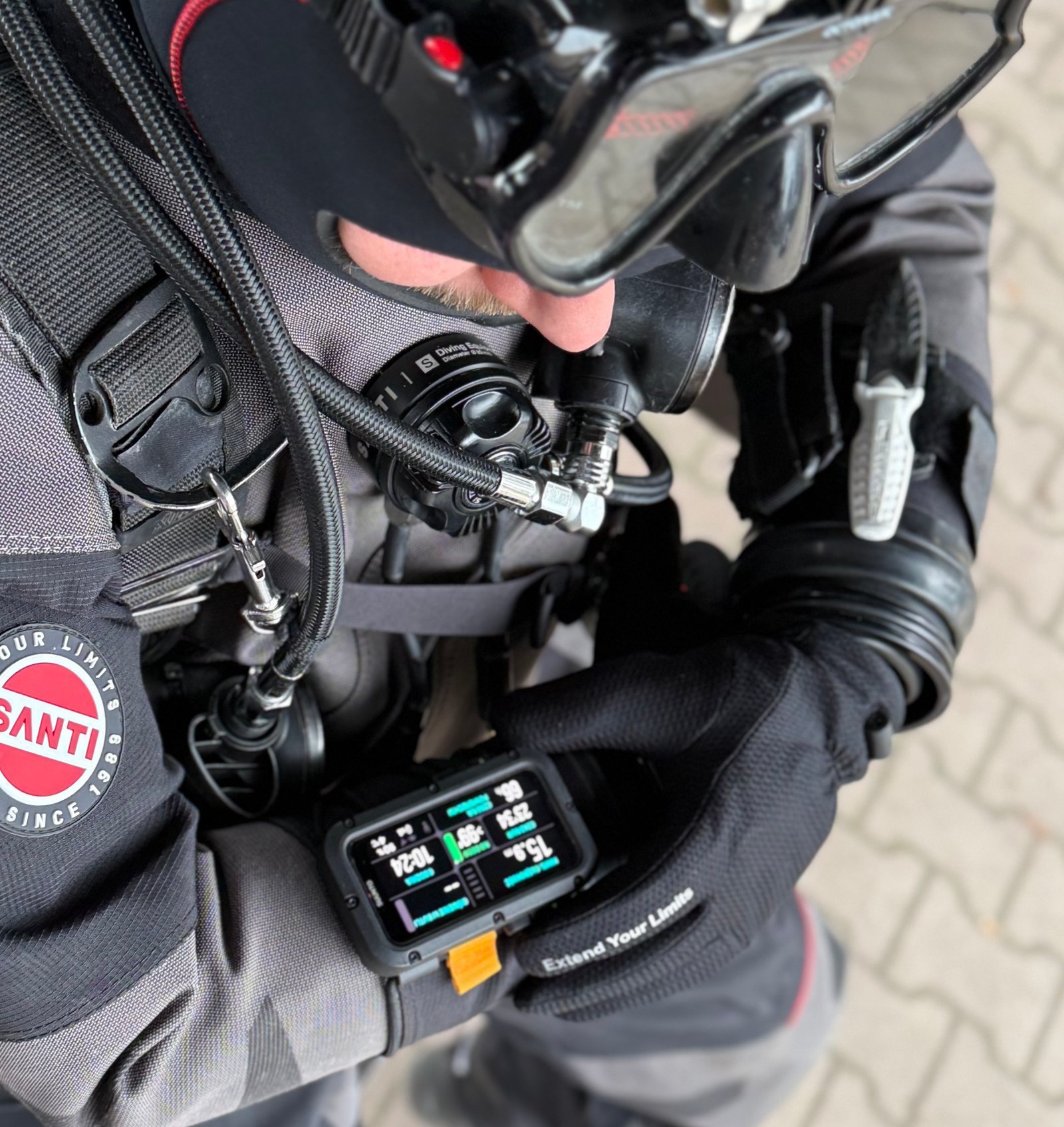
The GPS in Suunto Nautic is very accurate. It shows positions almost to the metre.
SEARCHES HAVE MANY FACES
The concept of search and exploration diving is very broad.
We can search for contemporary objects, such as phones, watches or wallets. Then we most often explore beaches, bathing areas, piers, jetties and marinas.
If we're interested in older objects, the situation looks completely different. There's no single rule here – such items can be found practically anywhere.
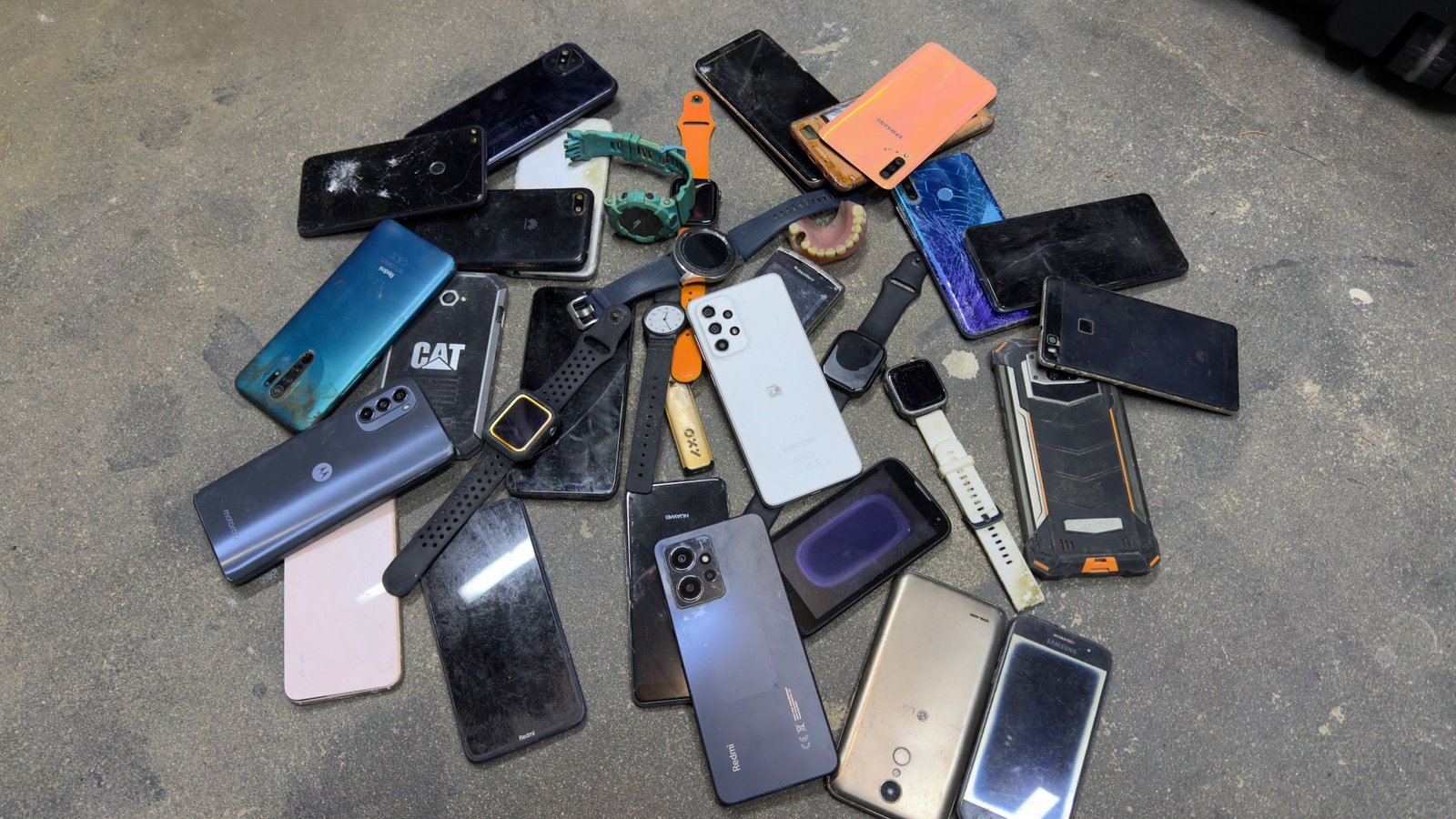
Finds from several dives. If the owner is not found, they go to e-waste disposal.
ECOLOGICAL EXPLORATION
I also count search and exploration dives connected with protection of waters.
Then the goal is to find and remove, among others:
- ghost nets,
- poaching nets and traps,
- rubbish dumps,
- unexploded ordnance,
- sewage pipes.
This type of diving also requires thorough knowledge of the water body and appropriate preparation.
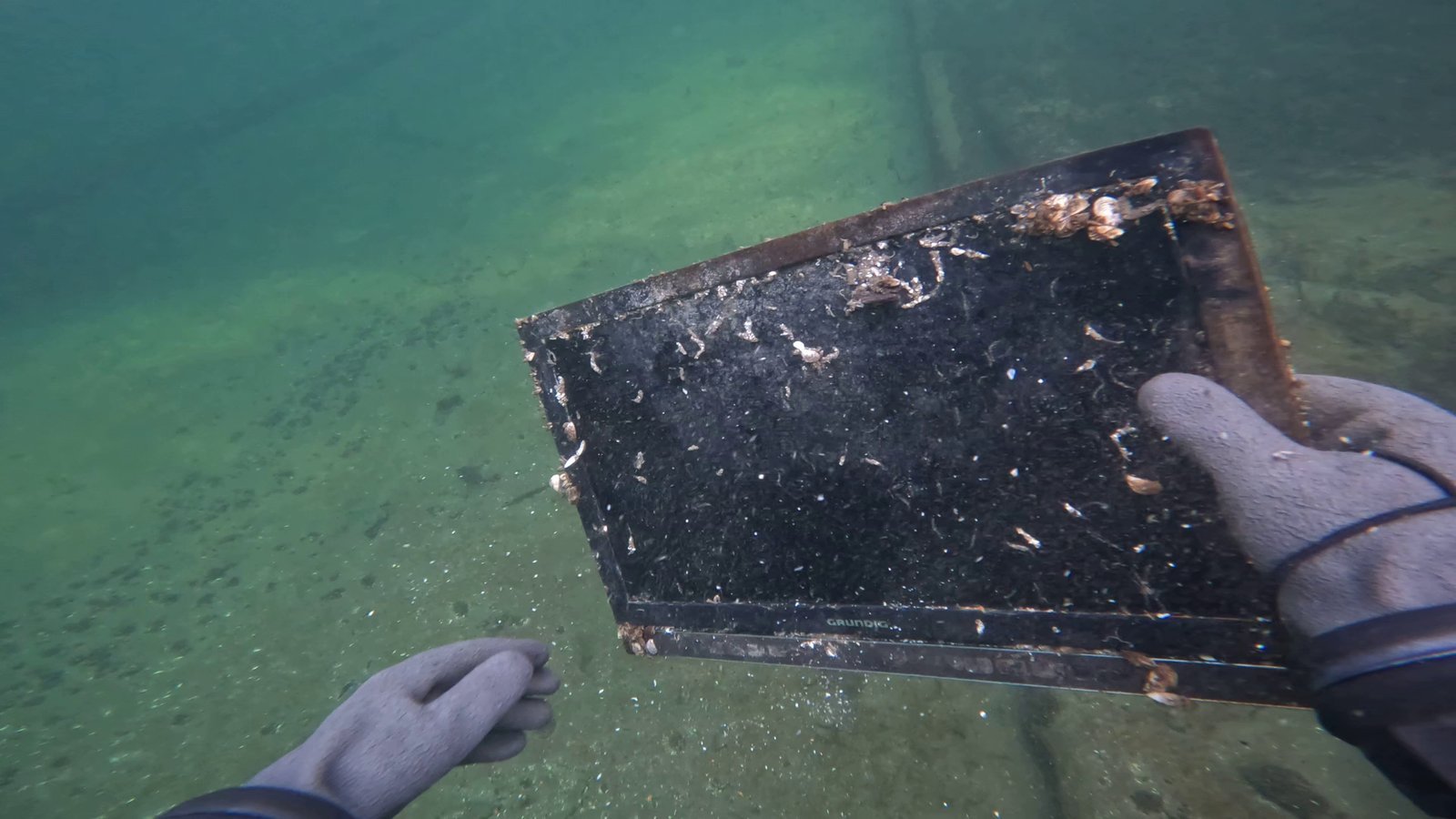
Pulling a television out of the water. An unexpected find, quite a haul, time to act.
SEARCHING WITH A METAL DETECTOR
A separate topic is searching with a metal detector.
If I'm interested in contemporary finds, such as coins or jewelry, I focus primarily on beaches and bathing areas.
In this case, extensive knowledge of the specific location, its bottom, and how it changes depending on conditions is crucial.
I've prepared a separate article on diving with a metal detector – "Diving with a detector – gold for the bold".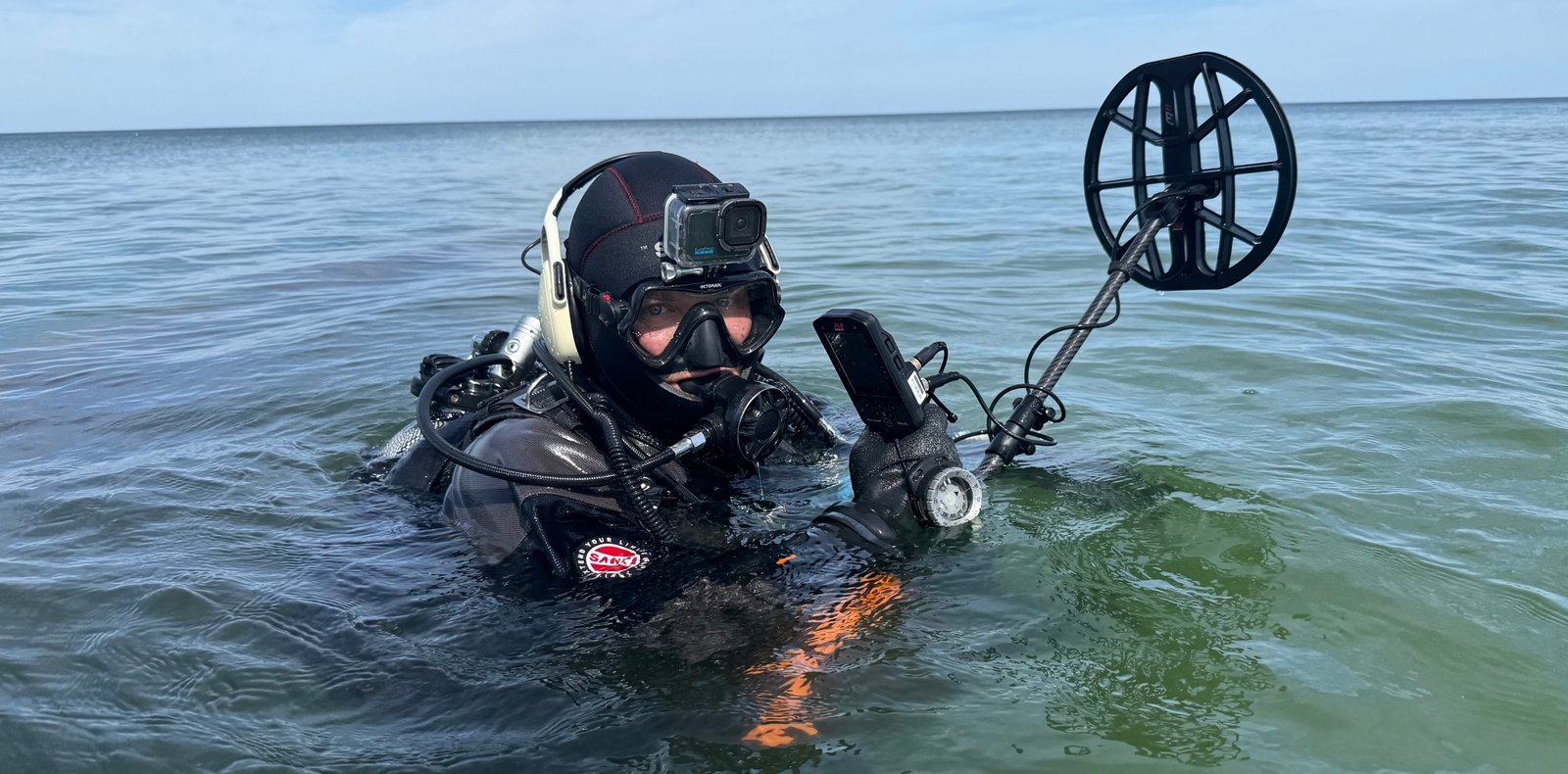
Minelab Manticore in action. The Baltic.
UNDERWATER NATURE IS ALSO A TARGET
I also include in this type of diving nature dives.
When I know there might be something interesting to show underwater, I bring an additional camera and record fish, vegetation, and other elements of underwater life.
Exploration doesn't always have to end with finding an object. Sometimes the goal is simply to reach a place I haven't known before and show what lies beneath the water.
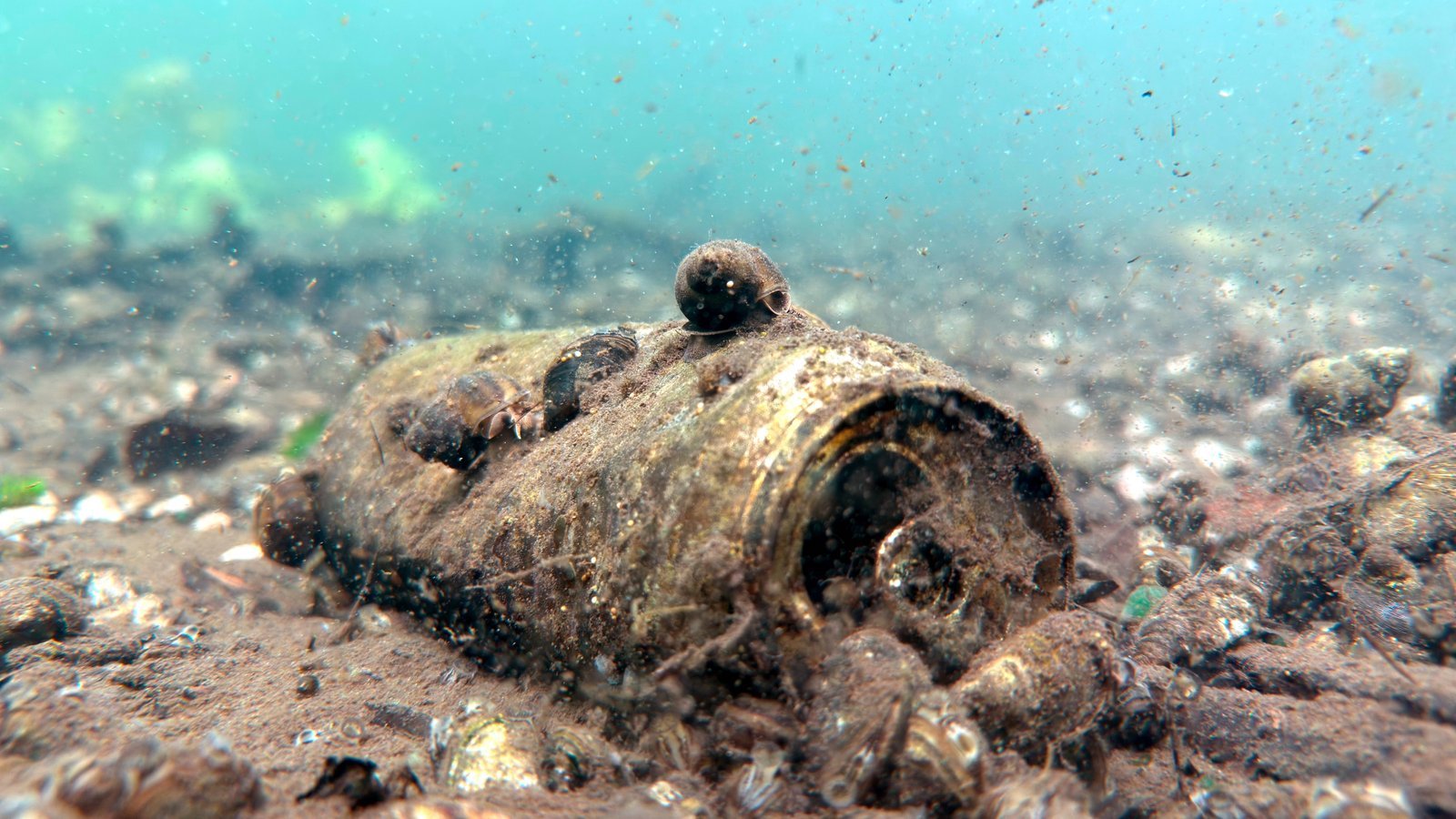
A can and snails in close-up. Recording even the smallest organisms can also be interesting. Viewers often appreciate this.
FOR EVERY DIVE I GO PREPARED FOR EVERYTHING
Most often I don't focus exclusively on one type of search. I usually carry out all these dives simultaneously, which is why I bring equipment that allows me to respond to whatever I find.
I have with me, among other things a miniature Scuba Tector Pro detector, a phone iPhone in an Oceanic Dive Housing case for taking nature photographs and a special knife for cutting large nets.
I also bring two disposable, inexpensive buoys with markings – one with the inscription "CAUTION UNEXPLODED ORDNANCE", and the other "CAUTION NETS".
This way I can be prepared both for an interesting find and for a situation where I need to mark a dangerous object or a location requiring later intervention.
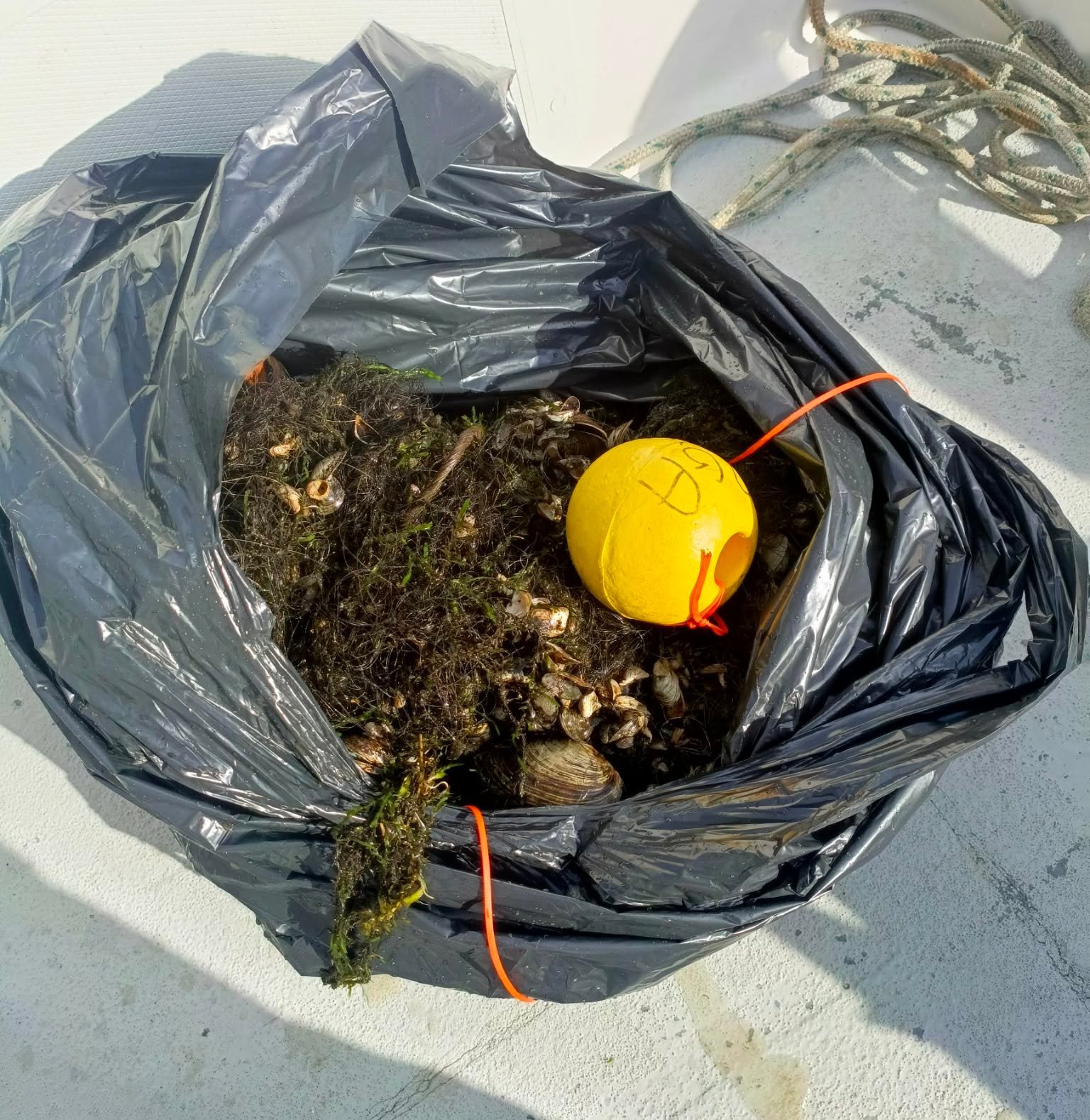
One of the ghost nets retrieved by the Marine Fisheries Inspectorate in Szczecin. You can see my buoy that marked it.
EXPLORATION IS FIRST AND FOREMOST CURIOSITY
That's precisely what I love most about search and exploration diving.
I never quite know what lies on the bottom. I can search for contemporary objects, historical remains, wrecks, debris requiring removal, or simply fascinating natural locations.
The most important thing, however, is to reach where others haven't reached yet. That's precisely where true underwater exploration most often begins.
Support me on Suppi!
Support on Suppi →