
Metal detecting while diving is not simply entering the water with a device and searching for gold. Before we go underwater, we must first get to know the detector well on land, then learn to search while wading, and only after gaining appropriate experience combine it with diving. The Baltic Sea can reward patience with truly spectacular finds, but to find gold, you must first and foremost know what you're doing.
METAL DETECTING WHILE DIVING - GOLD FOR THE DARING
Metal detecting while diving is a completely different level of searching than walking with a detector on land. Before we go underwater with it, however, we must first become very familiar with the detector itself, learn its capabilities and understand how it behaves during searches.
This is not an activity for a beginner diver. The detector is another piece of equipment that needs to be controlled, so the basics of diving must be really well mastered.
FIRST THE DETECTOR ON LAND
If someone wants to start an adventure with a metal detector, the first stage should be searching on land..
You need to learn to listen to signals, recognize their character and understand how the device reacts to different objects. Only when we know the detector well and understand what to expect from it is it worth moving the search to the water.
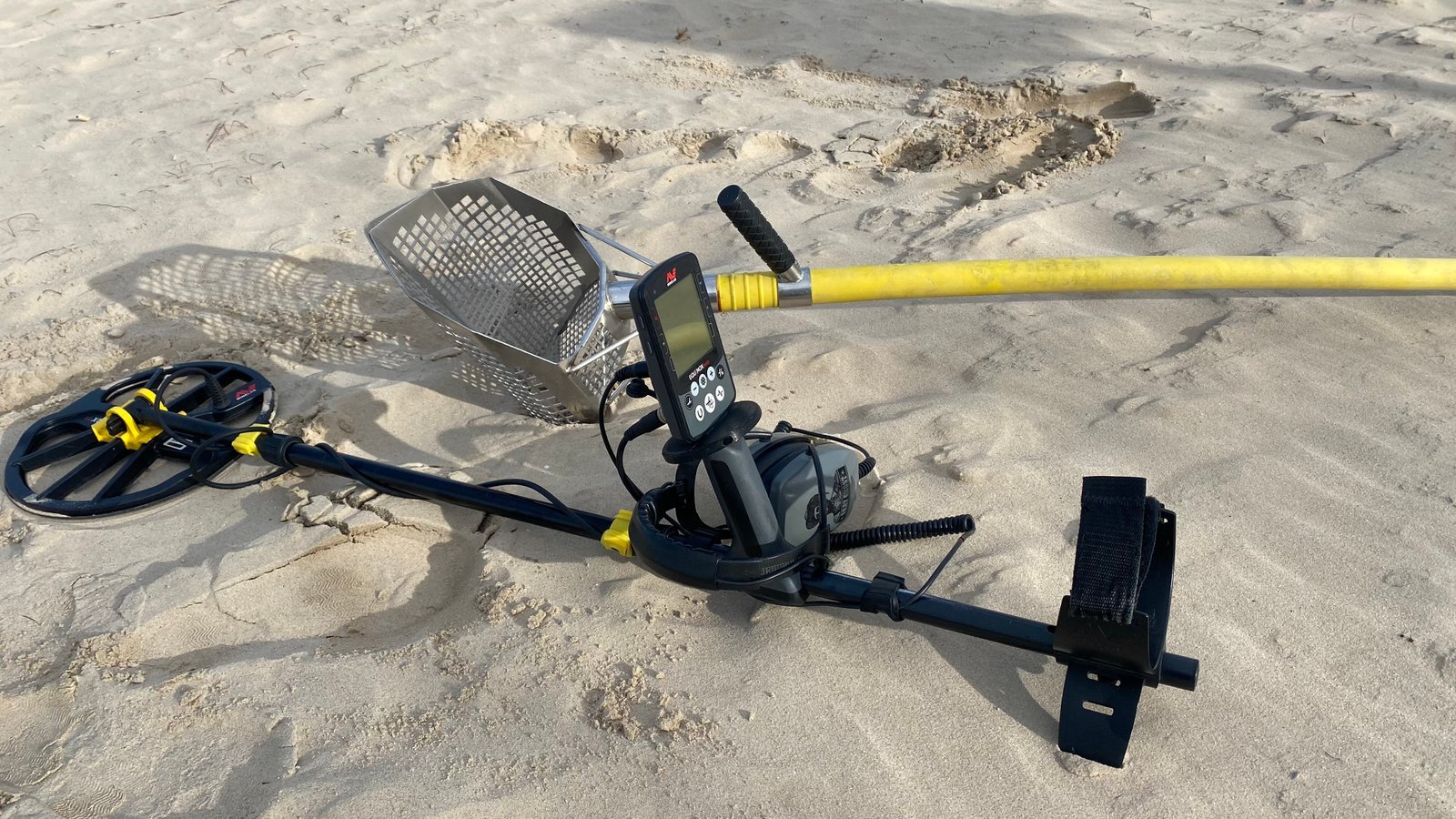
Beach searches - an easy way to learn the detector. Here, a Minelab Equinox 800.
WADING - FIRST STEP INTO THE WATER
The next stage is wading with a metal detector..
This is a very good way to learn the specifics of searching in water without adding all the problems associated with diving.
In water, signals behave differently, and the bottom itself is also extremely important. You need to learn how signals are arranged, how masking and signal overlap work, and how the detector's operation changes depending on the location..
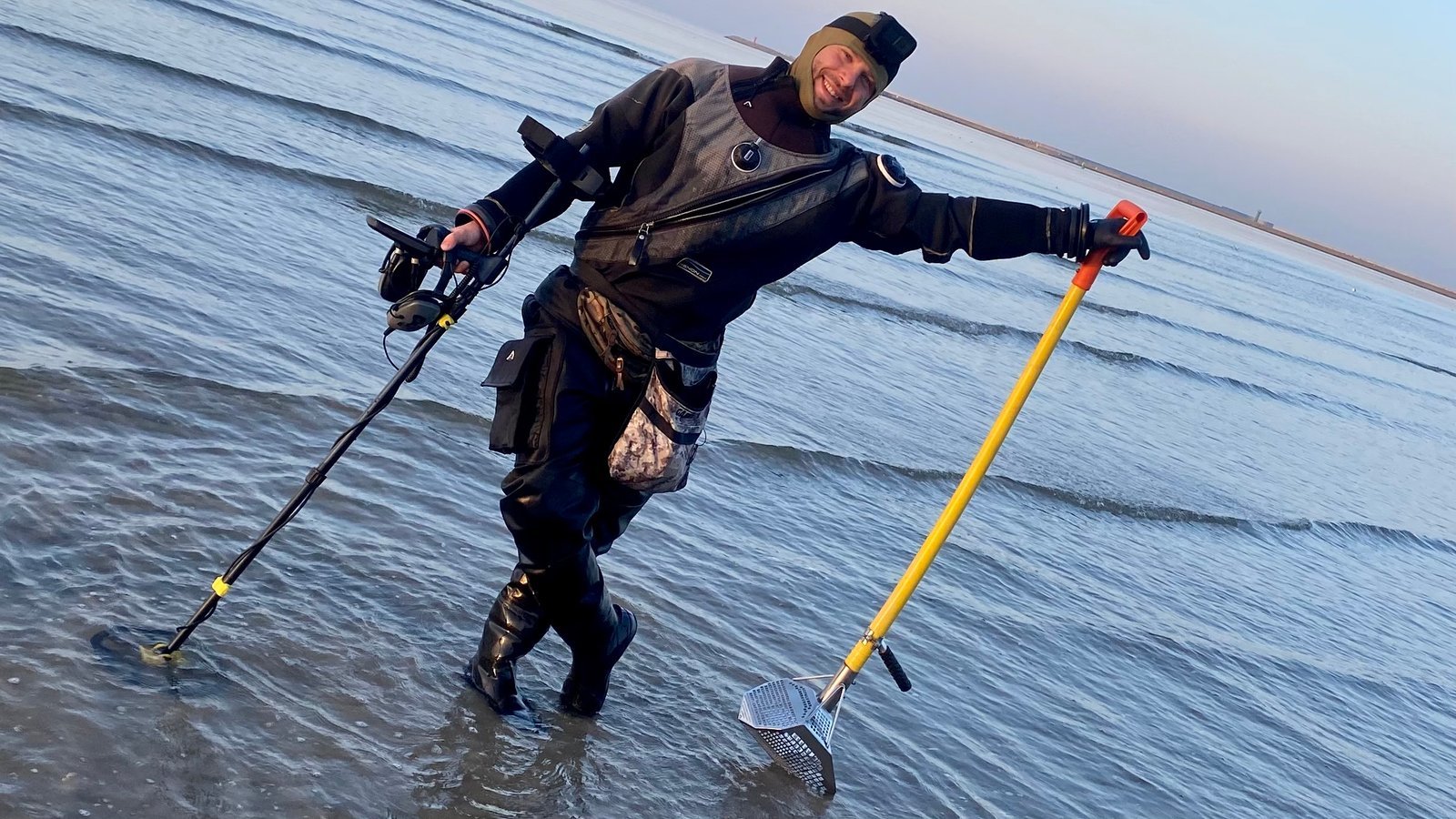
I started the same way - wading with a metal detector in the Baltic Sea. Świnoujście.
EVERY BOTTOM WORKS DIFFERENTLY
It is very important to learn about your specific environment.
A lake works differently than the Baltic Sea, and different locations can give completely different results. You need to learn to recognize the character of a given bottom and know what to expect from it.
This experience is gained primarily through hours spent with a metal detector. It cannot be replaced simply by reading an instruction manual or watching a few videos.
Only when we know the detector well both on land and while wading can we think about the next step.
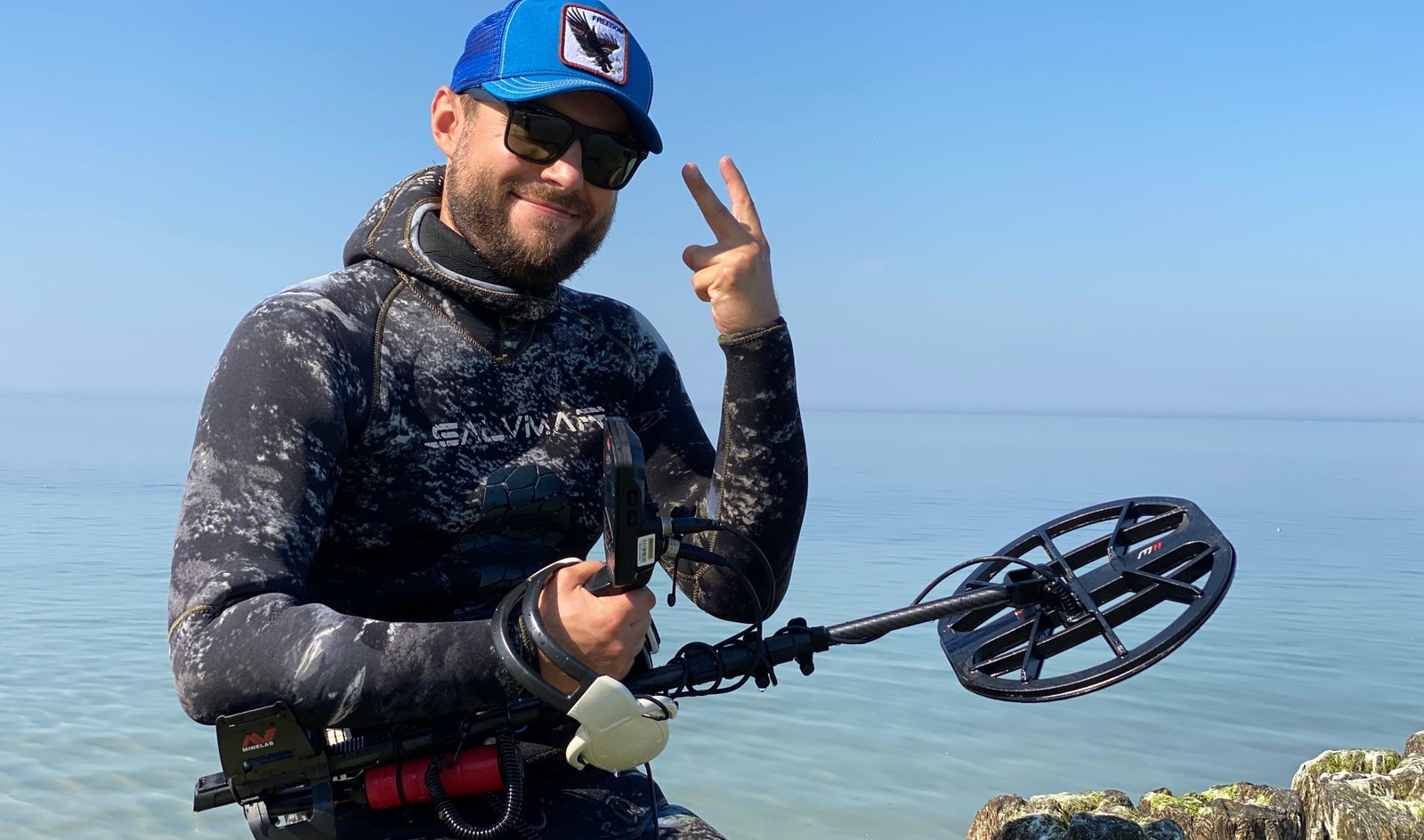
I have always preferred the Baltic Sea for searching. You can't search it completely. Every storm is a "reset" of the bottom. There could have been 100 others before you and it doesn't matter.
ONLY THEN DIVING
To dive with a metal detector, you need to be a good diver.
This is very important because the device becomes another element that needs to be controlled underwater. We must simultaneously monitor trim, buoyancy and equipment while conducting the search.
If basic diving skills are not yet automatic, the detector will only be an additional problem.
This is why a beginner OWD diver should not dive with a metal detector.Even less so should they do it alone.
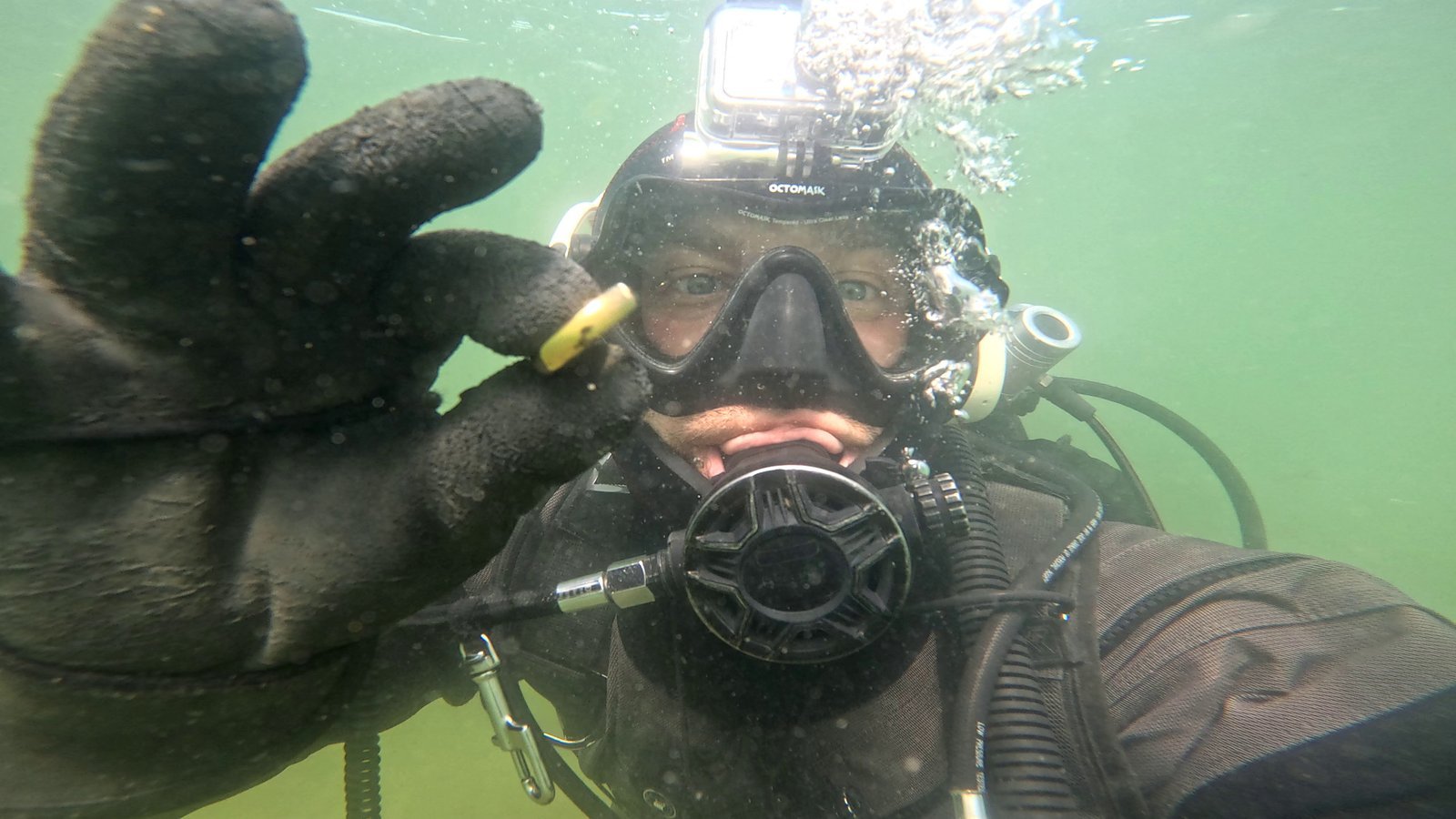
Gold ring from diving. I've found dozens of them.
WHY ARE LAKES NOT A GOOD PLACE?
In Polish lakes, diving with a metal detector usually doesn't make much sense.
The problem is primarily the bottom. In places where wading people can still reach, sand is often found. When the possibility of walking on the bottom ends, very quickly begins mud or vegetation.
Searching with a detector in mud and dense vegetation is very unpleasant and ineffective. It's harder to work with the coil, harder to extract objects, and the results of such searches are usually simply poor.
Therefore in most Polish lakes I don't see much justification for diving with a detector.
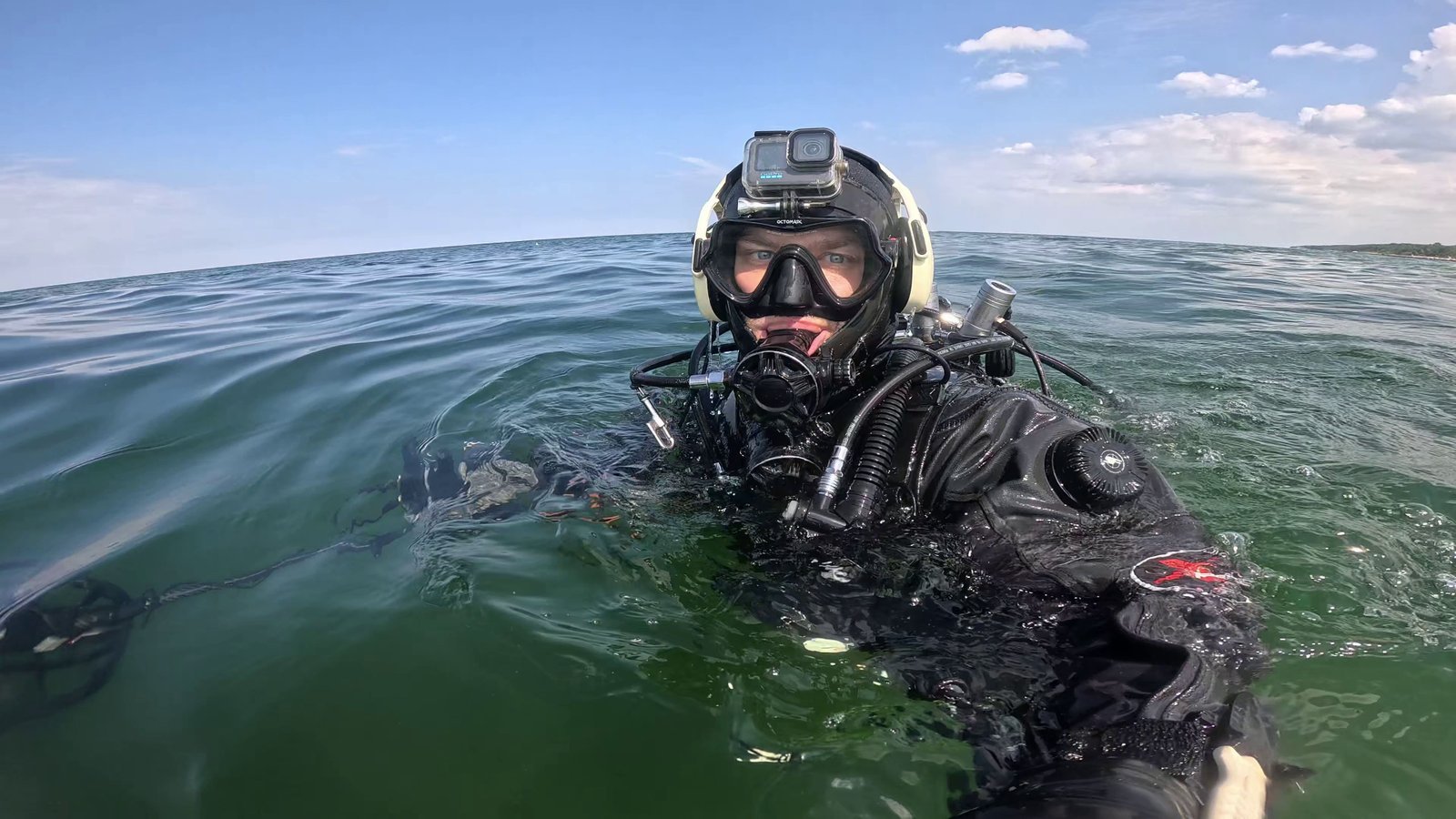
In the Baltic there is no problem with mud or vegetation. There is no problem with competition.
THE BALTIC – THIS IS WHERE IT MAKES SENSE
The situation over the Baltic is completely different.
Diving with a detector definitely makes much more sense here, but you need to find the right spot. It works best with hard, rocky bottom, where you can conduct searches among the rocks.
However, conditions must be appropriate. You need a flat sea, meaning calm sea without waves. The bottom also cannot be covered with a layer of sand.
Even small changes in conditions can completely change the situation. A place that gives excellent results one day can become practically useless after it becomes sanded over.
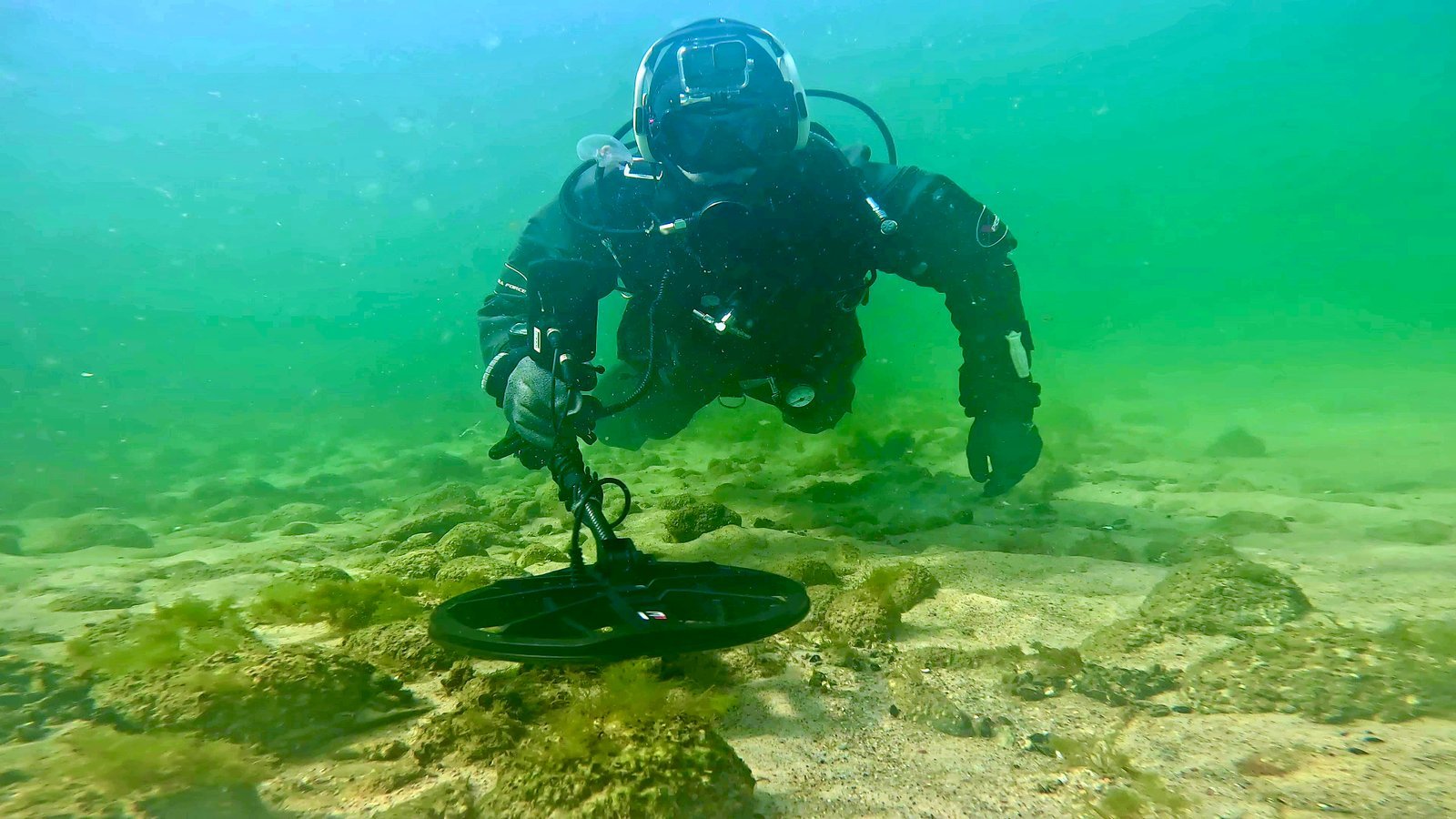
Good search conditions – rocky bottom, no waves, beautiful visibility.
YOU NEED TO KNOW THE BALTIC AND YOUR SPOT
A good detector alone is not enough.
You need to know very well the Baltic, the character of its bottom and the specific spotwhere we conduct searches. Know where rocks appear, where sand is located and how the bottom changes.
That's exactly why experience is so important. Searching a random spot with a detector and hoping to find gold usually won't bring good results.
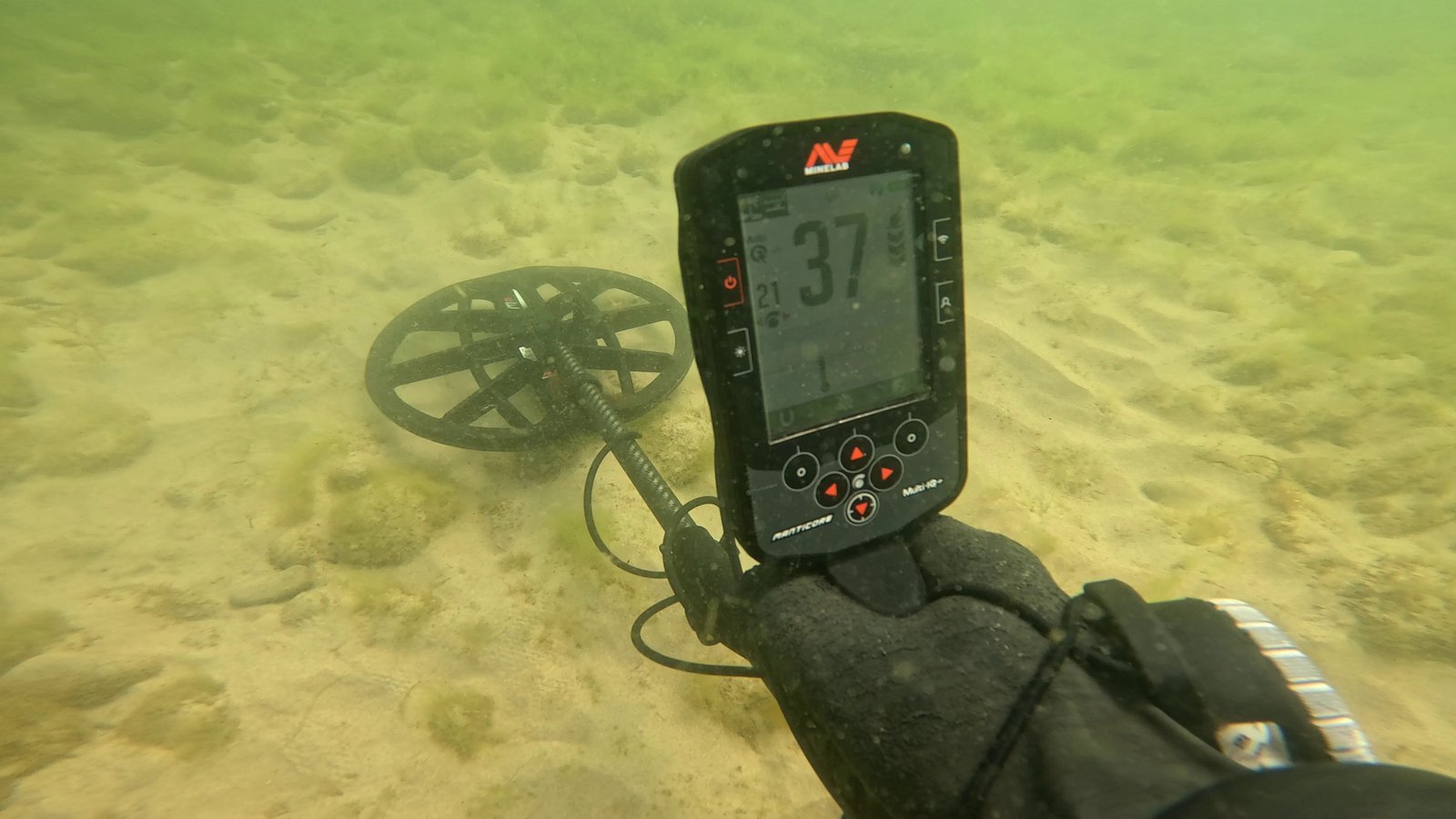
The figure 37 on the Minelab Manticore most often means a 5 złoty coin.
DETECTOR VS ROCKS AND SALT WATER
Another problem is the Baltic environment itself.
All metal detectors have problems with rocks and salt water. The device may have difficulty correctly recognizing signals, and in such conditions it won't always see an object the way we would like.
Therefore, choosing the right equipment and getting to know its capabilities well is of enormous importance here.
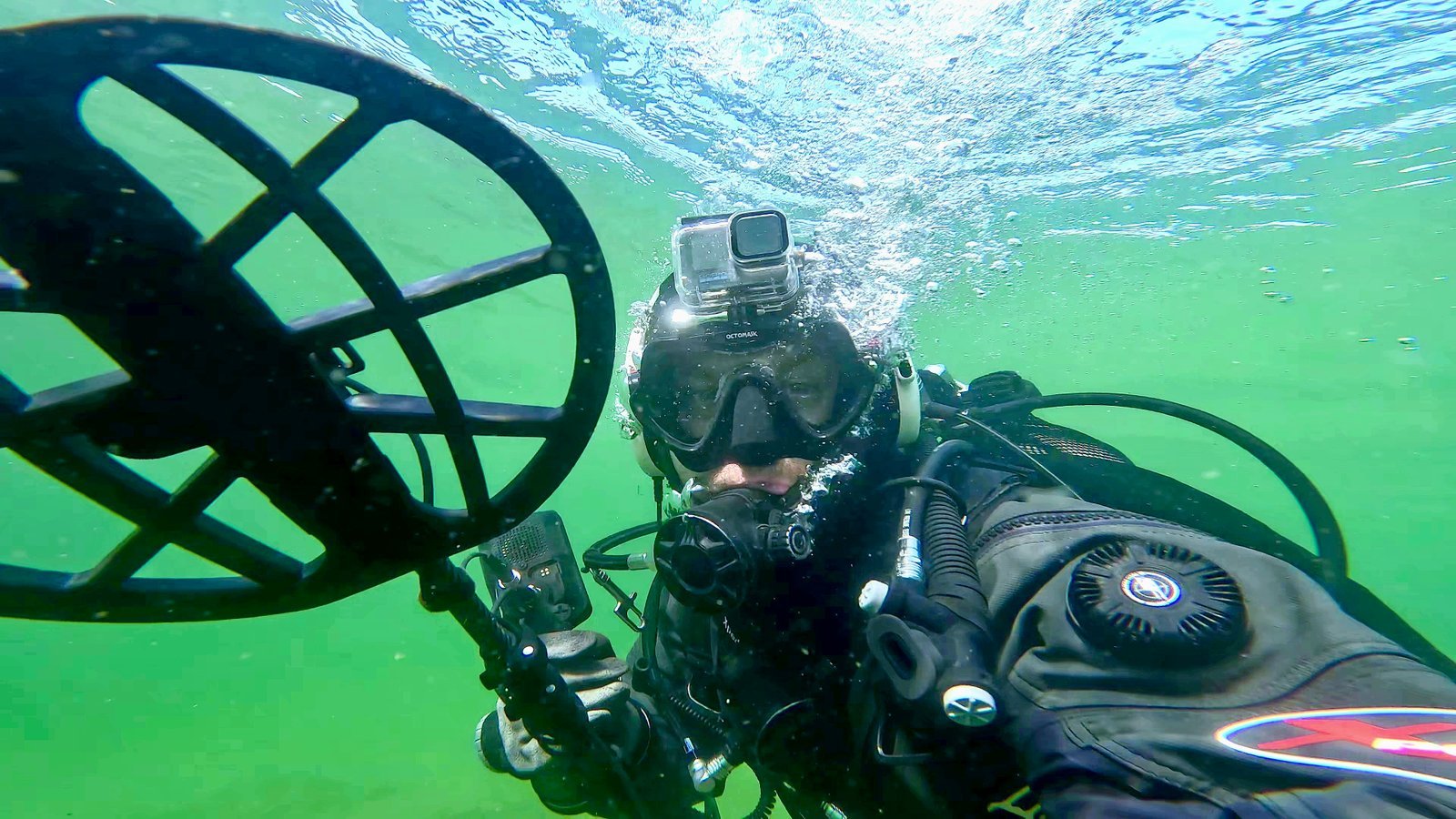
Searching with a detector can be monotonous. You need to be patient.
MINELAB MANTICORE
Over the years I have used many different detectors, but ultimately I decided on Minelab Manticore.
For me, it is the best metal detector for water on the market. Particularly useful during diving is the Audio Boostfeature, which allows you to amplify the sound in the headphones.
Underwater, the way information is conveyed through sound is extremely important, so the ability to amplify it additionally suits me very well.
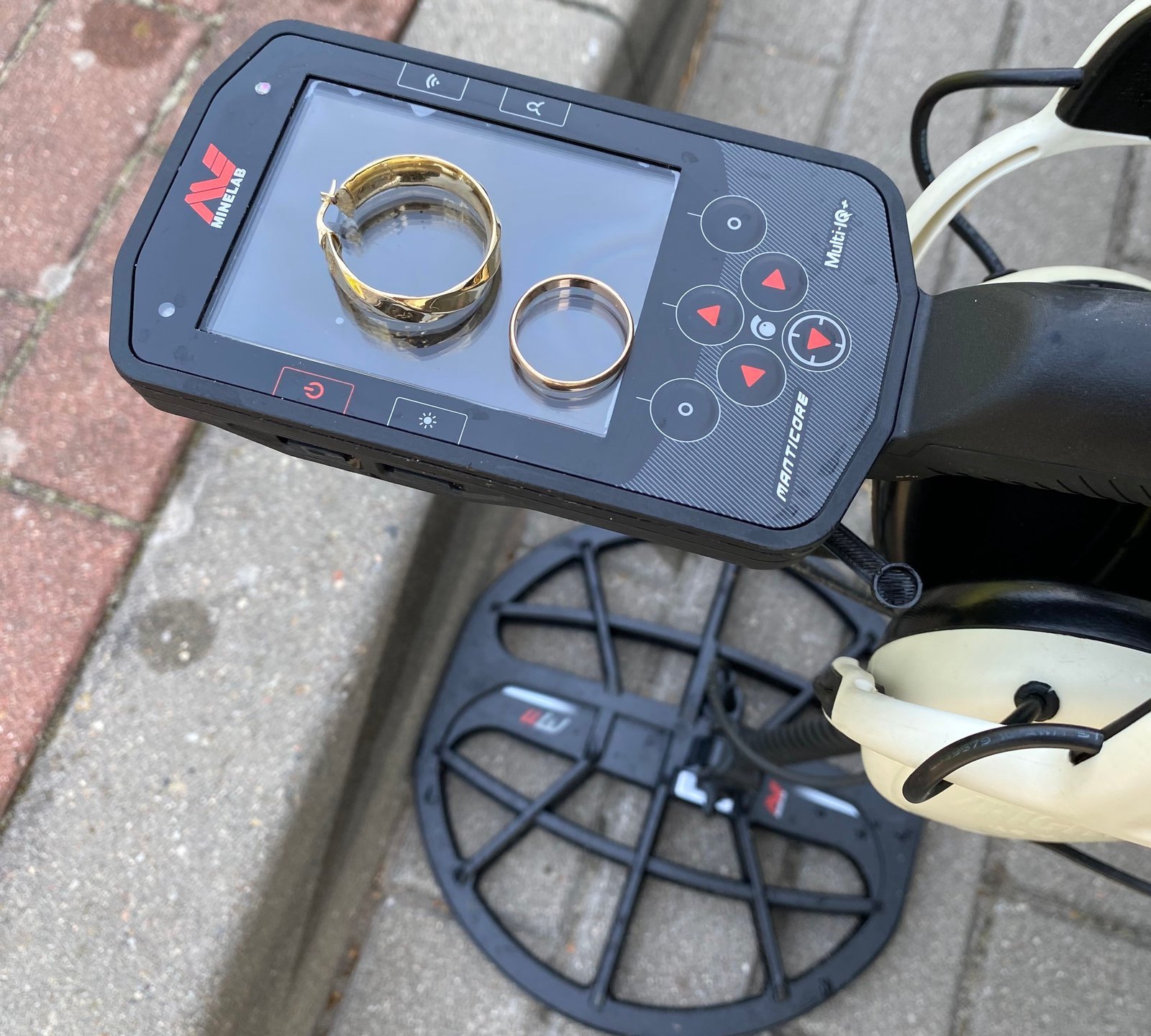
A gold ring and earring – decent result but without the WOW effect. I've had MUCH better diving sessions with a detector.
IS THERE REALLY THAT MUCH GOLD IN THE BALTIC?
Yes.
In the Baltic Sea you can find really a lot of gold jewelry, but this doesn't mean that you just need to enter the water with a detector and start pulling out gold after a while.
You need to know where to search, when to search and how to read the bottom. On top of that comes an enormous amount of time spent underwater.
During one dive I managed to find gold worth several thousand zlotys. Such results are possible, but they're built on years of experience and many, many hours spent searching.
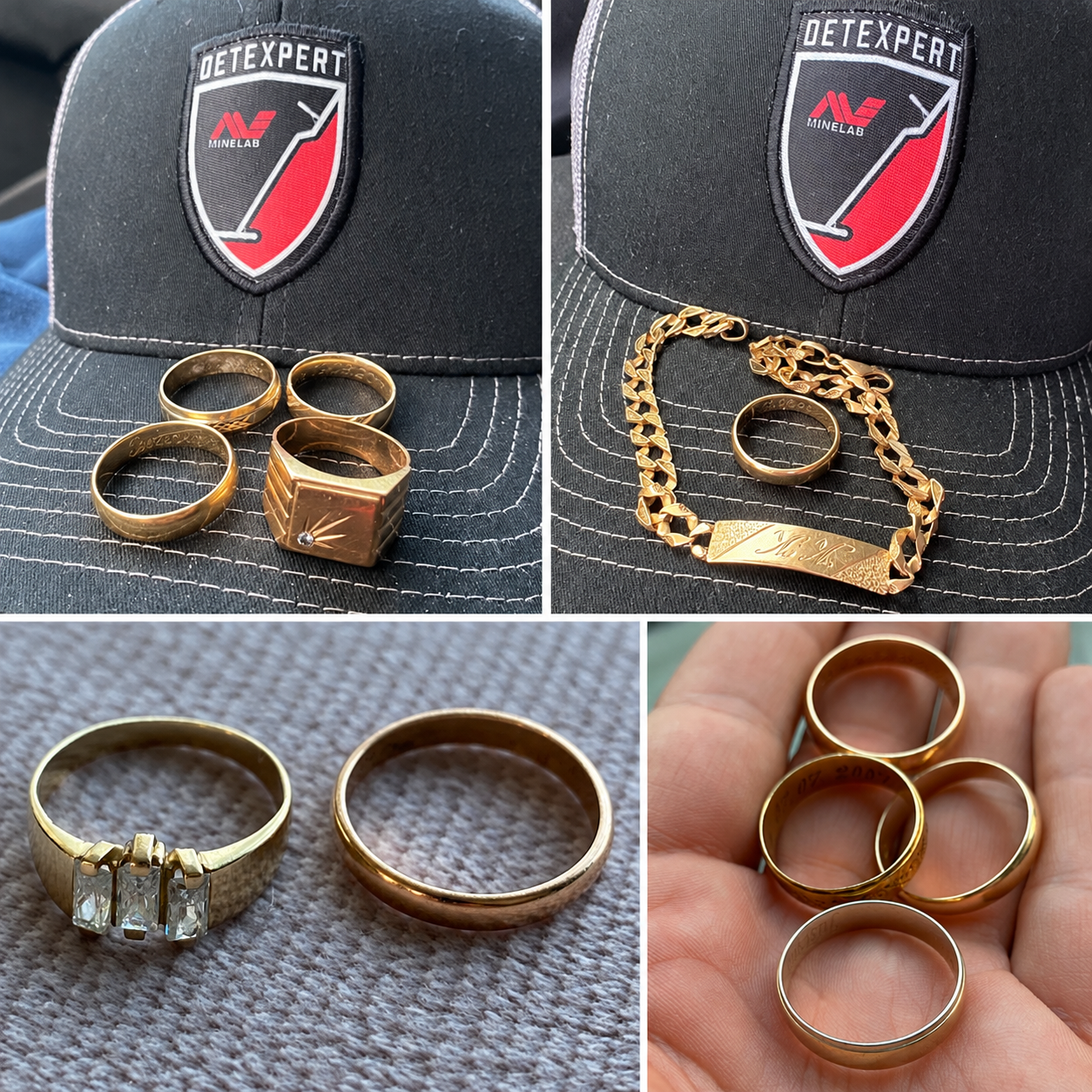
Each photo is from one dive. All from the same beach.
THE MOST COMMON GOLD FINDS
The most frequently found gold jewelry for me is men's rings. They are usually larger and heavier than women's rings, and additionally men enter the water more often, spend more time in it and feel the cooling of their hands more intensely. Fingers shrink then, and a loose, poorly fitted ring can simply slip off the finger and fall into the water.
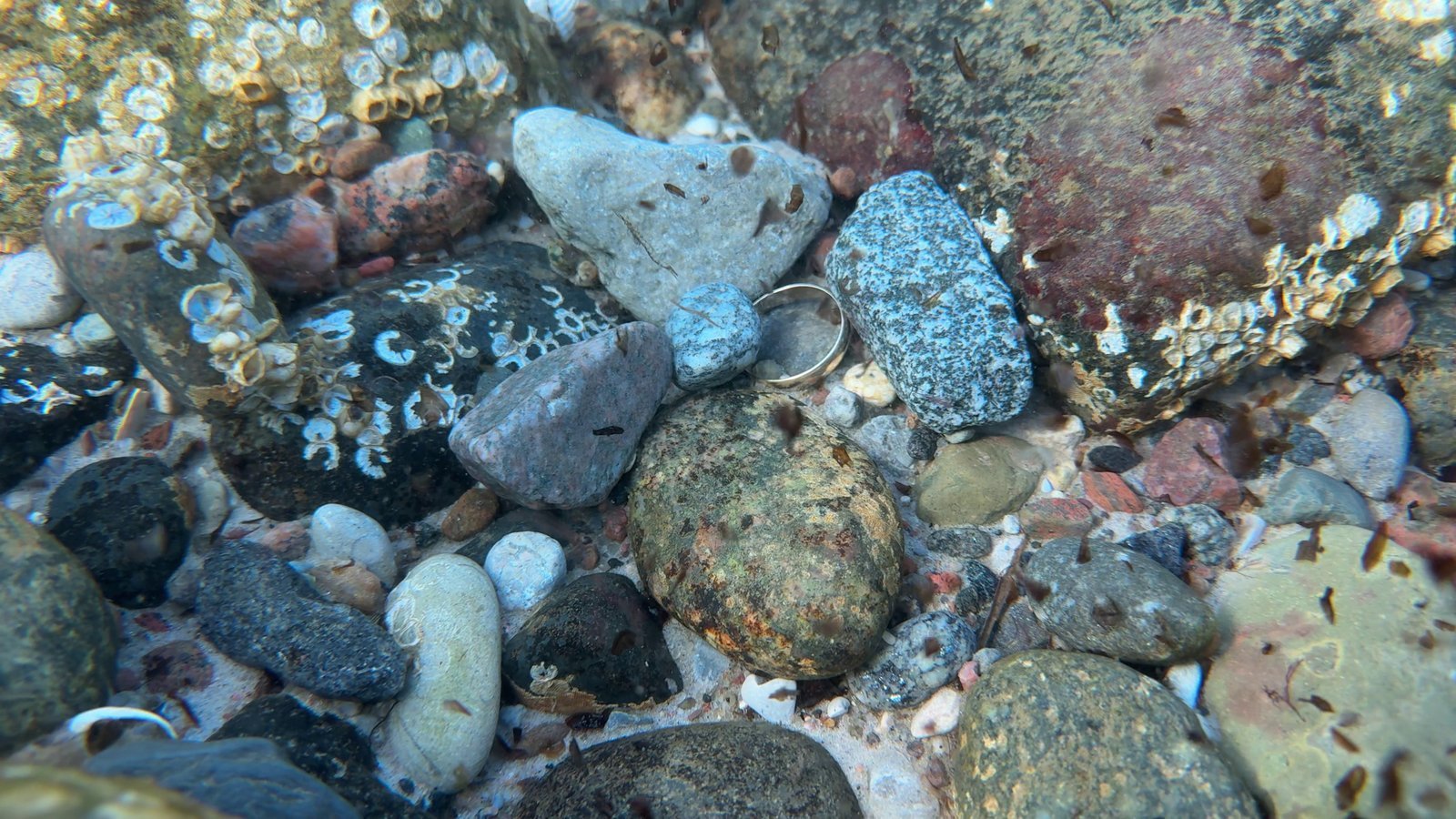
A gold ring on the bottom among stones. It lay exactly that way, right on top.
THIS IS NOT AN ACTIVITY FOR BEGINNERS
Let me emphasize once more: a beginner Open Water diver should not dive with a metal detector.
First you need to master the basics of diving very well – trim, buoyancy, equipment control and body control underwater. Only then do we add the detector.
Even more important is to not do it alone, and especially not in the Baltic. The sea is a demanding environment, and focusing on searching can cause a diver to pay less attention to what's happening with them and their equipment.
First become a good diver. Then learn to use a metal detector properly. Only then combine the two.
And that's when the real adventure with underwater treasure hunting begins.
Materials on this topic:
Support me on Suppi!
Support on Suppi →