
Chłopy Beach is an interesting place for metal detecting diving, especially for those searching for items lost by beachgoers. The hard, rocky bottom, small pier and rich life among the rocks mean that underwater you can find both interesting objects and crabs and shrimp.
Chłopy Beach – Rocky Bottom Full of Finds
Chłopy Beach is a place that is particularly well suited for metal detecting diving and searching for items lost by beachgoers. The hard, rocky bottom, small pier and numerous crevices mean that underwater you can find quite a lot of interesting objects, but you also need to be careful about what is hidden between the rocks.
HARD ROCKY BOTTOM
The biggest advantage of this place is the hard, rocky bottom. These are completely different conditions than on the typical sandy sections of the Baltic.
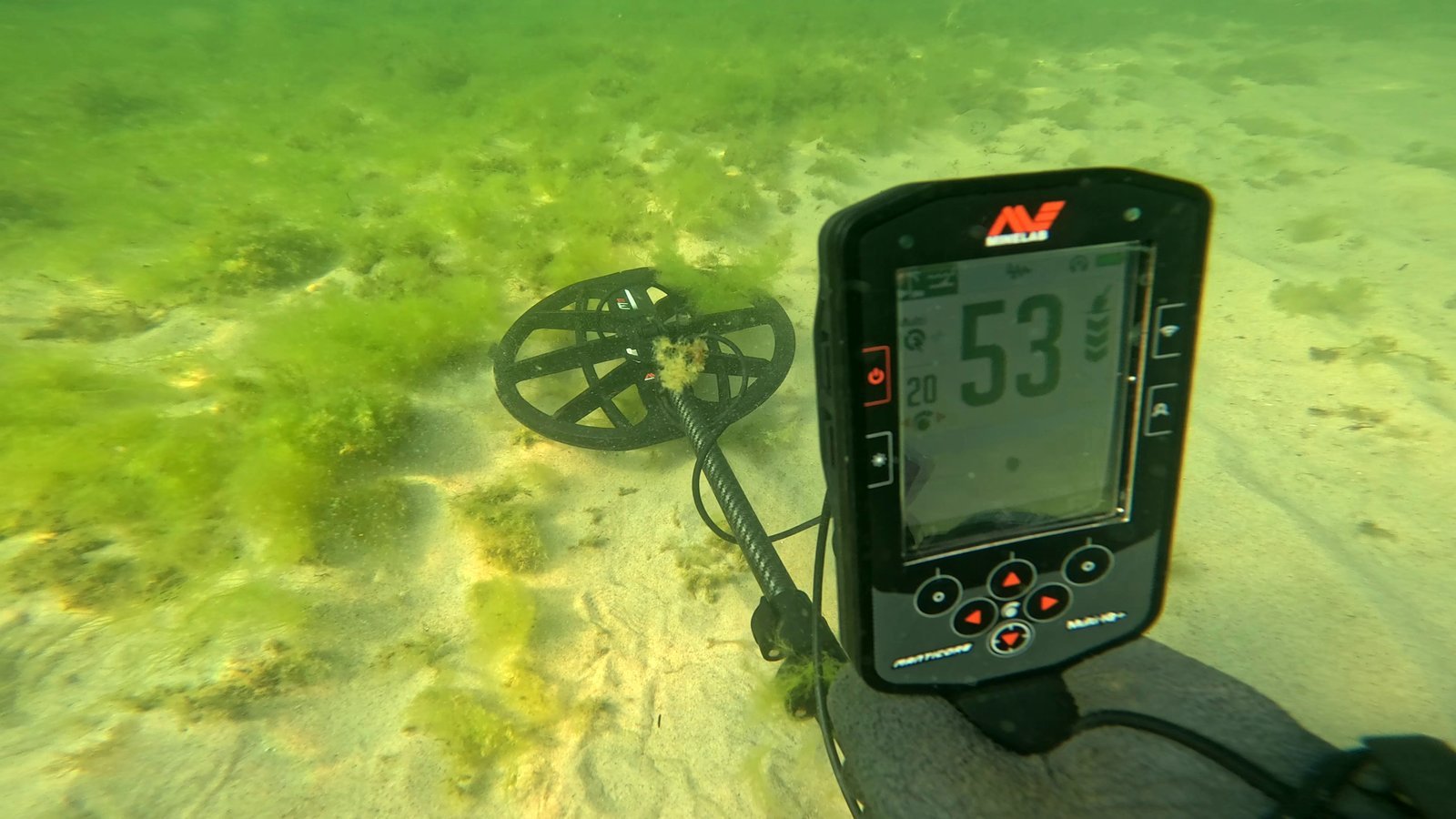
For divers using metal detectors, such a bottom is very interesting. Objects lost by people using the beach can get caught between the rocks, so you can conduct underwater searches for contemporary finds here.
SMALL PIER – A PLACE WORTH EXPLORING
In Chłopy there is also a small pier, which is one of the more interesting spots while diving.
Under the structure you can often find things that fell into the water before or were lost by people. The pier acts like a natural point of concentration for such objects, so it's worth carefully checking the surrounding area.
CRABS AND SHRIMP AMONG THE ROCKS
The rocky bottom is not just a good place for searches. Among the rocks live quite a few underwater creatures.
You can mainly encounter crabs and shrimp, which use the rocks as shelter.
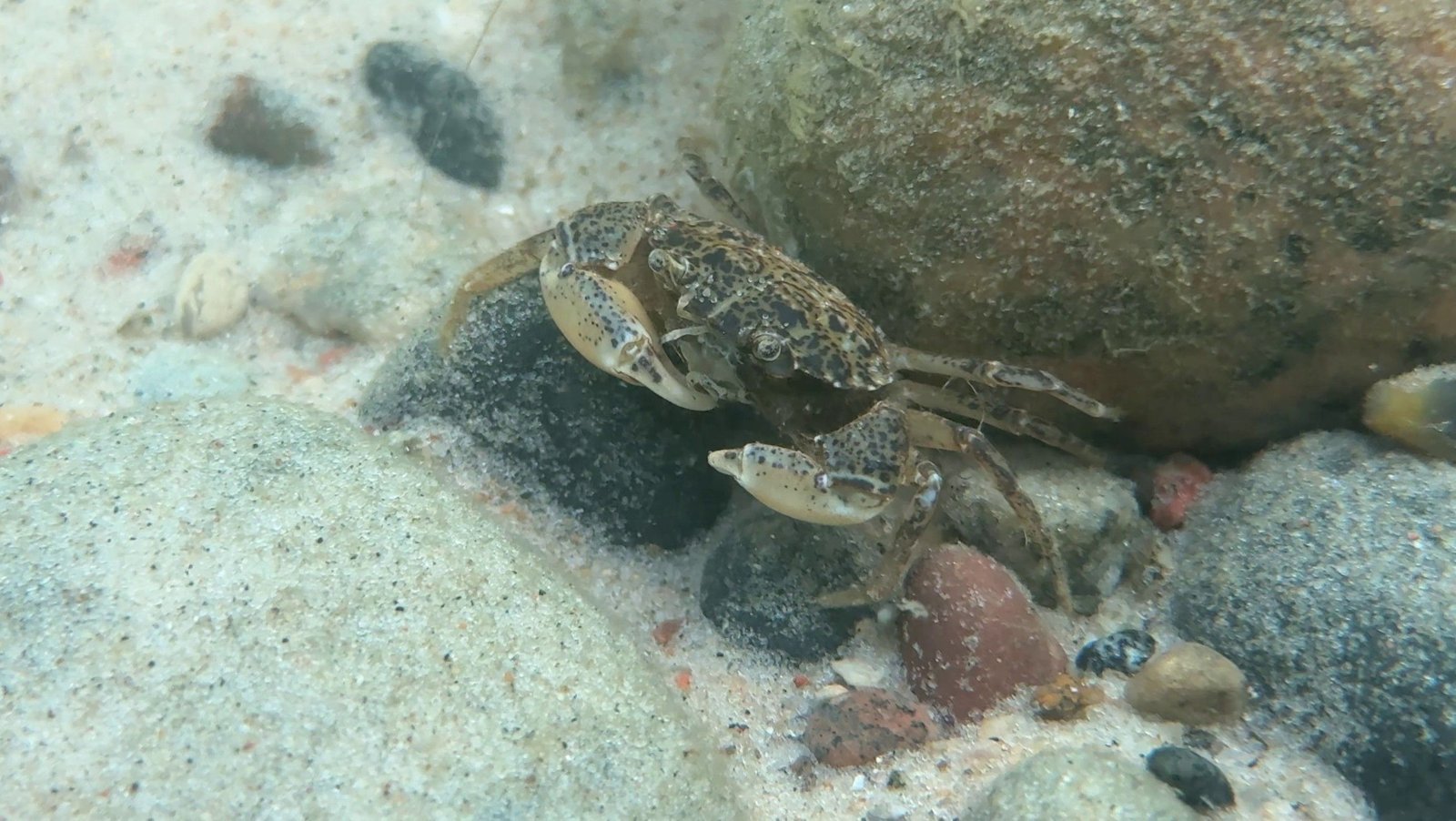
A little crab among the rocks. I like filming them.
UNEXPLODED ORDNANCE ON THE BOTTOM
While diving you must also remember that the Baltic can still hide dangerous remnants from the past.
In Chłopy I found an artillery shell. The find was reported to the appropriate authorities and safely removed.
This is a good example of why you should not touch or move objects during underwater searches if you are not sure of their origin.
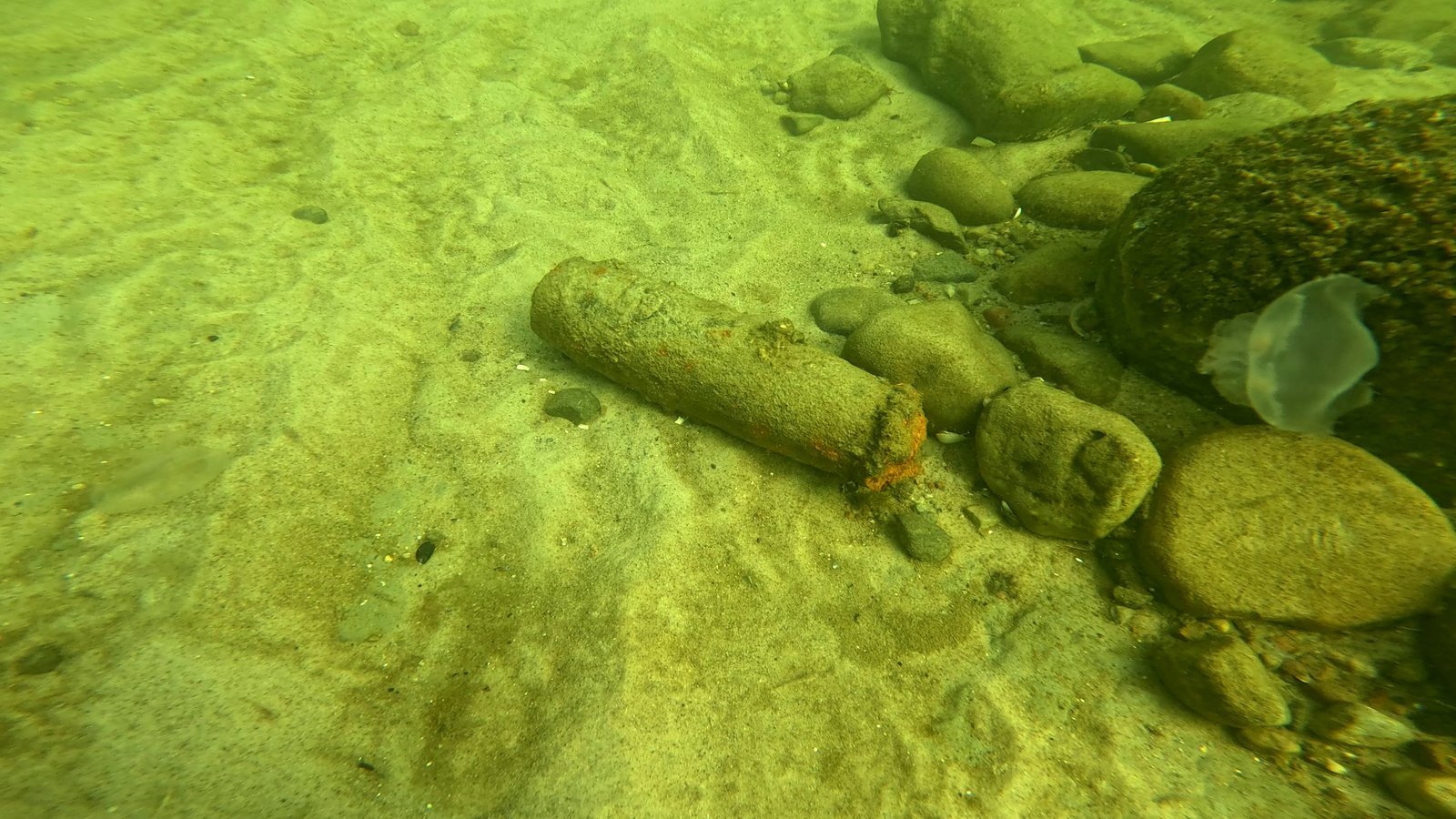
As you can see, the shell had a crushed nose from the impact. Very dangerous.
PARKING AND ACCESS PROBLEMS
The place itself is interesting, but it also has its downsides. Finding convenient parking can be a problem, and getting to the water with full diving equipment is not the easiest either.
When diving with a metal detector, you have to bring additional equipment with you, so logistics can be more cumbersome here than diving itself.
FISHERMEN AND FISH SCRAPS IN THE WATER
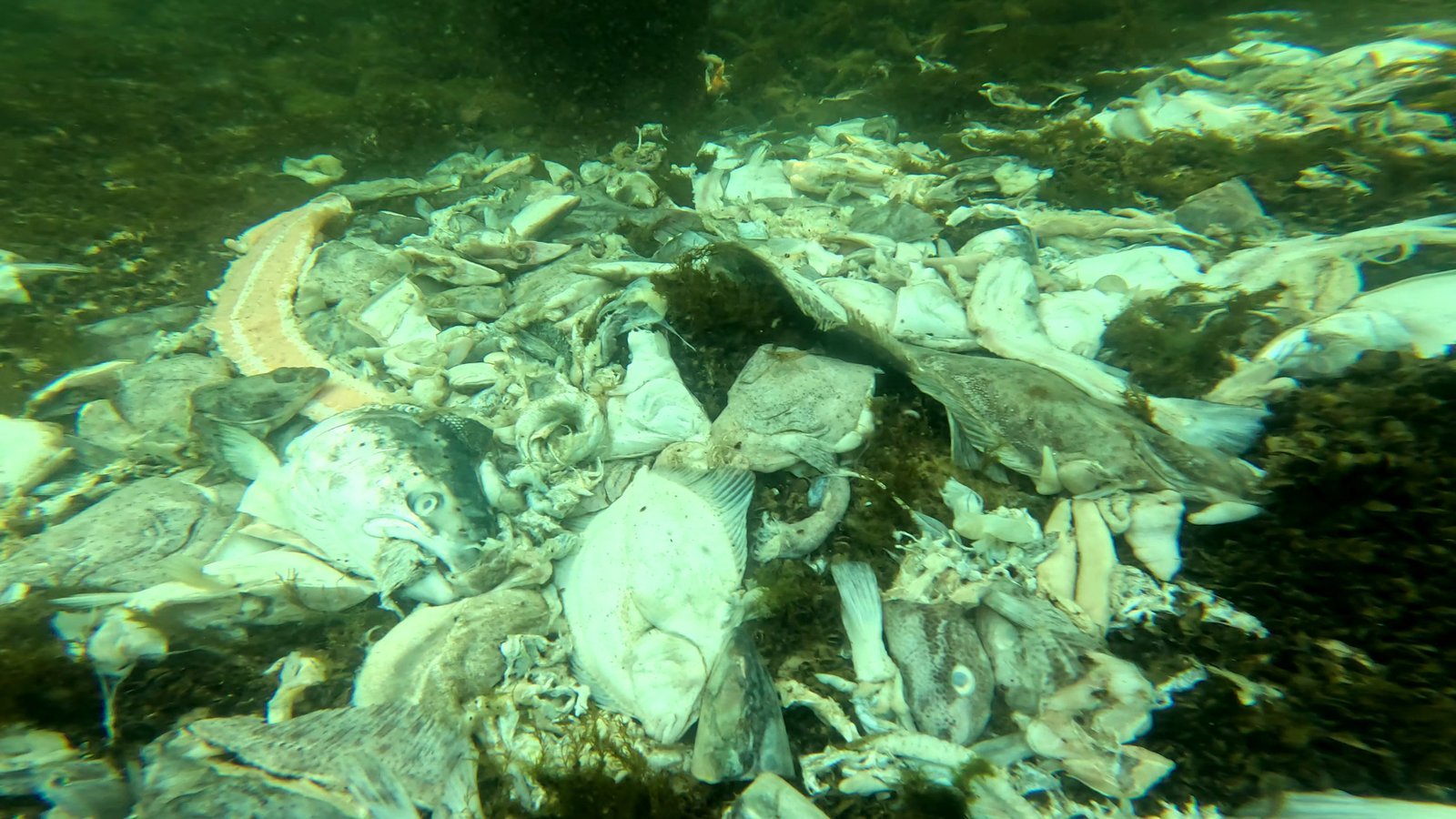
There is, however, one more problem that really stands out – the practice of fishermen dumping fish scraps into the water.
Scraps are dumped both from boats moored close to the beach and from the pier itself. This is a highly controversial practice, especially since right next to it, there is a guarded swimming beach during the summer season, and the water is full of people.
It is hard to consider such behaviour a good example of using a space that is simultaneously used by fishermen, divers, beachgoers and swimmers.
CHŁOPY FROM A DIVER'S PERSPECTIVE
The beach at Chłopy has several different faces. The hard, rocky bottom provides good conditions for metal detector searches, the areas around the small pier can hide things lost by beachgoers, and crabs and shrimp can be found between the rocks.
At the same time, you have to remember about unexploded ordnance, more difficult logistics, and the problem of fish waste ending up in the water.
This place shows that beneath the surface of the Baltic Sea you can find both interesting contemporary finds and marine life, as well as things we definitely would not want to encounter while diving.
Materials from Chłopy:
Support me on Suppi!
Support on Suppi →