
Fishing has a cost that is often unseen. Not only fish get caught in the nets, but also birds, seals, and porpoises. On top of that, there is increasing pressure on the wild resources of our waters.
Fishing and Bycatch – The Hidden Cost
Fishing is a commercial activity, but its true cost goes beyond the fish pulled from the water. Nets also trap birds, seals, porpoises, and other organisms, many of which die unnecessarily.
INLAND AND MARINE FISHERIES
Fishing in Poland must be considered in two distinct areas:
- inland fisheries
- marine fisheries
In both cases, we are dealing with the exploitation of wild resources.
Based on what I have seen underwater over the years, I believe that the current model of fishing in Poland requires serious change.
This is not about shutting down the entire industry overnight.
It’s about asking whether the way we currently use our fish resources still makes sense.
POLES EAT FISH, BUT MOSTLY NOT FROM POLISH WATERS
About 80% of the fish consumed in Poland is imported.
This means that Polish fisheries play a relatively small role in supplying the fish that end up on our tables.
This is especially absurd when it comes to the Baltic Sea.
In fry shops and restaurants, you can find labels suggesting that we are eating local Baltic fish, while very often they have little to do with the Baltic Sea.
What looks like “Baltic fish” is not always actually from the Baltic.
There have even been reports on this topic, including in the program “Uwaga!”.
THE BALTIC IS NOT INEXHAUSTIBLE
The best example is the Baltic cod.
Its population has practically collapsed..
Currently, there is a ban on cod fishing, except for a small amount of bycatch.
This shows that wild resources cannot be exploited indefinitely.
If fish populations decline to the point where fishing must be completely banned, it means that the previous resource management simply failed.
In reality, among the few commonly available fish actually from the Baltic today are mainly herring and flounder..
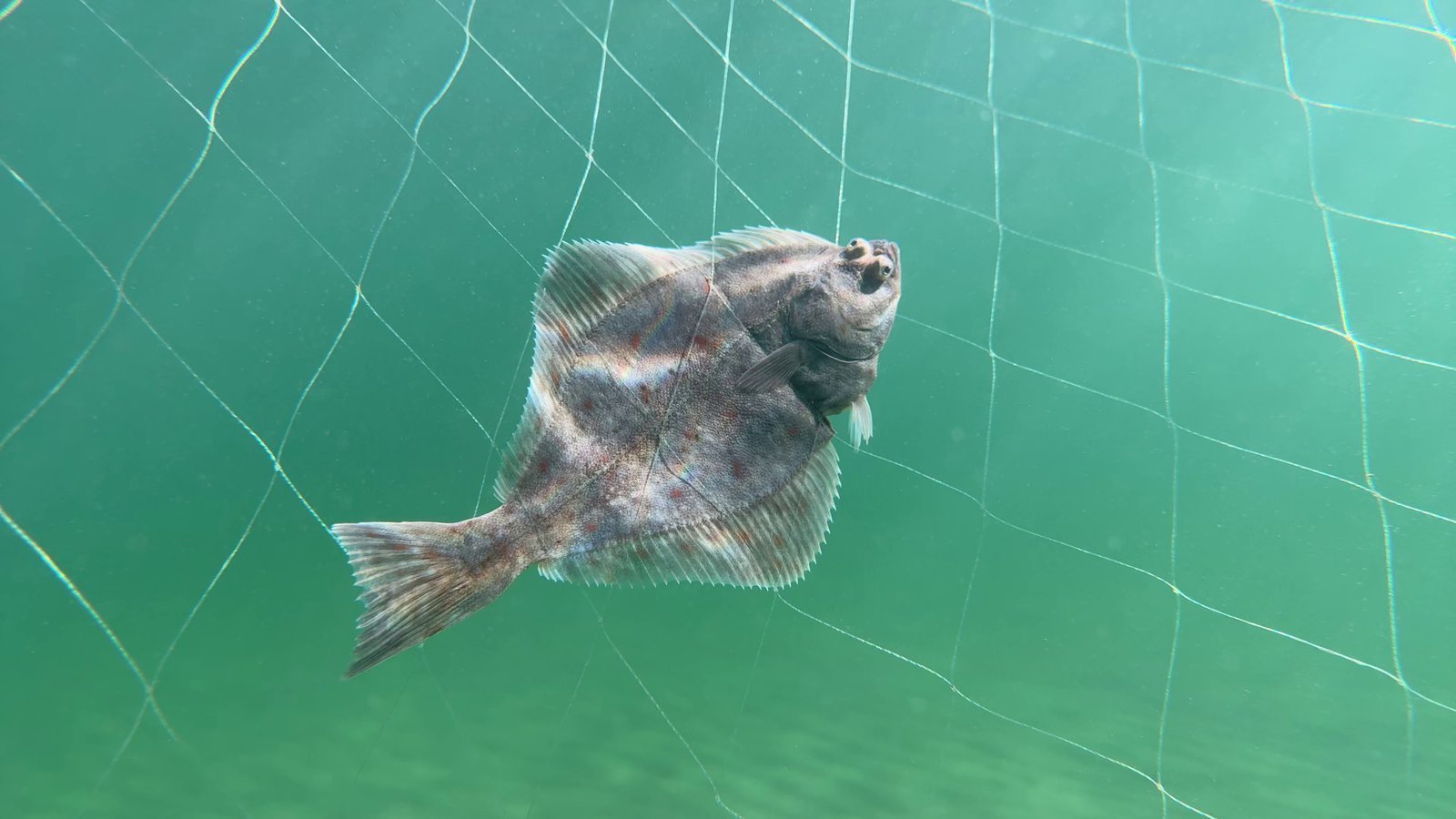
Flounder, one of the few fish left in the Baltic.
WHAT ABOUT THE ANIMALS NO ONE WANTED TO CATCH?
Here the problem of bycatch.
arises.
The net is set to catch a specific fish.
But there is no “only this species” button in the sea.
Anything that crosses its path can get caught in the net.
Bird. Seal. Porpoise. Invertebrate. Jellyfish.
And that is why bycatch is one of the biggest problems related to fishing.
THOUSANDS OF BIRDS DIE IN NETS According to data from the Fisheries Department of the Ministry of Agriculture, over.
21,000 birds die annually in the Polish part of the Baltic Sea.
This is the highest number among all Baltic countries.
And in my opinion, even this number may be underestimated.
Why?
Because fishermen are required to report bycatch, but some cases may go unreported due to fear of consequences.
Among the victims are also species under strict protection.
This raises the question:
how many animals really die in nets that no one will ever know about?
I myself had the chance to see what bycatch looks like in practice.
In the town of Gąski on the Baltic coast, I checked three fishing nets.
Inside I found:
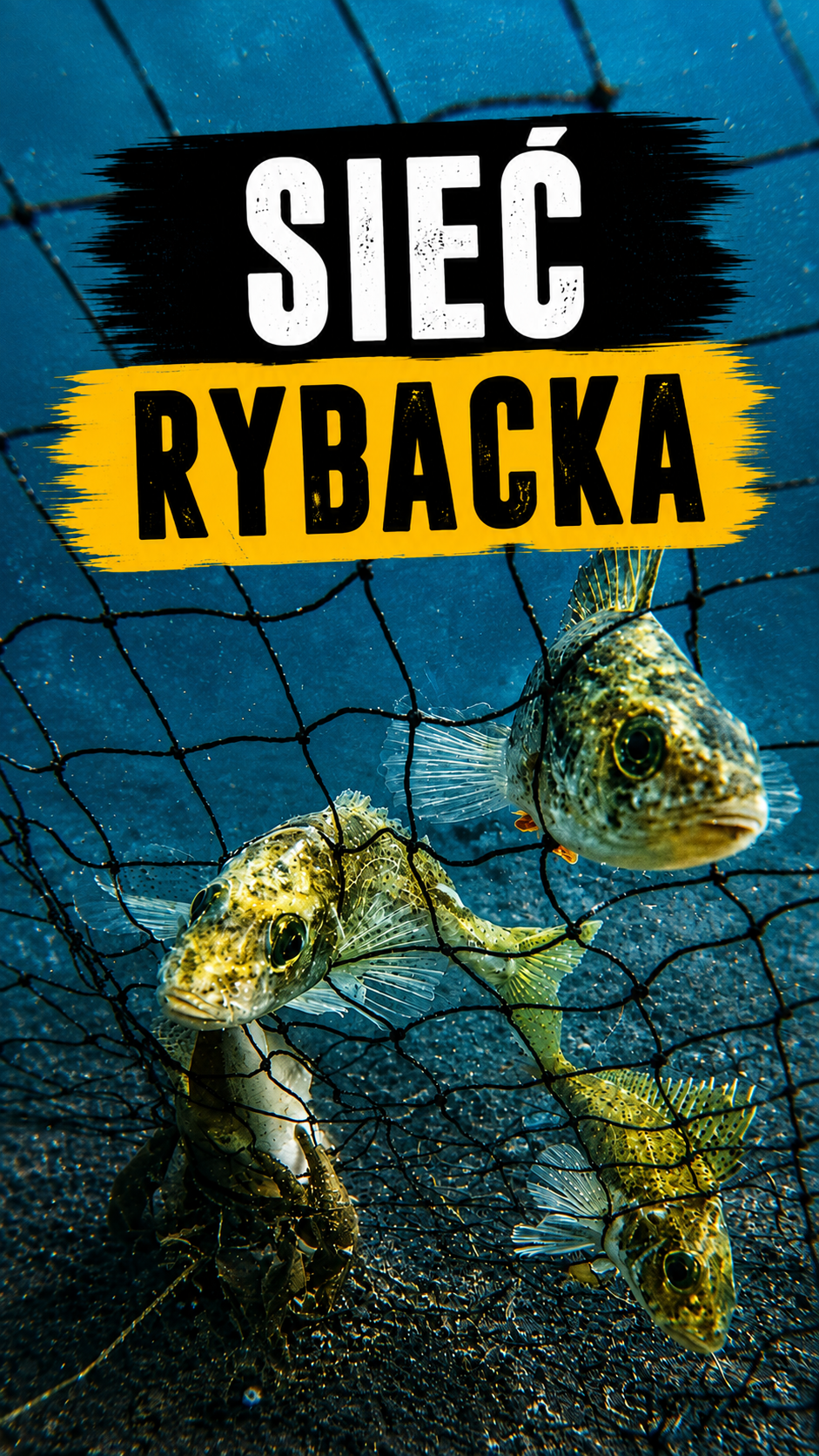
- 6 undersized flounders
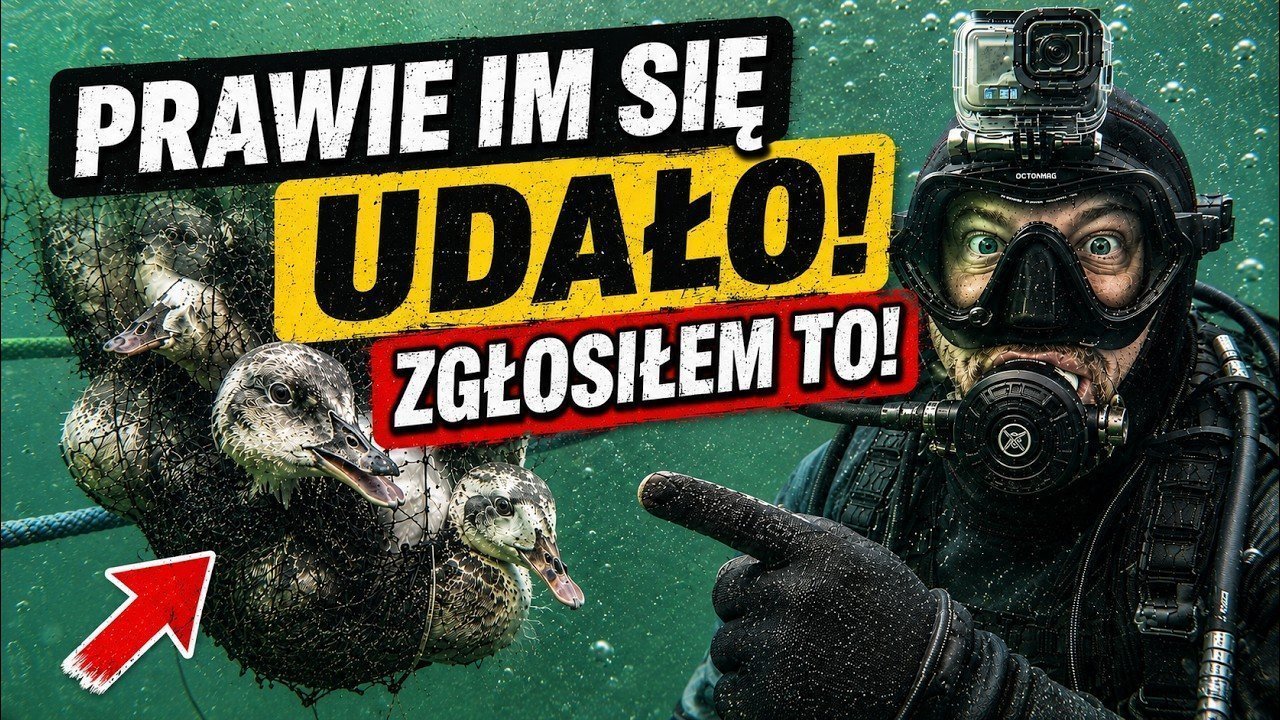
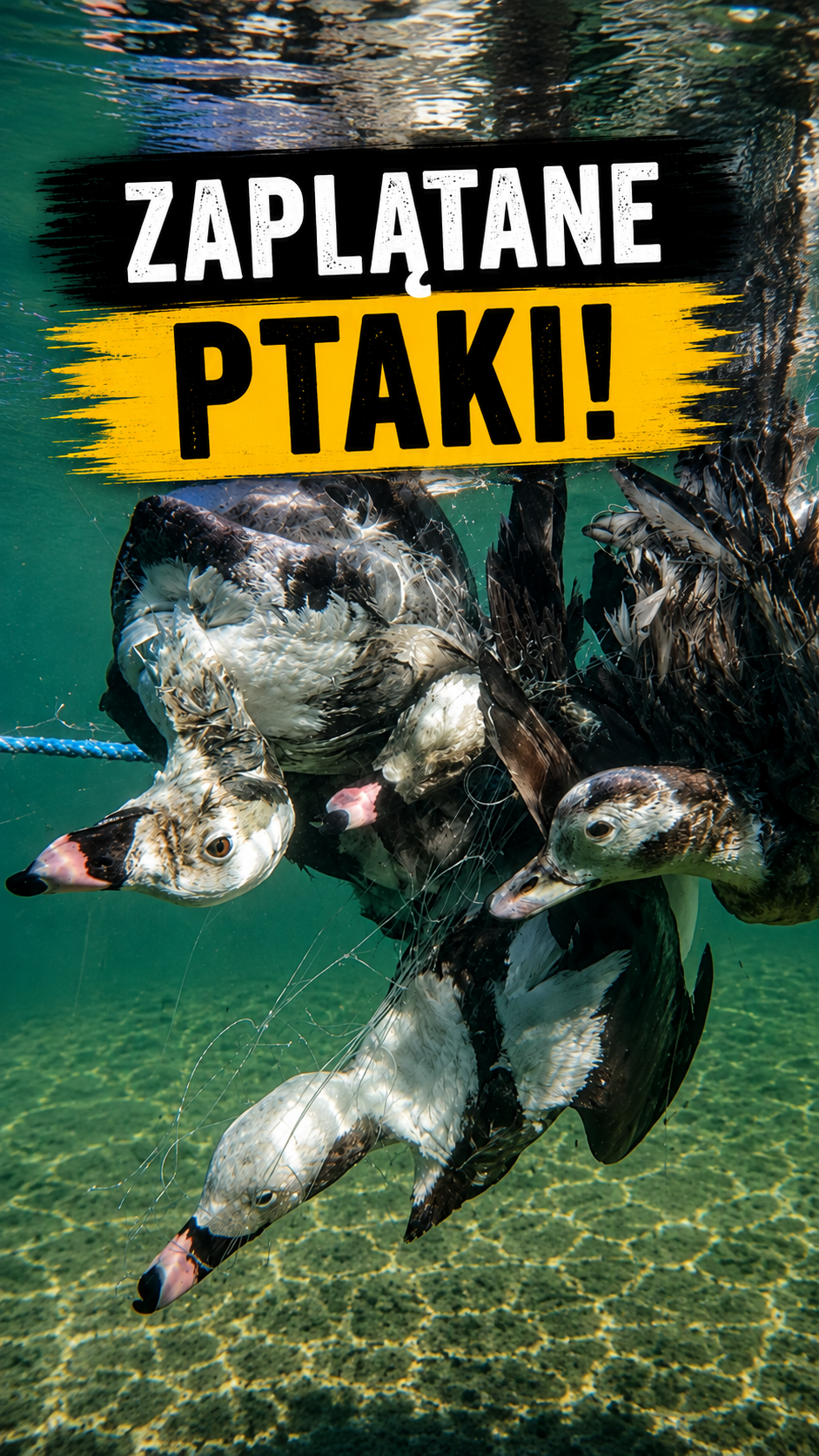
- 6 dead common scoters – sea ducks under strict protection
So in three nets, there were 6 protected birdsand at the same time, there wasn’t a single fish that could be legally taken.
This is bycatch.
An animal dies even though it was never the target of the catch.
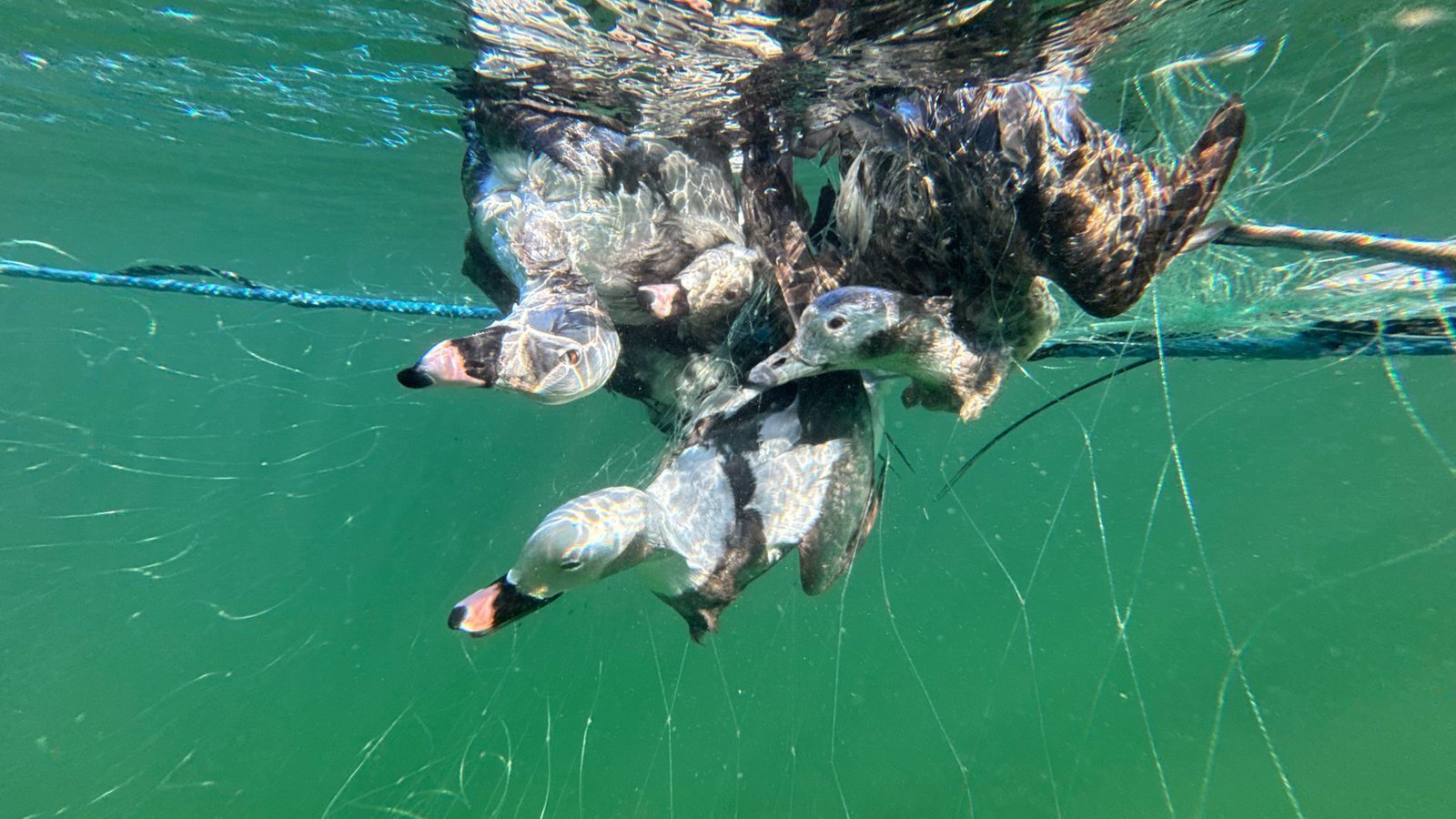
Killed by fishermen, common scoters are sea ducks under strict protection. Their population is sharply declining.
IT’S NOT JUST BIRDS
Bycatch is a much broader problem.
The nets can also trap:
- seals
- harbour porpoises
- invertebrates
- jellyfish
- other marine organisms
The problem is that the net doesn’t recognize species.
It doesn’t know if it caught a protected animal, a young fish, or a species the fisherman didn’t want at all.
The net just works.
HUMANS DECIDE WHO CAN BE A NUISANCE
There is another aspect of this problem that particularly outrages me.
Some fishermen treat animals such as cormorants or seals as competition.
And it’s hard not to get the impression that in this approach, nature becomes an obstacle to doing business.
Humans arrogate the right to decide which animal should live and which can die because it interferes with making money.
As if the sea belonged to us.
But a seal is not a “pest” just because it eats fish.
A cormorant is not guilty for wanting to eat too.
They are simply part of this ecosystem.
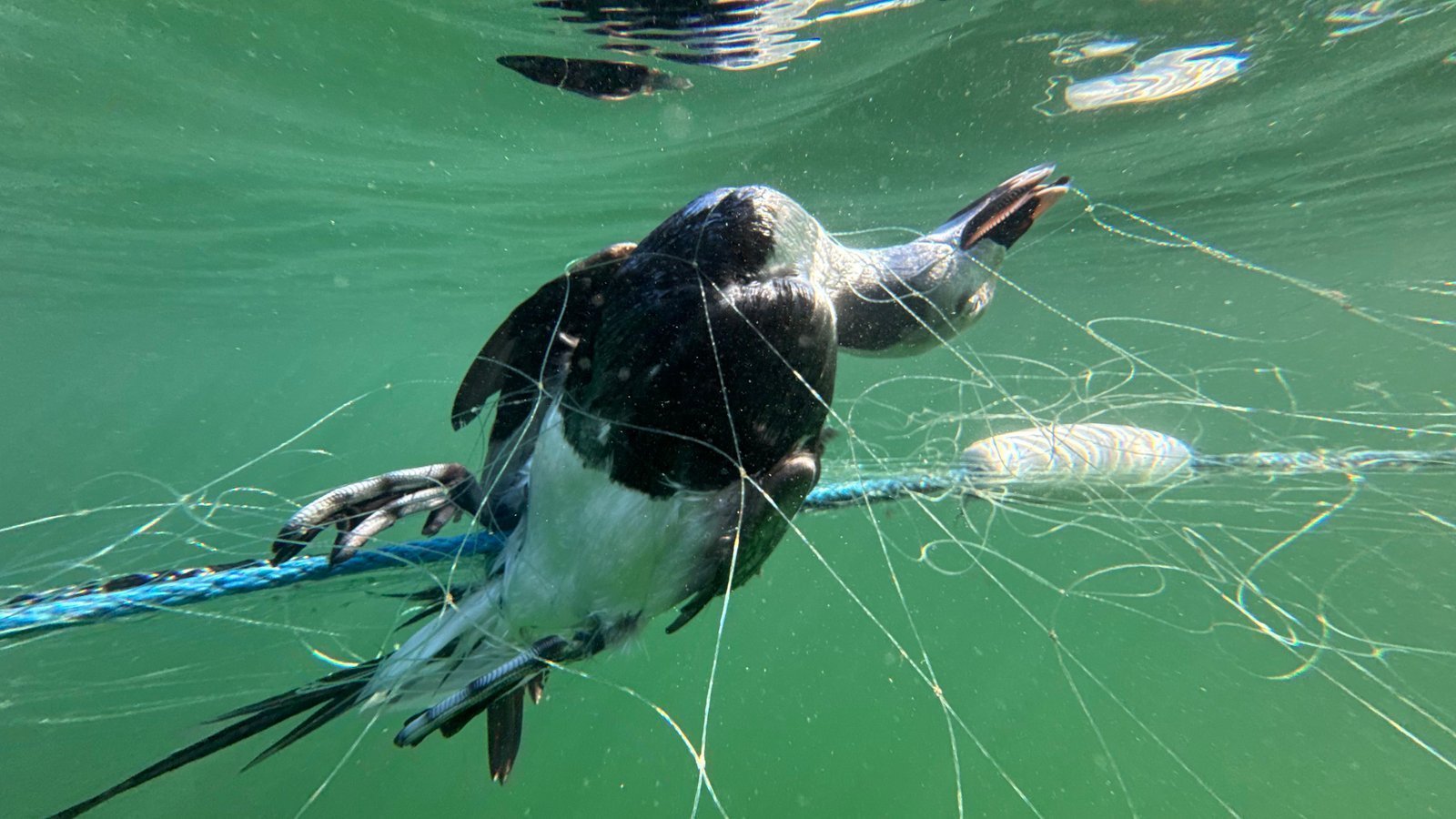
Nets are set from the surface all the way to the bottom, birds have no chance.
WHAT CAN BE CHANGED?
Bycatch is not an unsolvable problem.
Fishing can be limited in places where birds winter.
Minimum distances for setting nets from the shore can be established.
It is also possible to restrict or ban the use of gillnets in particularly sensitive areas.
It is these thin, practically invisible nets that are especially dangerous for birds and other animals.
The goal is not to ban everything everywhere.
The goal is to ensure that fishing does not happen at the expense of the entire ecosystem.
IS IT EVEN WORTH IT?
And here we come to economics.
Fishing currently has marginal significance for the Polish economy.
About 80% of the fish consumed in Poland is imported.
The fisheries and aquaculture sector has a small share in Poland’s GDP, and the industry employs relatively few people.
At the same time, a significant part of the sector benefits from subsidies and public support.
And a very simple question must be asked:
does it make sense to maintain a model that causes serious environmental damage if its economic importance is marginal?
INLAND FISHERIES
I have an even stronger opinion about inland fisheries.
In my opinion, it should not operate in its current form.
If we want to produce fish, it can be done in a controlled way:
- fish farms,
- ponds,
- private fishing grounds.
There, the owner bears the costs of feeding, treatment, maintenance, and all infrastructure.
That is a normal business.
Raising fish is one thing, exploiting wild nature that belongs to the entire ecosystem is another.
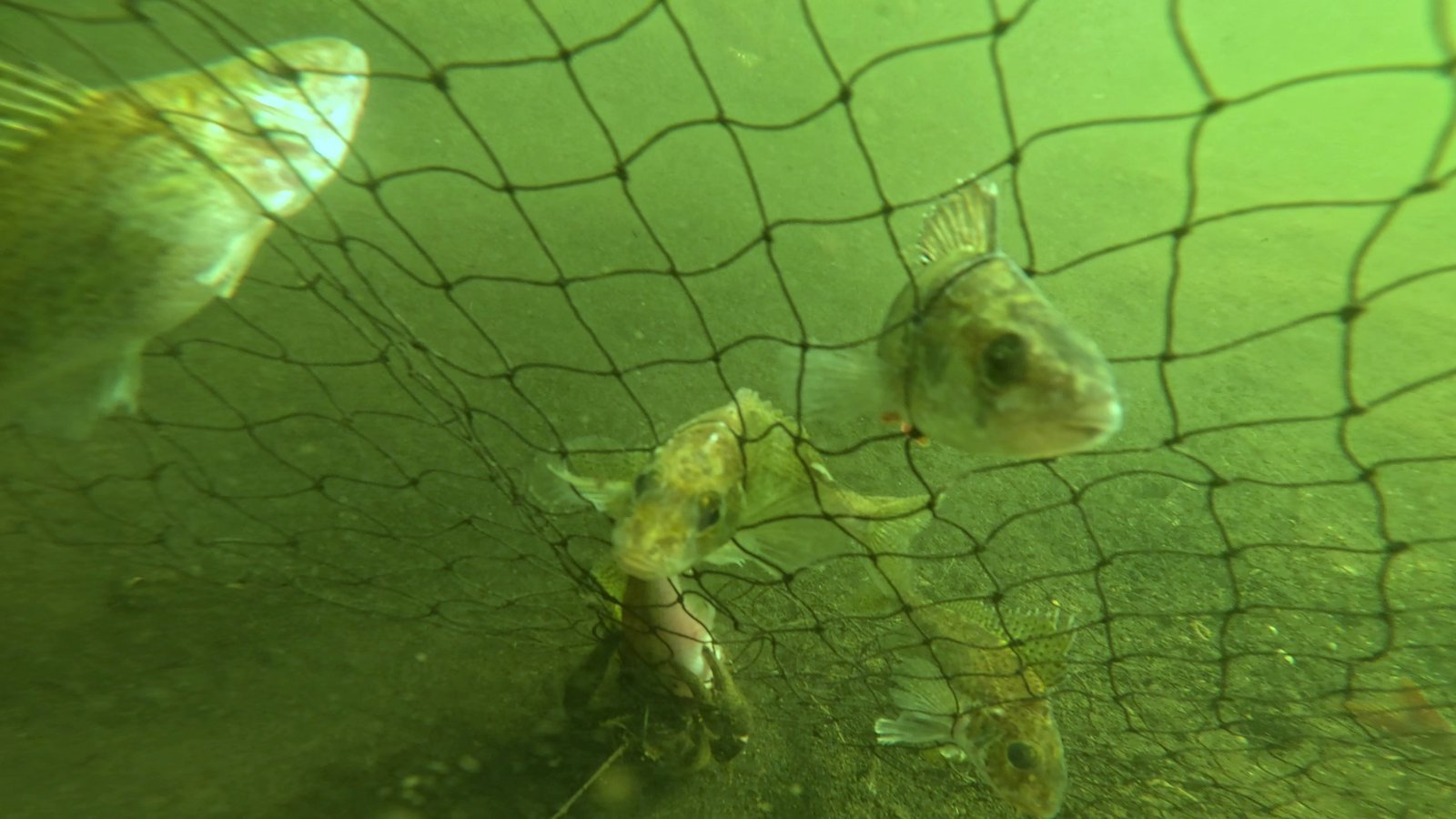
Undersized fish caught in fishing nets. Too small for consumption, they perish needlessly.
THIS IS NOT ABOUT SHUTTING DOWN THE INDUSTRY OVERNIGHT
I do not believe that the solution is to suddenly put all fishermen out of work.
If we want to change the current model, it should be a process spread over years.
Possible solutions include:
- not issuing new fishing licenses,
- gradually reducing the scale of fishing,
- significant funds for retraining fishermen who wish to leave the industry.
It's not about punishing people for doing their job. It's about changing a system that allows the environment to be overexploited.
FISHERMEN CAN BE PART OF THE SOLUTION
Paradoxically, people who have worked at sea for years have the knowledge, experience, boats, and equipment that can also be used for environmental protection.
A good example is removing ghost nets from the Baltic Sea.
Fishermen can use their experience and equipment to retrieve abandoned fishing gear.
It may seem a bit odd to pay fishermen to remove a problem that the industry has contributed to for years.
But if we focus solely on solving the problem, it is simply a practical use of people and equipment that already exist.
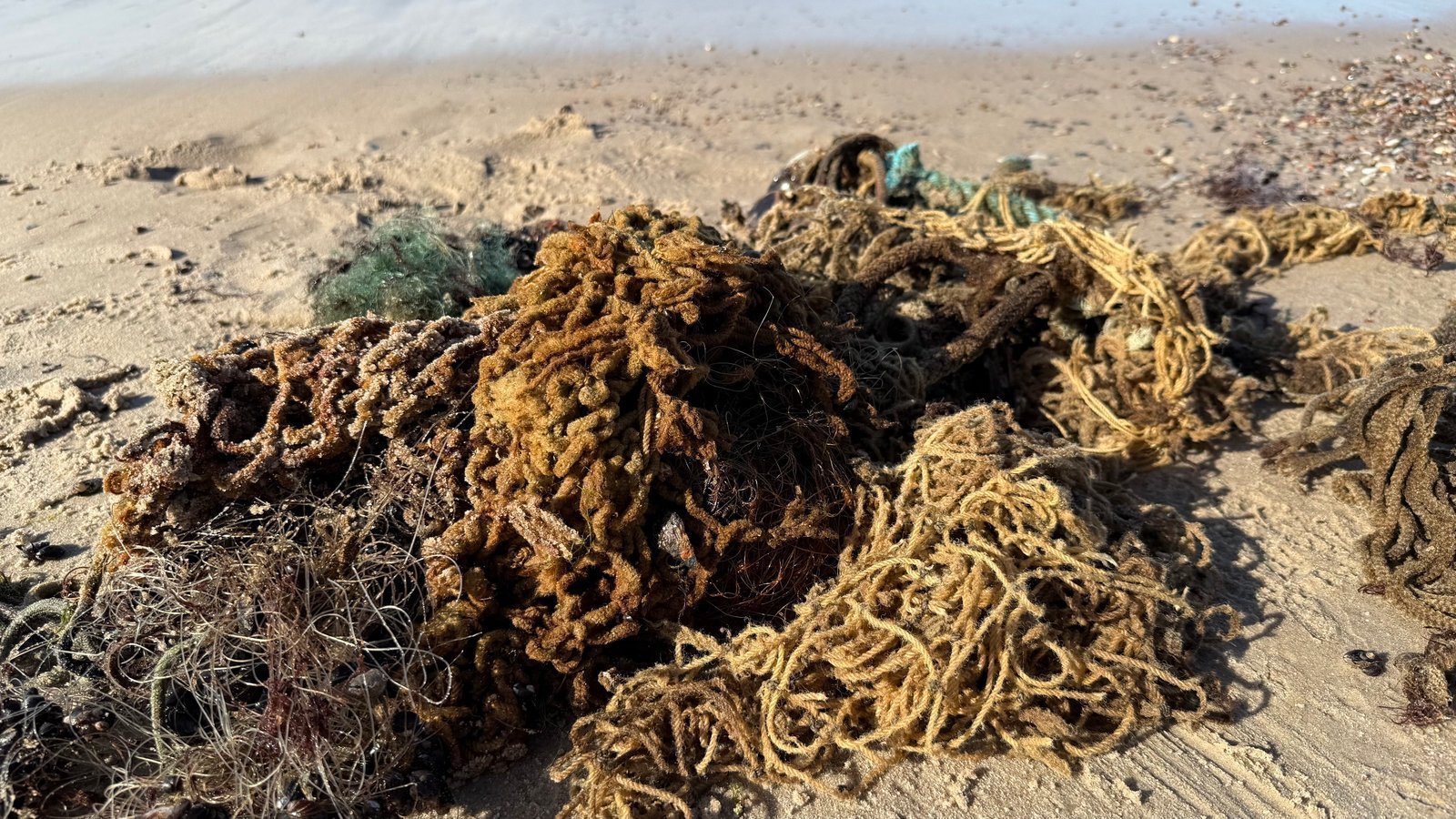
Ghost gear I removed from the Baltic Sea. Fishing destroys our sea on many levels.
FISHING CANNOT BE MORE IMPORTANT THAN THE SEA
Fish are part of the ecosystem.
Birds are part of the ecosystem.
Seals are part of the ecosystem.
Porpoises are part of the ecosystem.
The sea was not created for humans to extract as many fish as possible from it.
If we exploit resources faster than nature can replenish them, sooner or later we will be left with an empty Baltic Sea.
And then there will be nothing left to catch.
Fishing should be subordinated to ecosystem protection, not the other way around.
Fishing is also one of the sources of the ghost net problem – lost or abandoned nets remain in the water and can kill long after fishing has ended. You can read more about how they work and why they are so dangerous in the article: Ghost nets – an invisible trap that kills for years.
Materials on this topic:
Support me on Suppi!
Support on Suppi →