
Sewage enters Polish waters on a massive scale. Sometimes through illegal connections, sometimes through unemptied septic tanks – and all of this ultimately ends up in the environment around us all.
Sewage in Polish Waters – Pipes, Septic Tanks, and Illegal Discharges
Sewage enters Polish waters on a massive scale. Sometimes through illegal connections, sometimes through unemptied septic tanks – and all of this ultimately ends up in the environment around us all.
There are still places in Poland without sewage systems. In such cases, sewage should go into sealed tanks and be regularly emptied.
The problem arises when someone decides not to do this.
Instead of paying for septic tank emptying, there’s always a “simpler” solution.
A pipe to a ditch. A pipe to the stormwater drainage. Discharge into the ground. And sometimes directly into a lake.
That’s why this problem primarily requires monitoring.
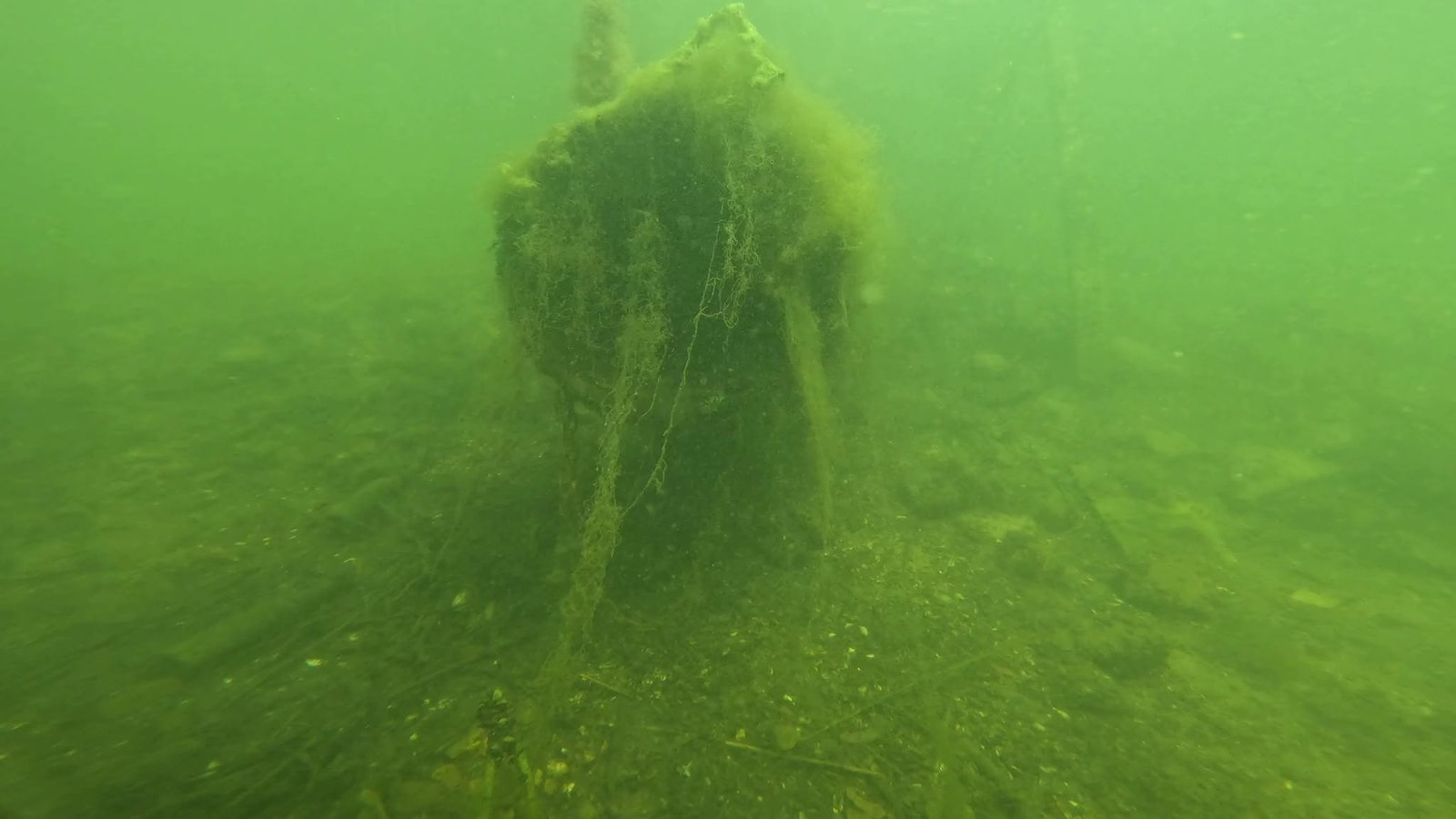
A legal pipe draining rainwater from city streets. Someone illegally connected their septic tank to it. Lake Drawsko.
SILENT PERMISSION FOR FILTH
Formally, municipalities are responsible for sewage management control.
In practice, the matter is much more complicated.
Mass inspections mean having to check on your own residents – often also voters. And when the problem is big, sometimes it’s easier to pretend everything is fine.
But sewage doesn’t disappear just because no one wants to check it.
If someone doesn’t empty their septic tank, its contents have to go somewhere.
If someone illegally connects their sewage to stormwater drainage, the sewage will also flow somewhere.
Ultimately, it ends up in the soil, rivers, or lakes.
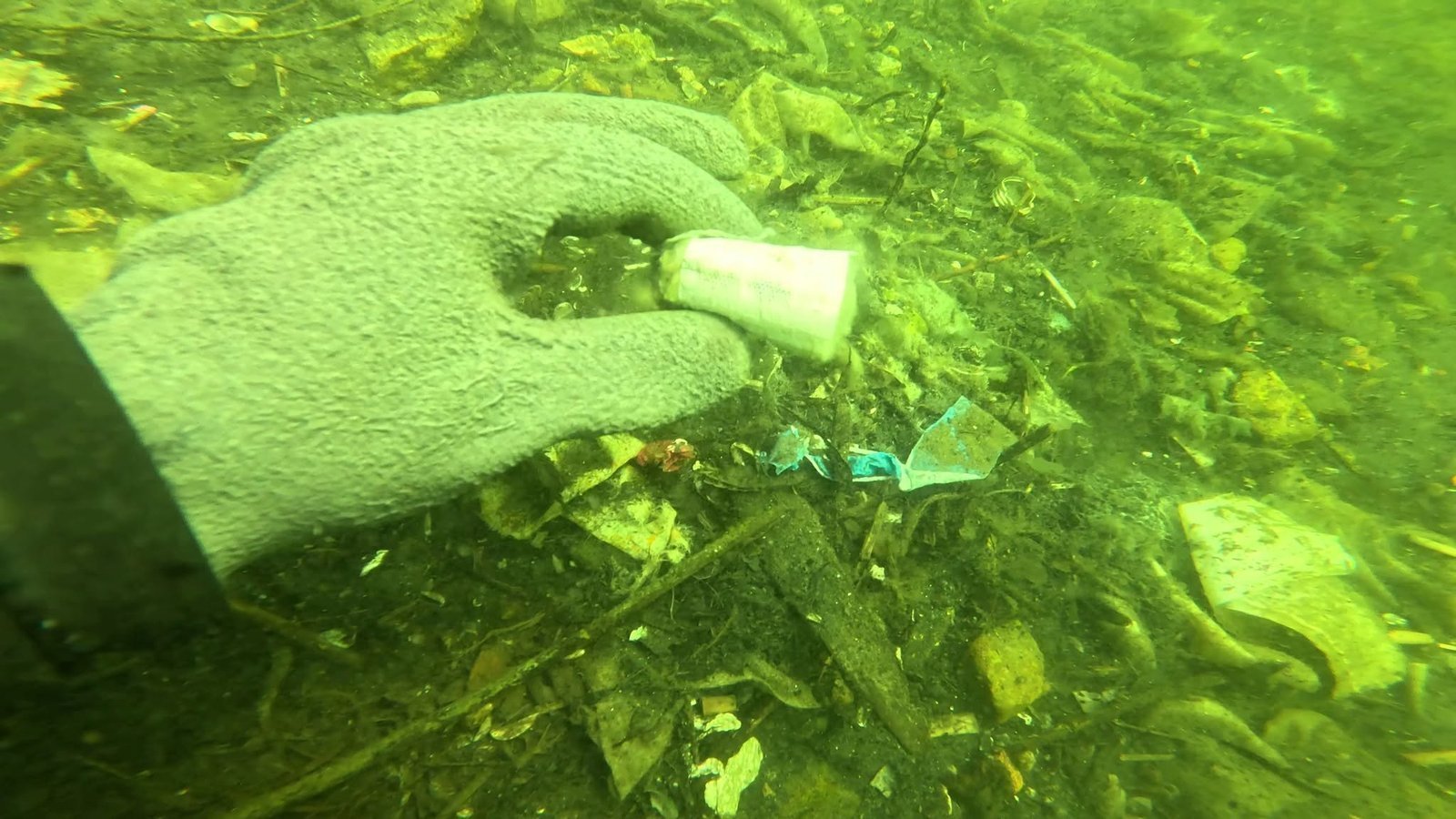
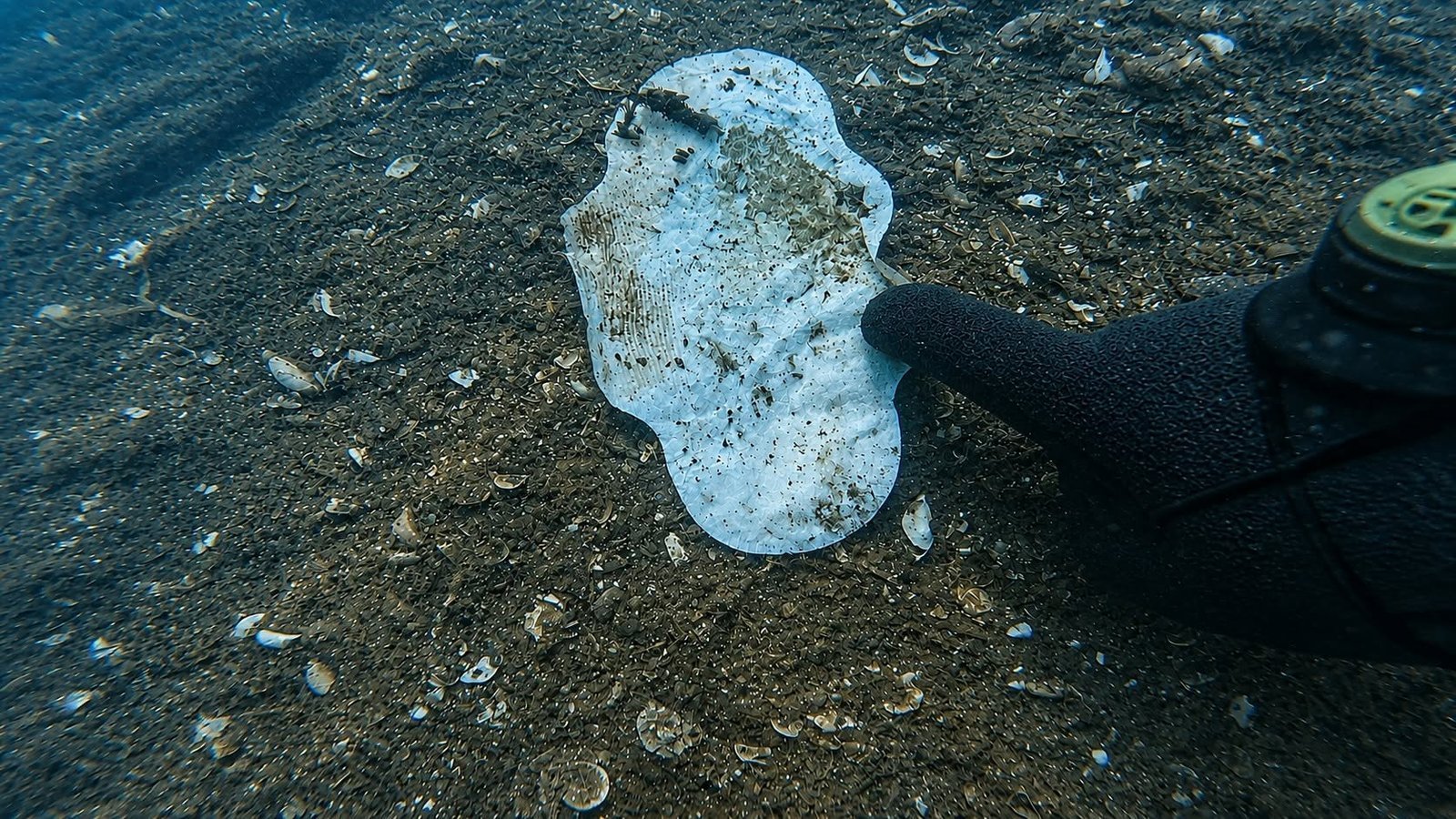
A tampon found at the outlet of a sewage pipe, with more such “treasures” around it.
TWO SOLUTIONS
In my opinion, the problem requires two things.
1. MASS INSPECTIONS AND HIGH FINES
It’s necessary to check whether property owners actually empty their waste.
Regulations that exist only on paper are not enough.
If someone deliberately discharges sewage into the ground or water, they must know they will be found and face consequences.
As long as people feel no one will check them, some will simply choose the cheapest option.
2. SEWAGE SYSTEMS AND PROPER INFRASTRUCTURE
The second issue is infrastructure.
Where there is no sewage system, residents must be provided with the possibility of legal and safe sewage disposal.
The capacity of treatment plants is also a problem.
Sewage systems alone are not enough if the treatment plant is not prepared for the volume of sewage it receives.
Investments in sewage systems, networks, and treatment plants are therefore needed.
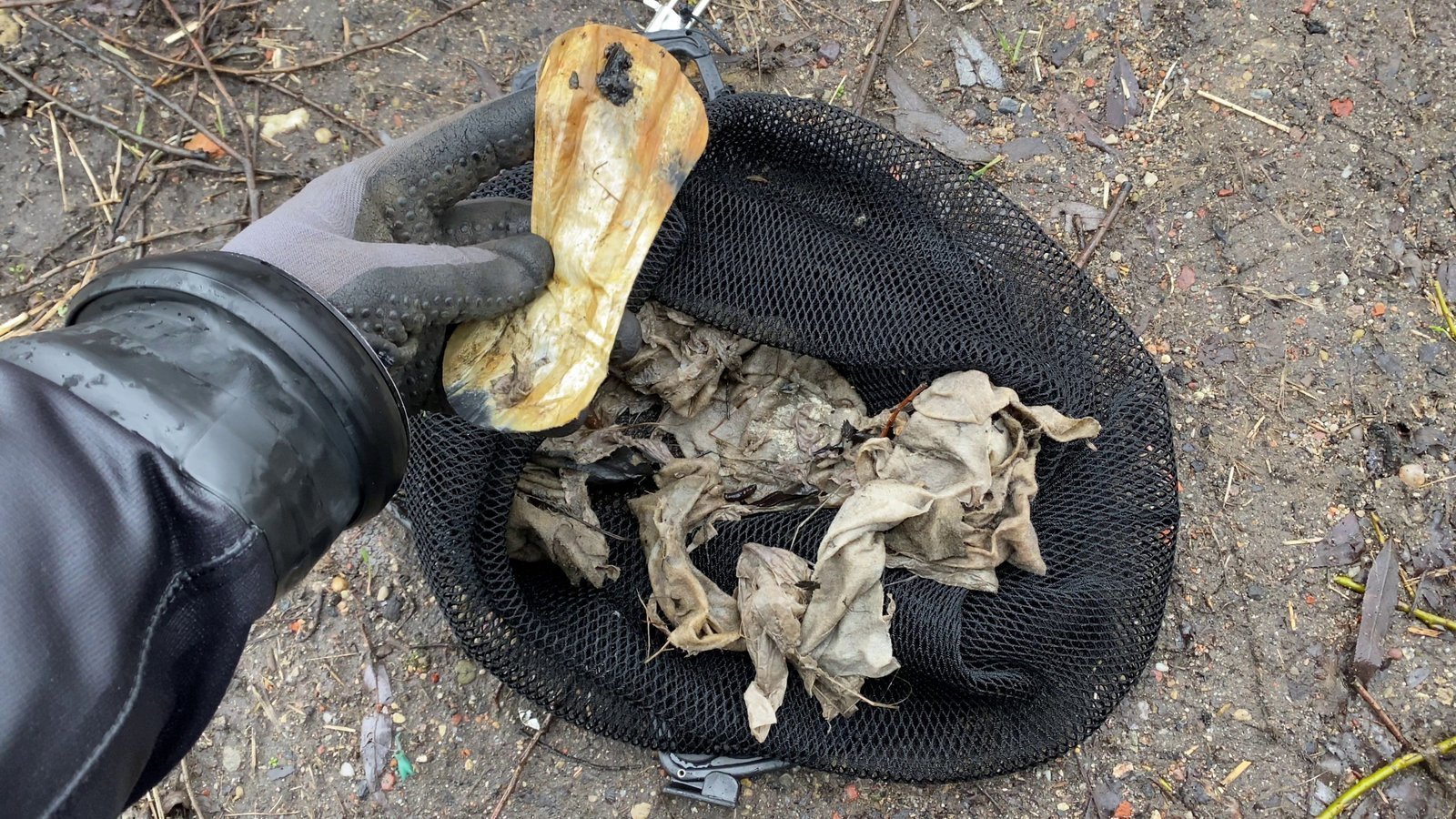
A net full of collected pads, tampons, and wet wipes. Lake Drawsko.
NOT EVERY PIPE MEANS SEWAGE
There is one very important thing.
Not every pipe leading to a lake or river indicates an illegal discharge.
It may be part of legal infrastructure. It may carry rainwater. It may be used for water intake or to discharge treated sewage.
Therefore, if we notice a suspicious outlet, we should not assume on our own that we have just discovered an illegal discharge.
It should be reported and the appropriate authorities allowed to check what is really at the end of the pipe.
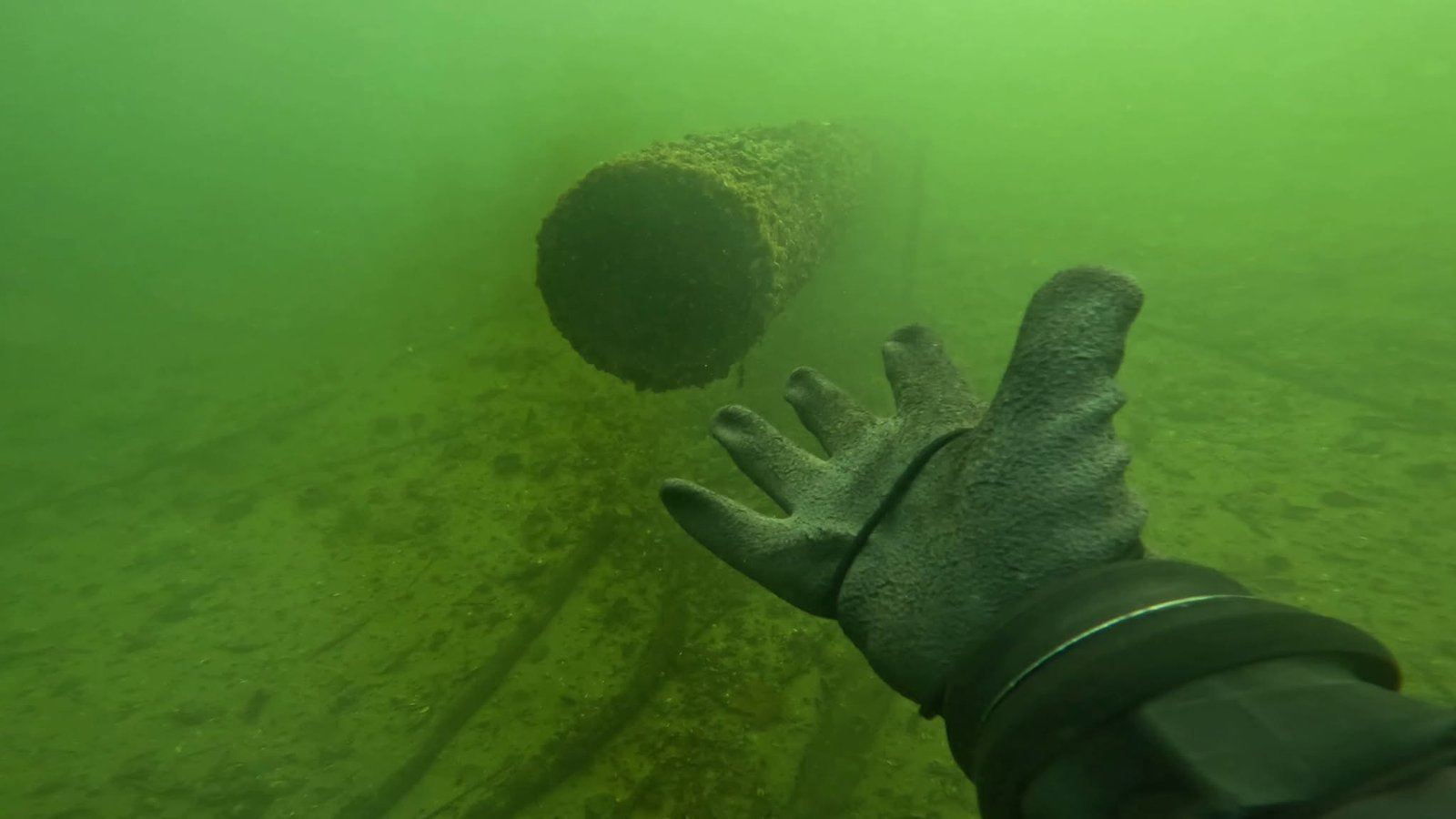
LAKE DRAWSKO – THIS IS HOW IT CAN BE DONE
A good example is a situation I discovered myself while diving in Lake Drawsko.
I saw several pipes underwater and reported the matter.
After investigation, it turned out that one was a legal outlet from a treatment plant, another was used for water intake, and the rest were municipal pipes draining rainwater.
And it was to these pipes that someone illegally connected properties with sewage.
Five such cases were found and eliminated.
But it didn’t stop there. Mass inspections of homes around the lake regarding septic tank emptying were also conducted.
Four village districts were checked.
The result?
64 fines for failure to empty septic tanks.
This shows the scale of the problem, but above all it shows something else:
if you want to, you can.
You just have to take the problem seriously.
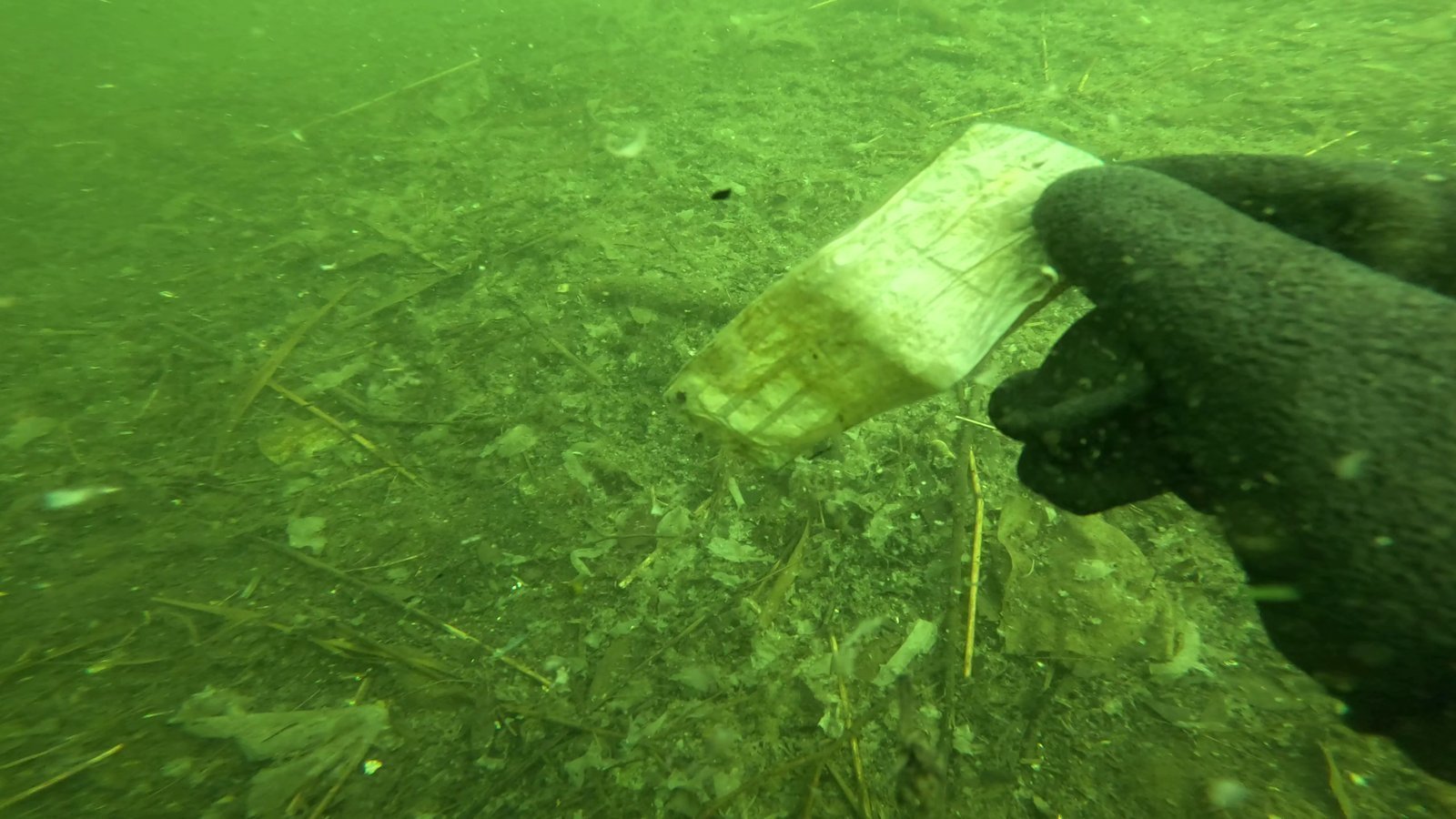
Collecting pads from the bottom of the lake. In the background, torn pieces of wipes can be seen.
TREATMENT PLANTS ARE NOT BLAMELESS EITHER
The problem doesn’t end with property owners.
Treatment plants can also have failures.
In emergency situations, legal discharges of untreated sewage into water can occur.
And such situations also happen.
That’s why protecting waters requires efficient action of the entire system – from the homeowner, through the sewage system, all the way to the treatment plant.
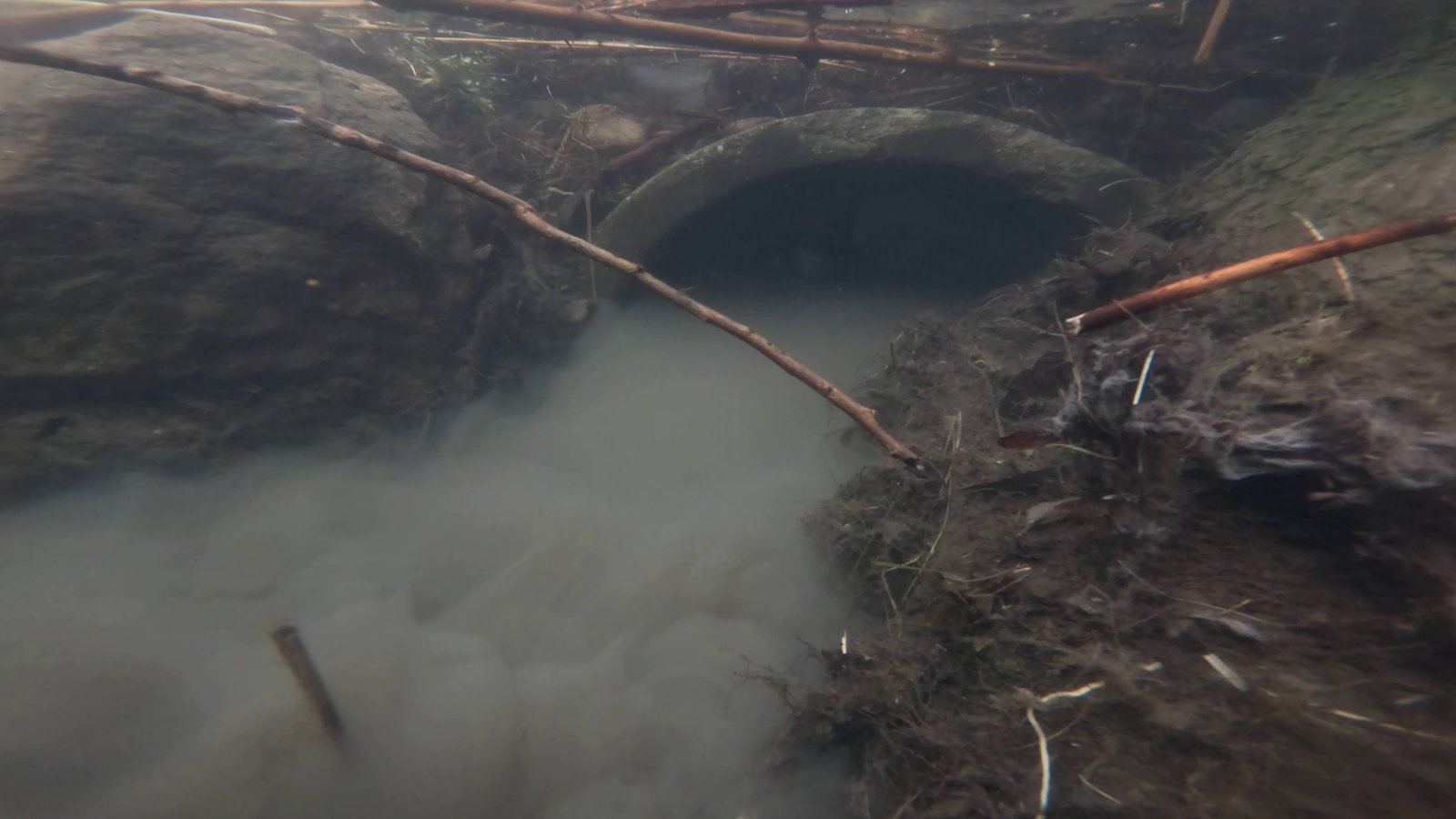
Sewage flowing out of a pipe. Lake Drawsko.
DON'T WAIT FOR SOMEONE ELSE TO REPORT IT
You don’t have to be a diver to notice the problem.
A walk by a lake or river is enough.
Suspicious pipe.
Strange outflow.
Foam on the water.
Unpleasant smell.
Change in water color.
If something looks suspicious – report it.
You can use, among others:
- mObywatel
- the National Safety Threat Map
- municipal and local apps
You can also report illegal dumps and other water pollution issues.
Don’t assume someone else has already done it.
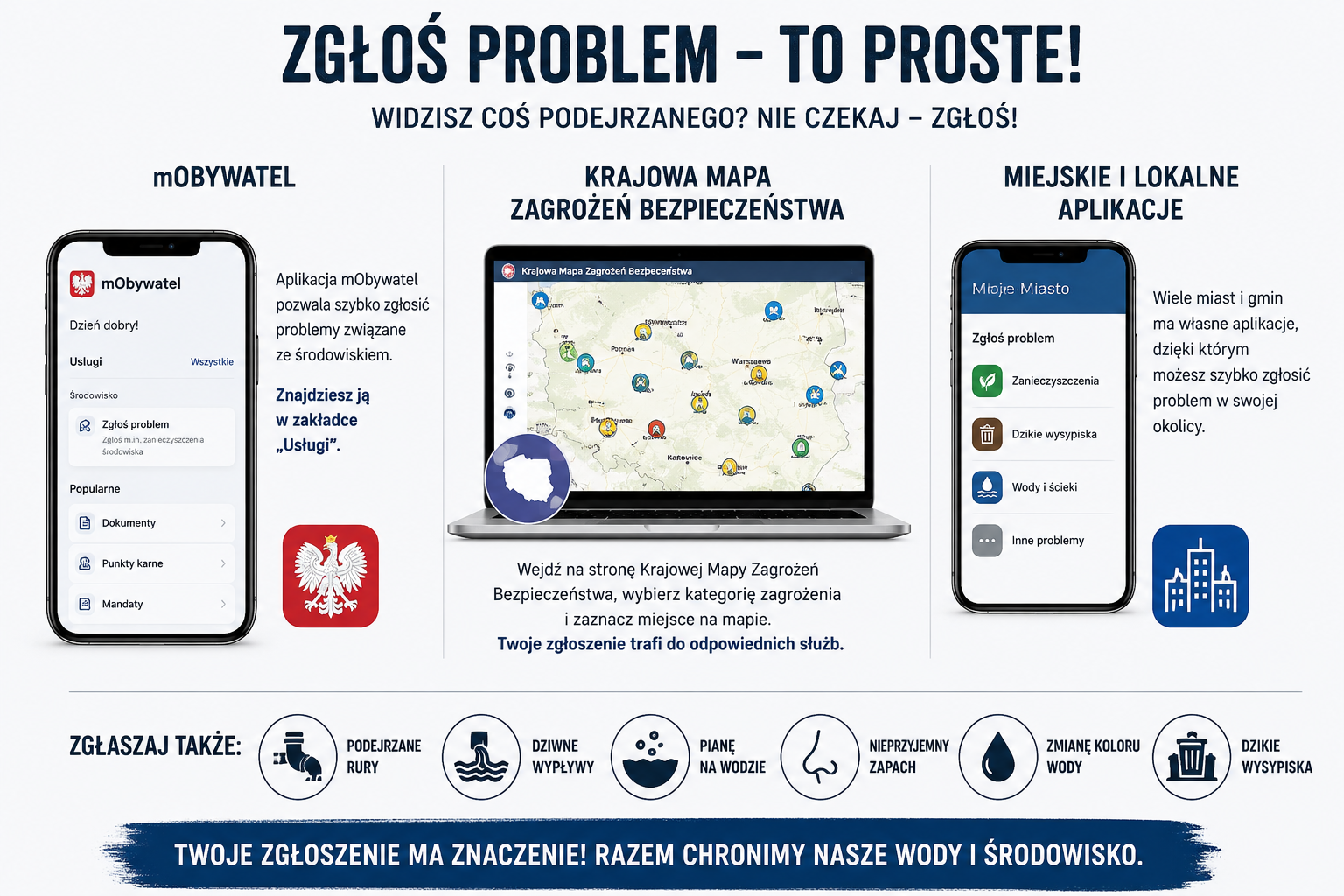
The most effective is mObywatel; the report goes to the Chief Inspectorate of Environmental Protection.
THE STATE WON'T SEE EVERYTHING
No service can be everywhere at once.
That’s why people who watch, notice, and react are so important.
It can be a diver, angler, kayaker, sailor, or just a regular walker.
Sometimes one photo and an exact location are enough for the authorities to start an inspection.
The state may have laws and officials. But without information from the field, many problems remain invisible.
One of the car batteries found in Lake Myśliborskie at the city beach area.
SEWAGE CAN'T BE SOMEONE ELSE'S PROBLEM
The worst part is that sewage discharge often happens out of sight.
Someone releases sewage.
The water carries it away.
And the problem disappears from view.
But it doesn’t disappear from the environment.
What we don’t see is still there.
That’s why we need inspections, penalties, infrastructure development, and above all, people who won’t pretend the problem doesn’t exist.
Lake Drawsko showed me that one report can trigger concrete actions and lead to removal of illegal connections and inspections of other properties.
So if you see something suspicious near the water:
take a photo, note the location, and report it.
Because sometimes it starts with one person solving a problem no one wanted to notice before.
Materials on this topic:



Support me on Suppi!
Support on Suppi →