
Trash ends up in our lakes, rivers, and the Baltic Sea every day. Bottles, cans, plastics, and tires land on the bottom instead of the shore. The problem is huge, and its cleanup is largely handled by activists and volunteers.
Trash in Polish Waters – a Problem That Can No Longer Be Ignored
Trash in the water is one of the most visible and at the same time most widespread problems of our lakes and rivers. Just dive in a place where people regularly gather to see how many items end up beneath the surface.
I have been diving in Polish waters for years, and during successive cleanup actions, I keep realizing that the problem is enormous. I pull bottles, cans, plastics, tires, nets, and hundreds of other objects from the bottom that someone previously threw in or lost.
And most importantly – a large part of this mess wouldn’t even need to be cleaned up there. It would be enough not to throw it into the water in the first place.
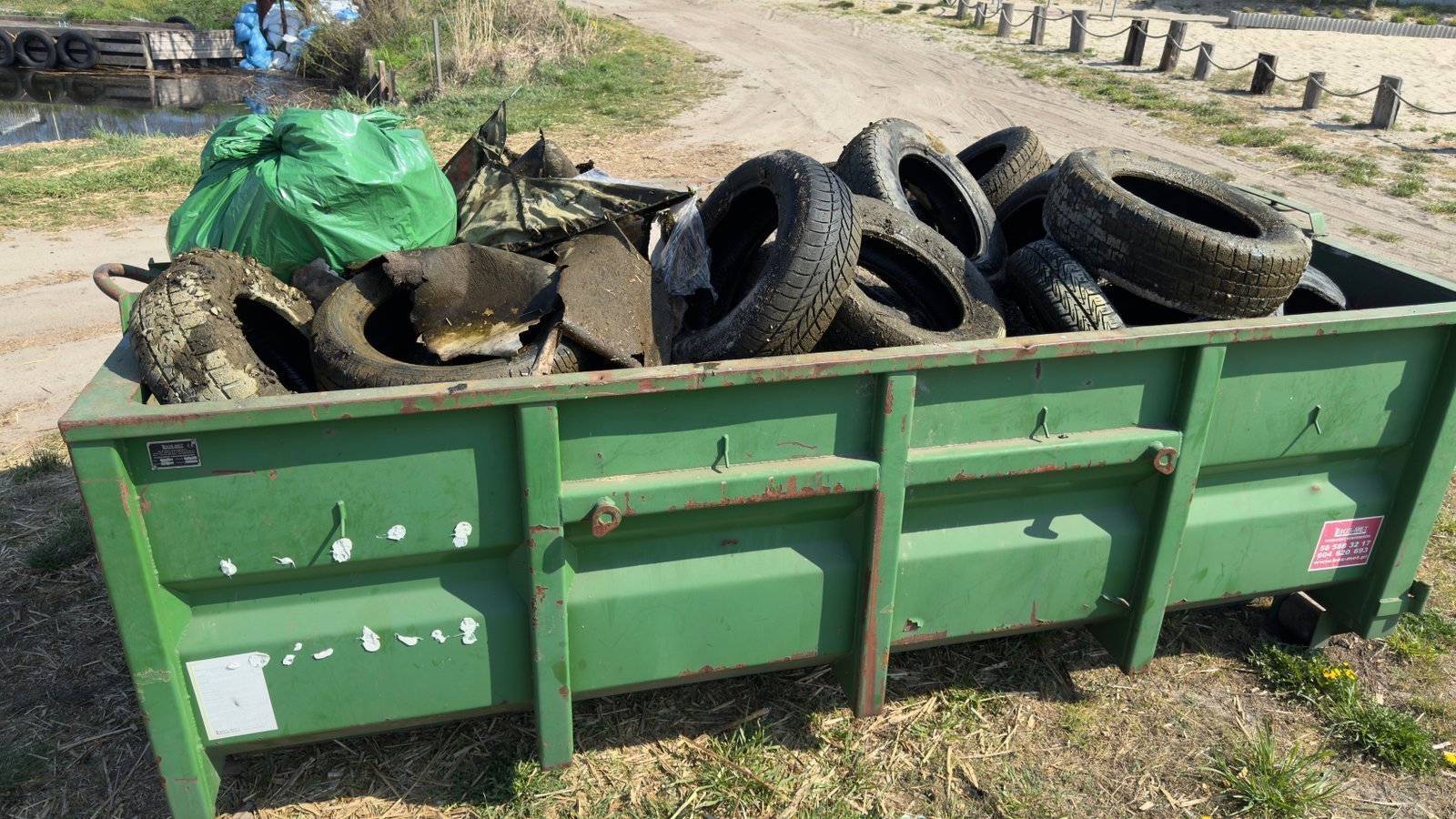
A trash container pulled from Lake Dąbie. There were 77 tires alone.
THE MORE PEOPLE, THE MORE TRASH
The rule is ridiculously simple.
The more human activity by the water, the more trash you can find underwater.
Beachgoers leave behind bottles, cans, and various items. Anglers lose bait, packaging, and fishing lines. Sailors and boat users also leave waste behind.
And then all of it ends up on the bottom.
Some trash sinks directly under piers and near beaches. Others move along the bottom, get caught on vegetation, or reach places no one on the surface would even suspect they could get to.
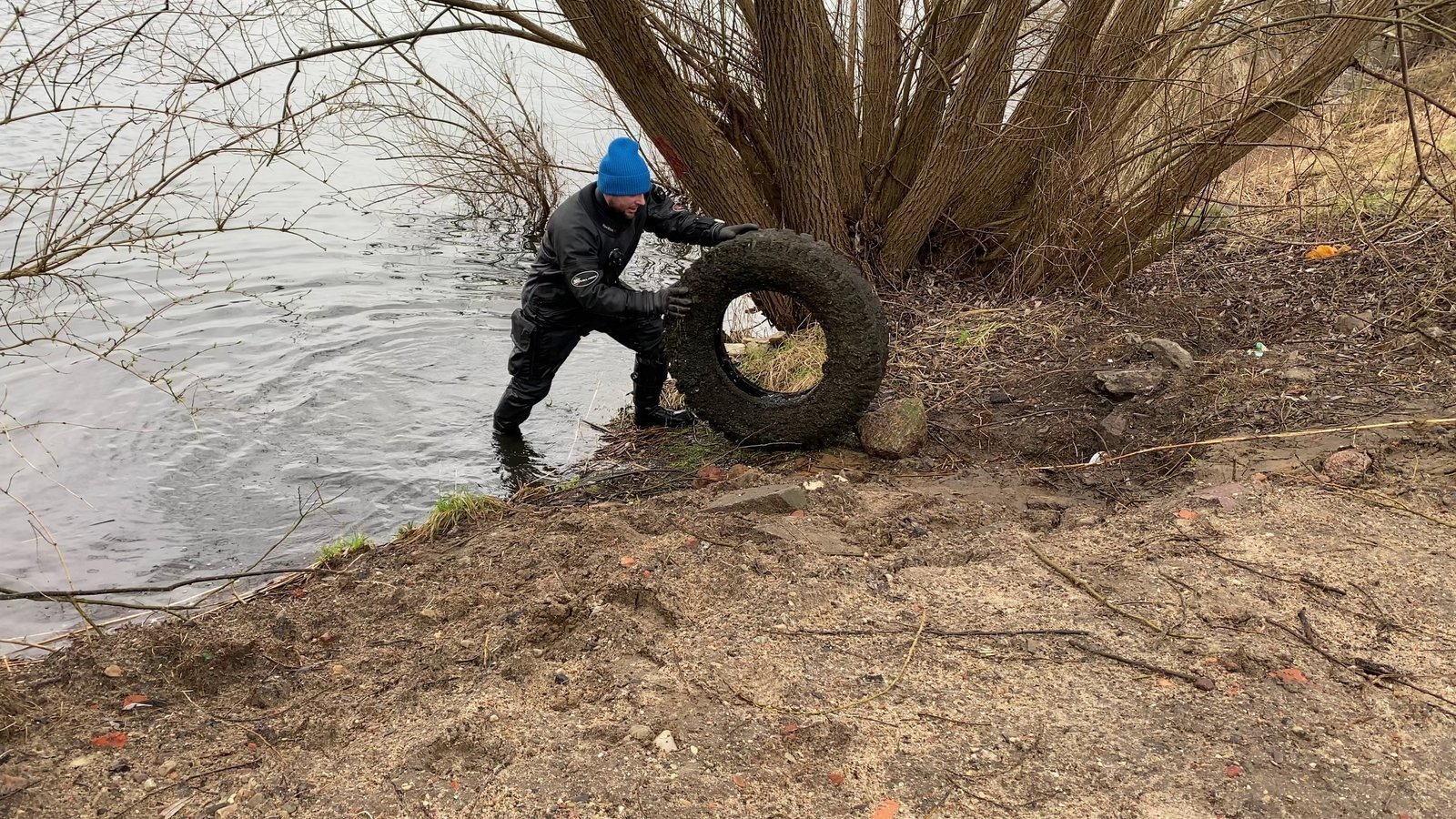
Pulling a tractor tire out of Lake Drawsko.
WHAT DO I FIND MOST OFTEN?
After my cleanup actions, I started categorizing the waste I pulled out.
This created a very interesting picture.
1. MIXED TRASH
At the top are ordinary trash – plastics, bottles, cups, and all kinds of random junkthat people leave behind.
This is by far the largest group.
There is no specific group to point a finger at here.
People just litter.
2. ALCOHOL
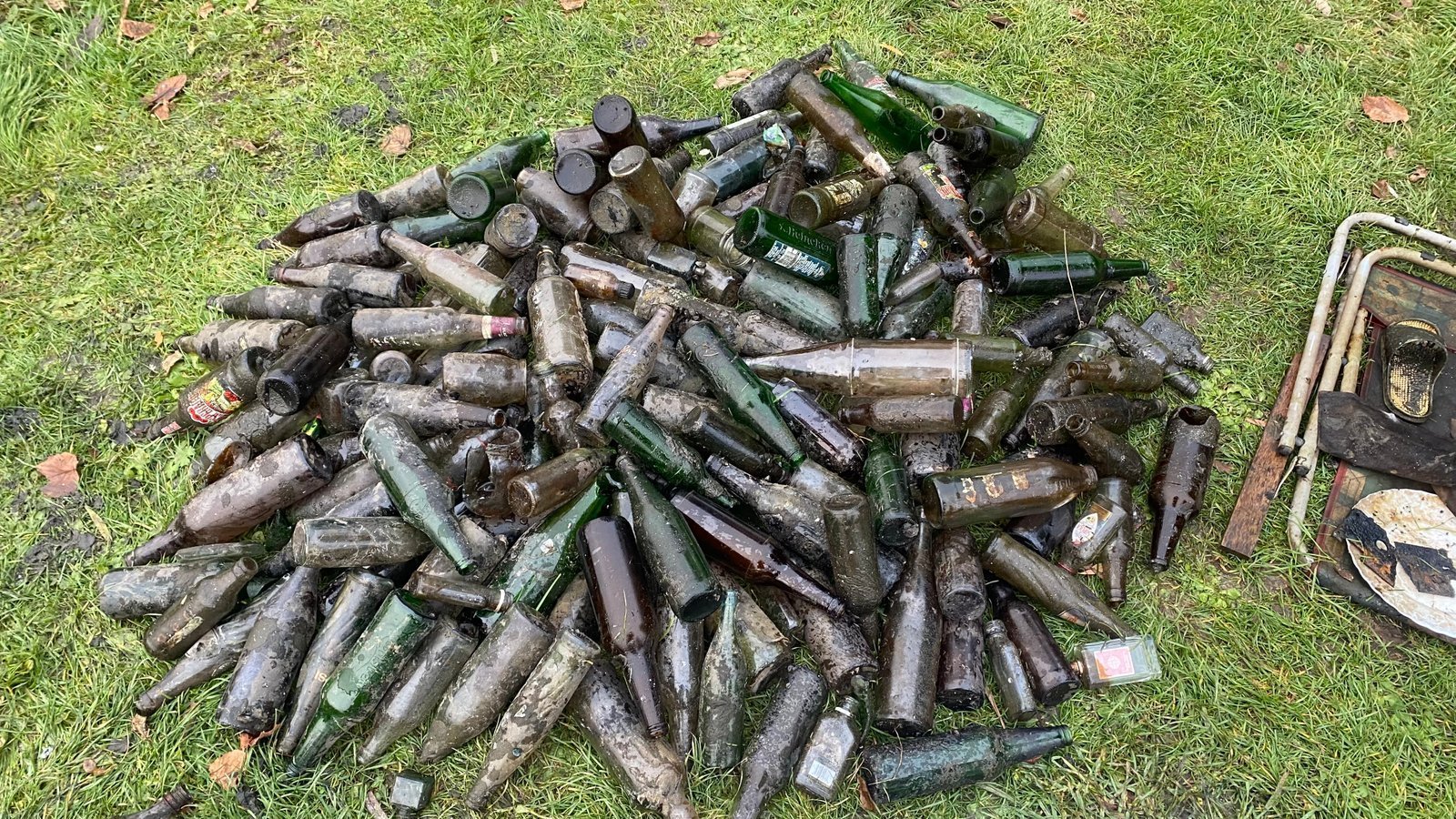
In second place are cans and bottles of alcohol, mainly beer.
And this shows something very simple – the littering problem doesn’t end on streets, parks, or forests.
It even reaches underwater.
A can thrown into a lake can lie on the bottom for years. A bottle can be covered by sand. And all of this remains in the environment simply because someone couldn’t be bothered to throw their trash in a bin.
3. TRASH FROM ANGLERS
The next category is waste related to fishing:
- cans of corn
- worm packaging
- fishing lines
- bait
- hooks
- other packaging
But here it’s worth saying one thing.
I don’t believe anglers litter the most just because they are anglers.
It’s simply that there are many of them by the water, so statistically they also leave a lot of waste.
Because the truth is, by the water, everyone litters Beachgoers. Anglers. Sailors. Partygoers. Walkers..
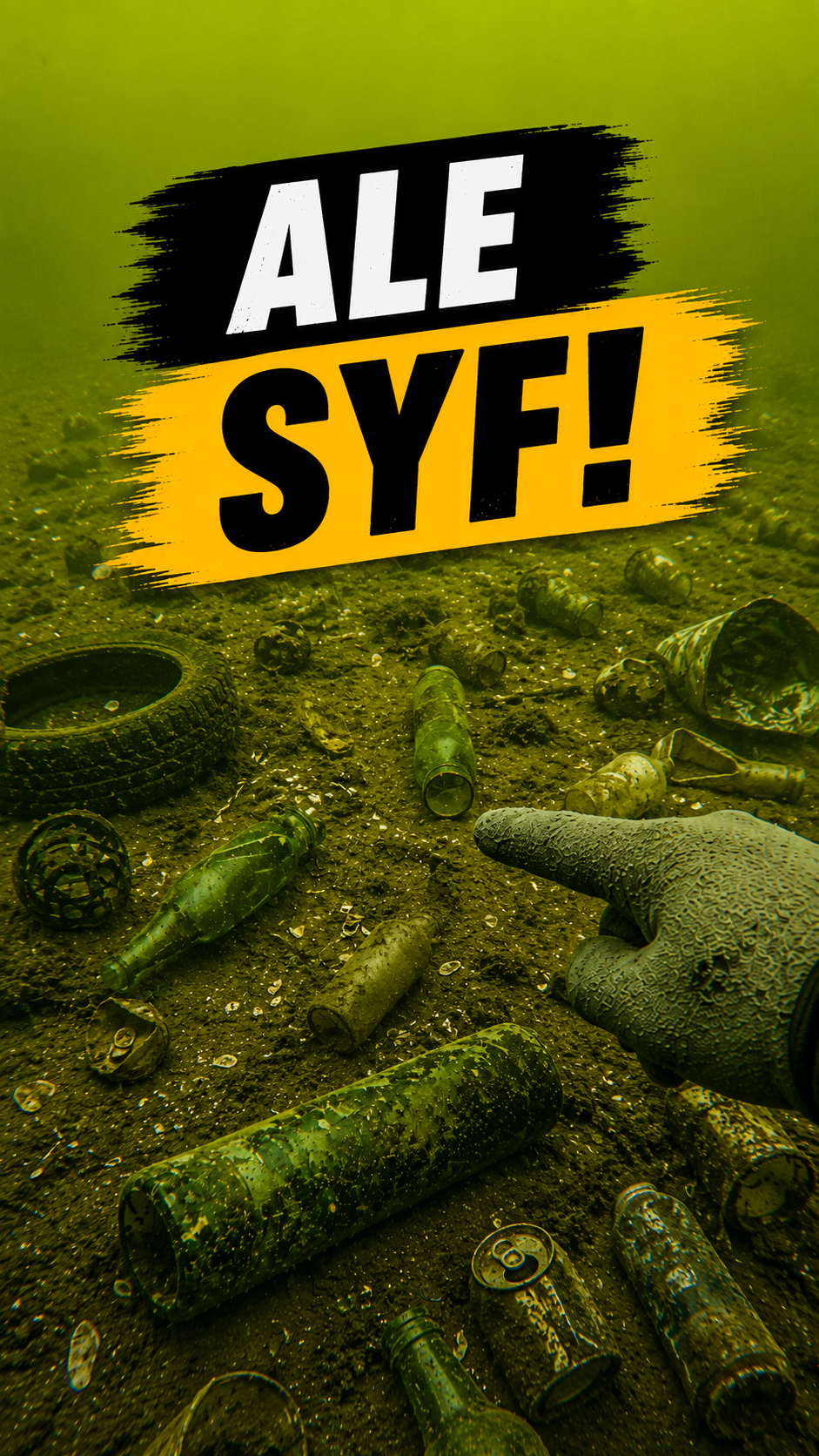
Bottles pulled from Lake Szczucze, Golczewo – an image showing that the alcohol problem also reaches underwater.
THIS IS NOT A PROBLEM OF ONE GROUP
I don’t believe the excuse that a specific social group is responsible for the trash.
Poles as a society have a huge problem with littering.
Young and old litter. Poor and rich. People from big cities and small towns.
The problem isn’t who someone is.
The problem is that
someone thinks they can throw trash wherever it’s convenient for them. And if that place is water, the consequences last much longer than the moment someone got rid of their problem.
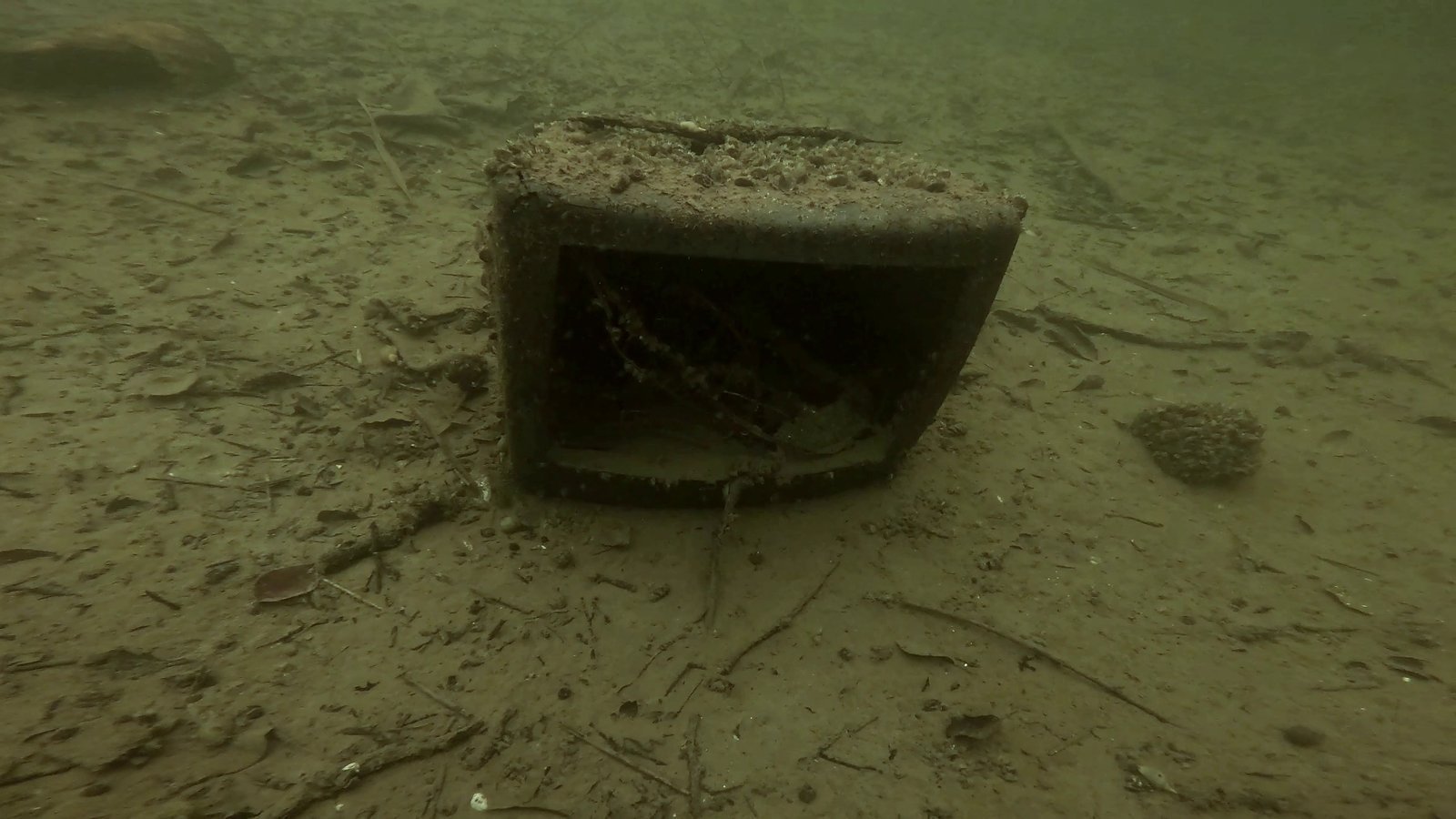
Everything ends up in the water. Nothing surprises me anymore. Here’s a TV at the bottom of Lake Drawsko.
WODY POLSKIE DO NOT HAVE A CLEANUP SYSTEM
POLISH WATERS HAVE NO CLEANUP SYSTEM
And here we come to another problem.
In Poland, there is practically no systemic solution to the problem of trash found directly in the water.
Most of the work is done by people who do it voluntarily – divers, volunteers, and organizations.
The majority of waters in Poland are managed by Wody Polskie, but cleanup efforts focus primarily on land and coastal areas.
According to information I obtained from RZGW in Szczecin, in the years 2019–2025, no underwater trash removal by divers was conducted there.
And it’s hard to claim the problem doesn’t exist when all you have to do is go below the surface to see its scale.
Volunteering should support the state, not do its work for it.
It cannot be that people sacrifice their time, equipment, and money to do something that should be part of normal protection of our waters.
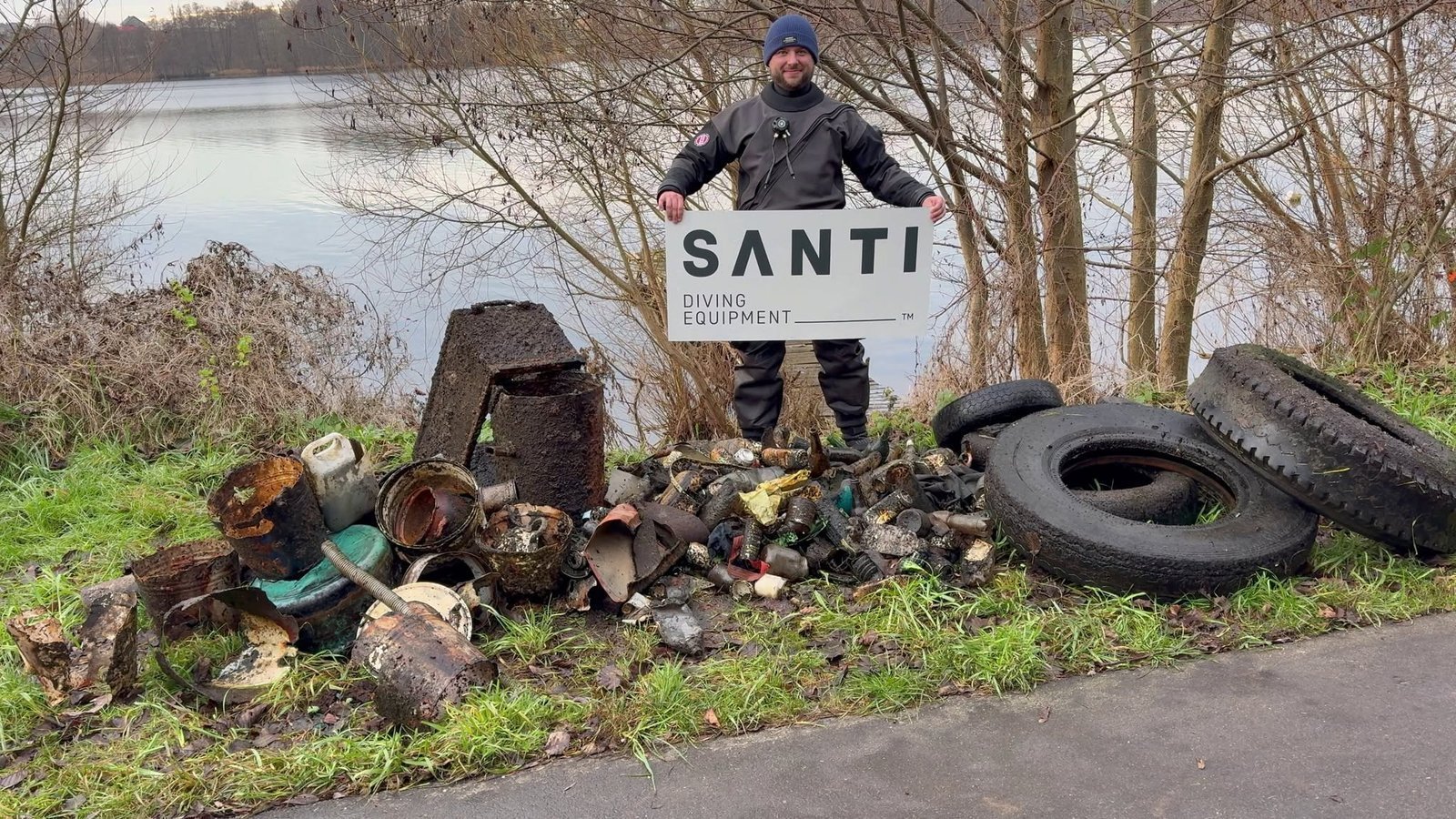 Trash pulled from Lake Drawsko. The cleanup was sponsored by Santi Diving.
CLEANUP IS ALSO RESOURCE RECOVERY
Trash taken from the water doesn’t have to remain just trash.
During cleanup, we recover, among other things:
- glass
- plastic
- metal
Waste can be properly sorted and sent for further processing.
Every item removed also means one less thing polluting the environment.
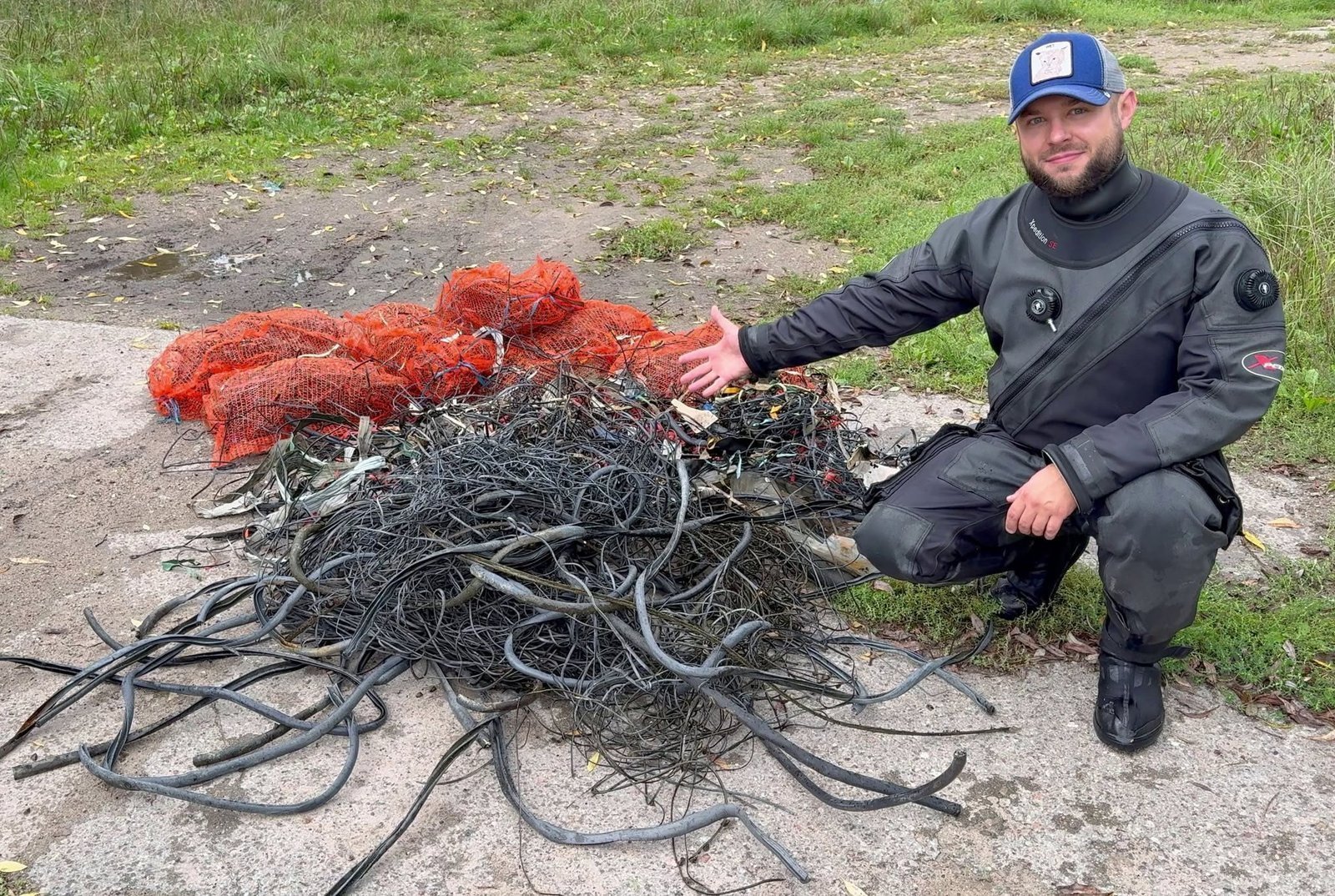
Industrial waste – plastics, plastic materials resembling cables. Removed from Lake Drawsko.
THE SCALE OF MY ACTIONS
Over the years, during my cleanup actions, I have removed from Polish waters:
10.07 tons of waste
568 bags of trash
357 tires
35 nets and traps
These are not numbers from a report or statistics found on the internet.
These are trash items I personally pulled from the water.
Each of these numbers represents real objects that were previously lying on the bottom of Polish lakes or the Baltic Sea.
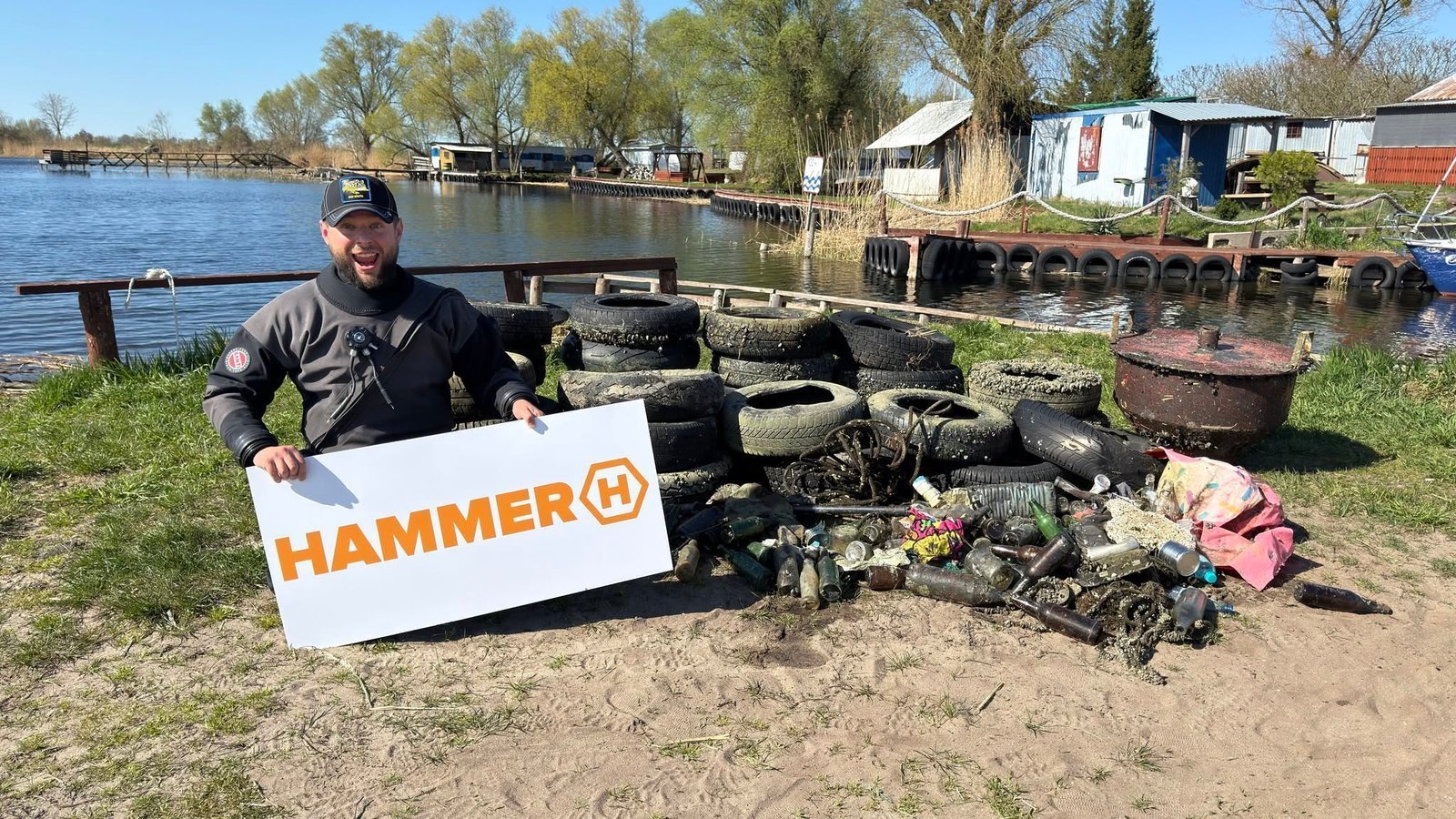
My efforts are supported both by my viewers and private companies. Without them, I couldn’t clean on such a scale.
IS EDUCATION ENOUGH?
Education is important, but let’s not fool ourselves that a campaign with a nice slogan will solve the problem.
Some adults simply cannot be convinced by another poster or video about protecting the planet.
For some, the only reason they don’t litter everywhere is:
- fines
- laws
- social pressure
Therefore, people who knowingly pollute the environment should be severely punished and socially stigmatized.
If someone knows they are not allowed to throw trash into the water but does it anyway, the problem is not a lack of knowledge.
The problem is a lack of responsibility.
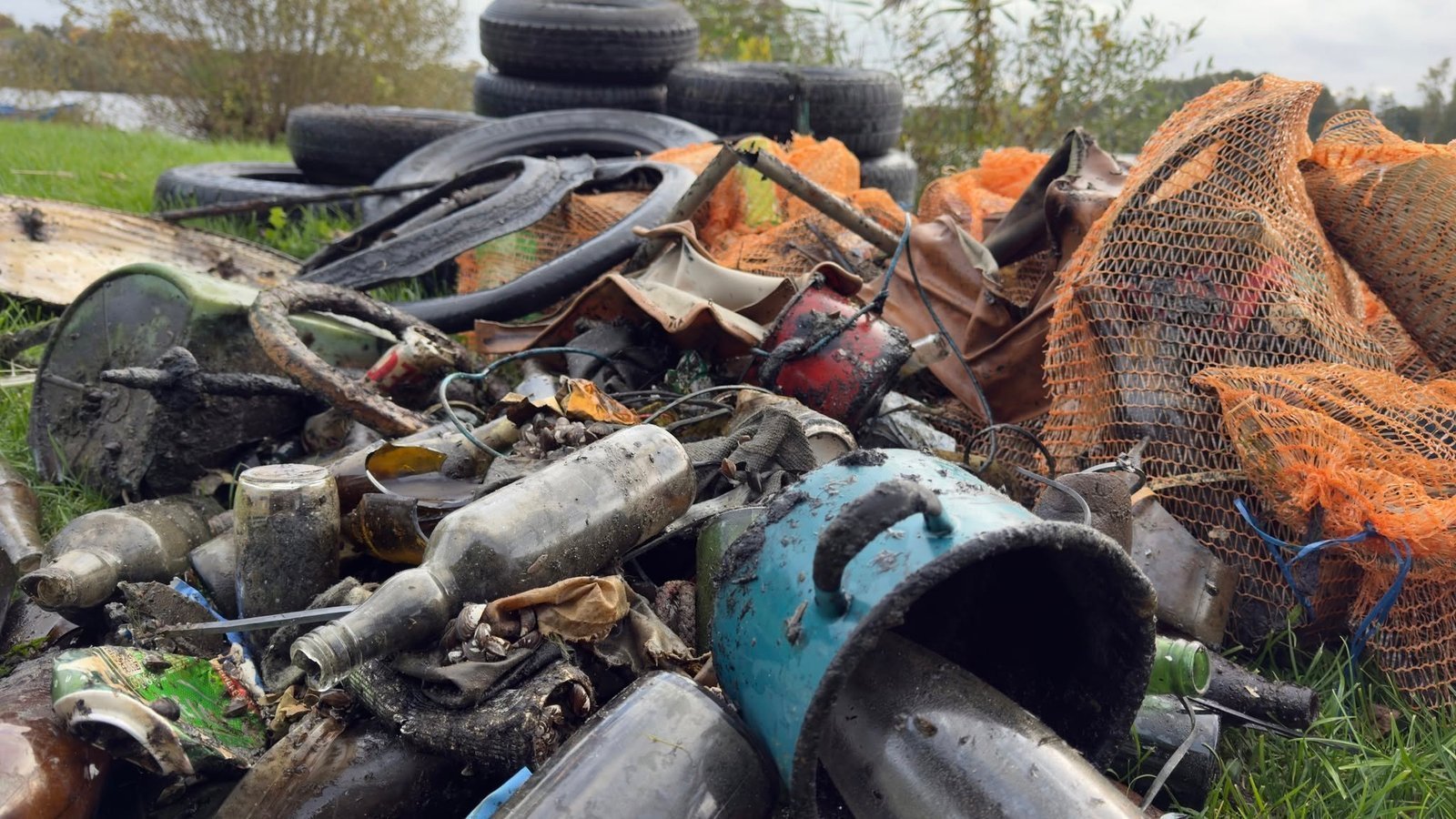
Trash pulled from Lake Drawsko – from this lake alone I have removed 5 tons of trash.
WITH CHILDREN IT’S DIFFERENT
Education works very well with children.
If from an early age we teach a person that trash belongs in the bin, not in the forest, river, or lake, there is a great chance it will be natural for them as adults as well.
Education also works on people who already have proper social norms.
Such people can be encouraged to:
- pick up trash during walks
- organize cleanup events
- join volunteer groups
- pick up trash found along the way
- report illegal dumpsites
- report pollution and sewage discharge
- take action instead of pretending the problem doesn’t exist
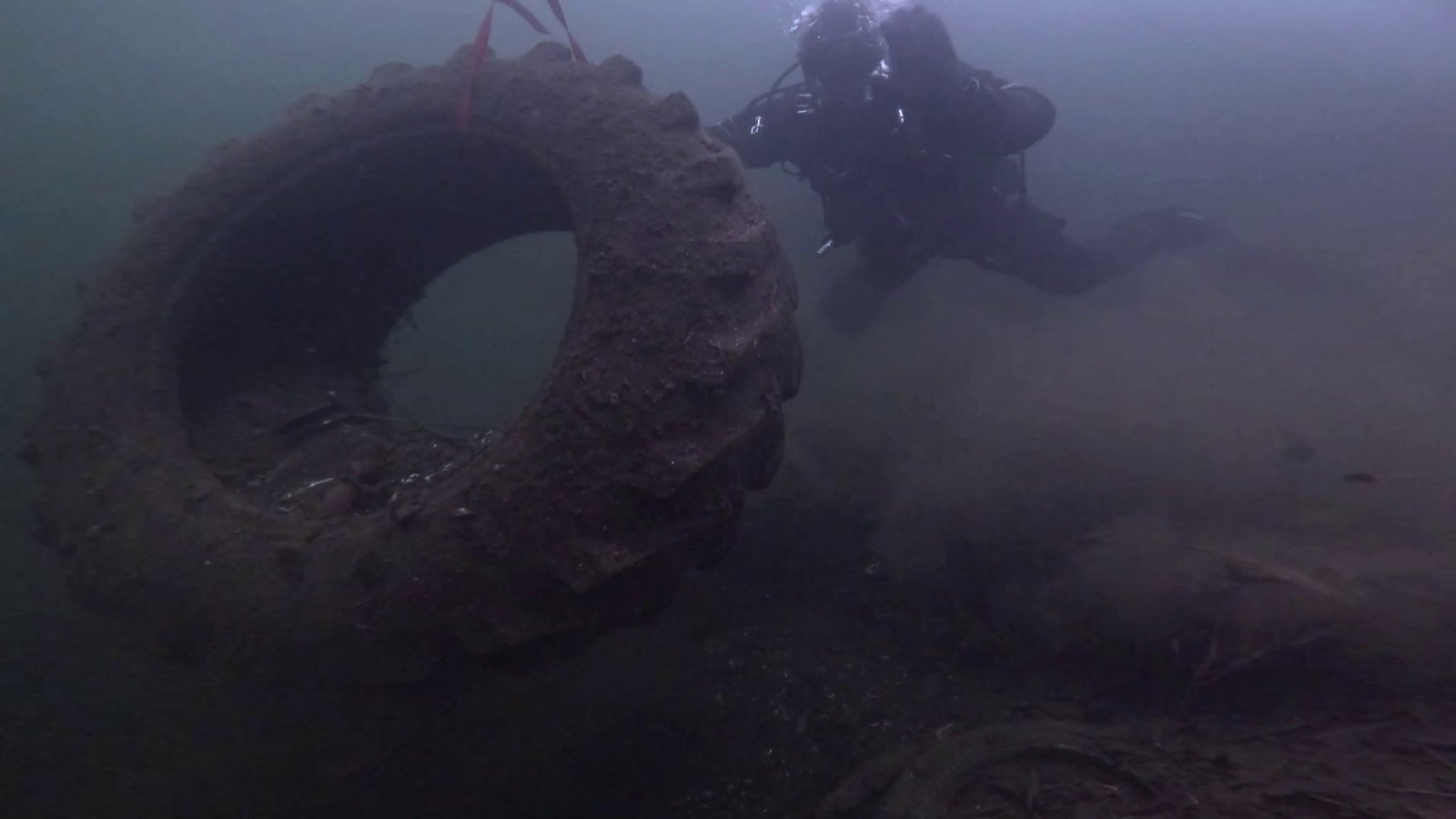
Pulling a huge agricultural tire using a lift bag. Lake Drawsko.
THE EASIEST TRASH TO REMOVE IS THE ONE THAT NEVER ENDED UP IN THE WATER
Cleanup is necessary.
I will continue to dive and pull out what others have left behind.
But no number of divers will clean all Polish lakes if people continue to treat water as a trash bin.
We can pull out more bags, tires, bottles, and cans. But what’s the point if most of them should never have ended up underwater in the first place?
Our lakes, rivers, and the Baltic Sea don't need more cleanup campaigns as much as they need people who will stop polluting them.
And until that changes, I will keep doing my part – diving underwater, cleaning up, and showing what the bottom of our waters really looks like.
Materials on this topic:
Support me on Suppi!
Support on Suppi →