
The Julius wreck is one of the most interesting shallow wreck sites in the Baltic. It lies just around 300 metres from the shore, at a depth of approximately 6 metres, but the greatest challenge is reaching the site itself – with all your gear, you need to walk around 2 kilometres.
Julius Wreck – 6 Metres Deep and 2 Kilometres Away
The Swedish steamship Julius wreck lies very close to the Baltic shore, at a depth reaching approximately 6 metres. The actual dive is, however, considerably easier than getting to the site – to enter the water with your gear, you need to walk around 2 kilometres along the beach or a path.
2 KILOMETRES TO THE WATER
Looking at Julius's location, you might think it's a very easily accessible wreck. After all, it lies just around 300 metres from the shore.
The problem appears earlier, though.
You can't drive a car directly to the dive site. You have to take all your gear with you and walk around 2 kilometres along the beach or a path.
With full diving equipment, such a walk can be a bigger challenge than the subsequent descent underwater.
When we finally reach the shore, though, it turns out the wreck is really close.
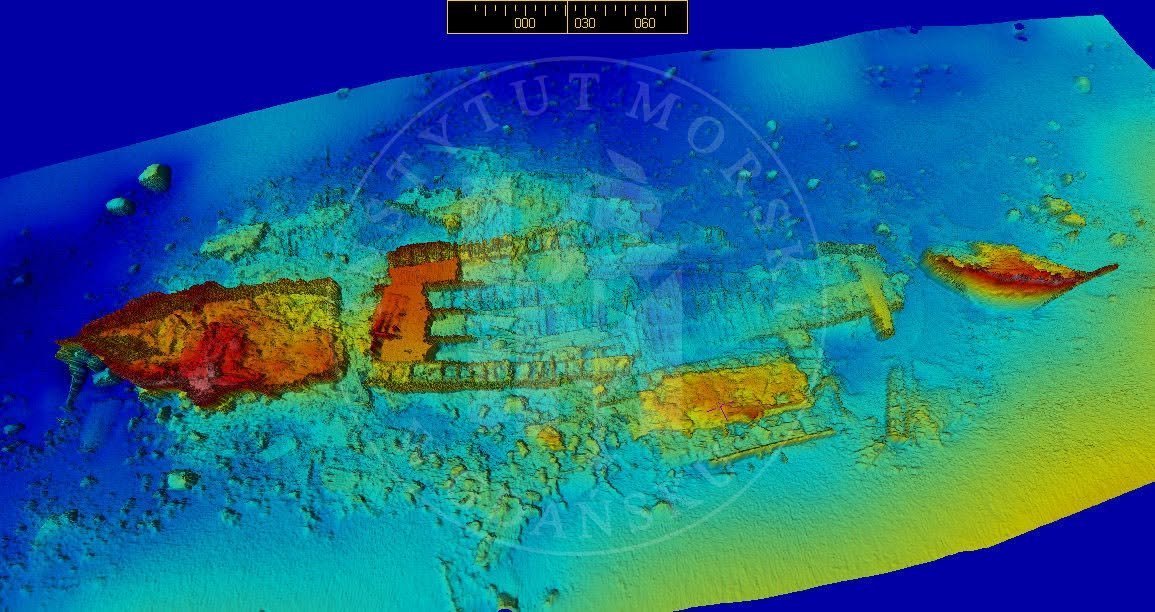
Sonar image of the wreck. On the right side we have the ship's bow – that's where most of the nets are. On the left the stern and propeller.
SHALLOW BALTIC WRECK
Julius is a very shallow wreck. During my dive the maximum depth was approximately 6 metres.
This means it's not a typical Baltic deep wreck dive. Here the entire wreck can be explored practically in shallow water zone.
At the same time, the shallow depth doesn't mean there are no interesting features.
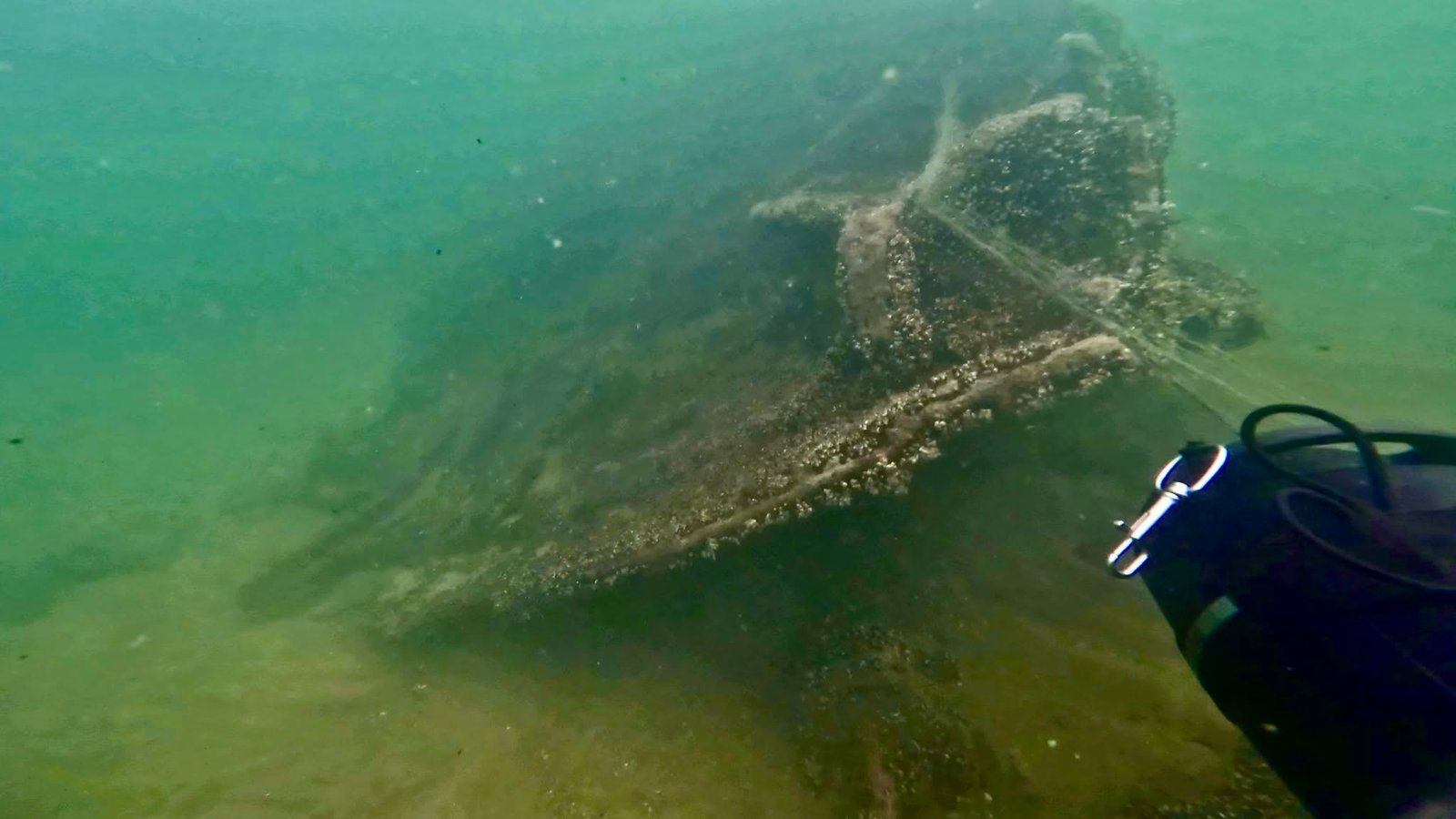
Wreck element with fishing net spread across it.
OVER 100 YEARS UNDERWATER
Julius was built in 1855 as Killingworth at C. Mitchell & Co. shipyard in Newcastle.
Throughout its history it changed owners and names several times. In 1905 it was renamed Skaato, and in 1907 it received the name Julius.
Its history ended on 10 February 1908.
During a storm the ship began taking in water and was cast onto a sandbank near Bagicz, close to Kołobrzeg.
Over 100 years have passed since then.
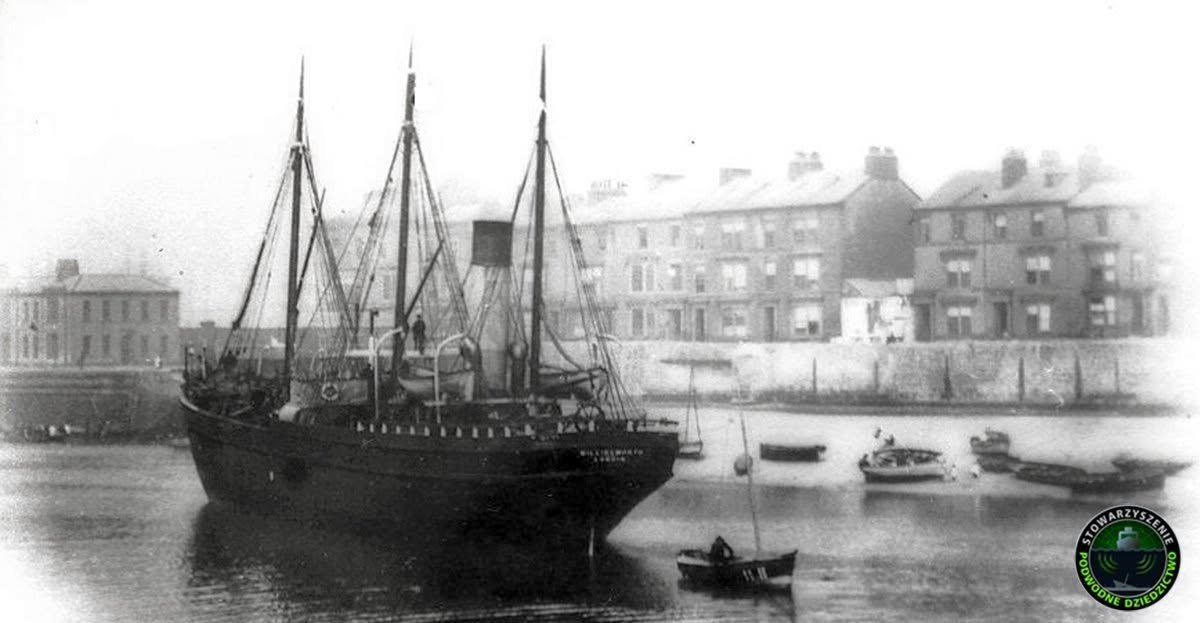
A period photograph of Julius. The masts visible in the photo can be found next to the wreck.
THE WRECK HEAVILY DAMAGED
Today Julius is heavily damaged.
The steel structure has been shattered over the years by storms and the effects of the sea. The wreck no longer resembles a complete ship, and its remains are scattered across the seabed.
What was once a single steamship is today a collection of steel structural fragments.
On the seabed there are also maststhat broke away from the ship and lie among the wreck's remains.
But there is something interesting about it – while diving, you can observe successive elements and try to imagine how Julius looked when she was still afloat.
PROPELLER CLEARLY VISIBLE UNDERWATER
One of the best-preserved and most distinctive elements is the wreck's propeller.
It is located beneath the stern overhang and is clearly visible while diving.
With such a heavily damaged wreck, these kinds of elements are most helpful in understanding its original construction.
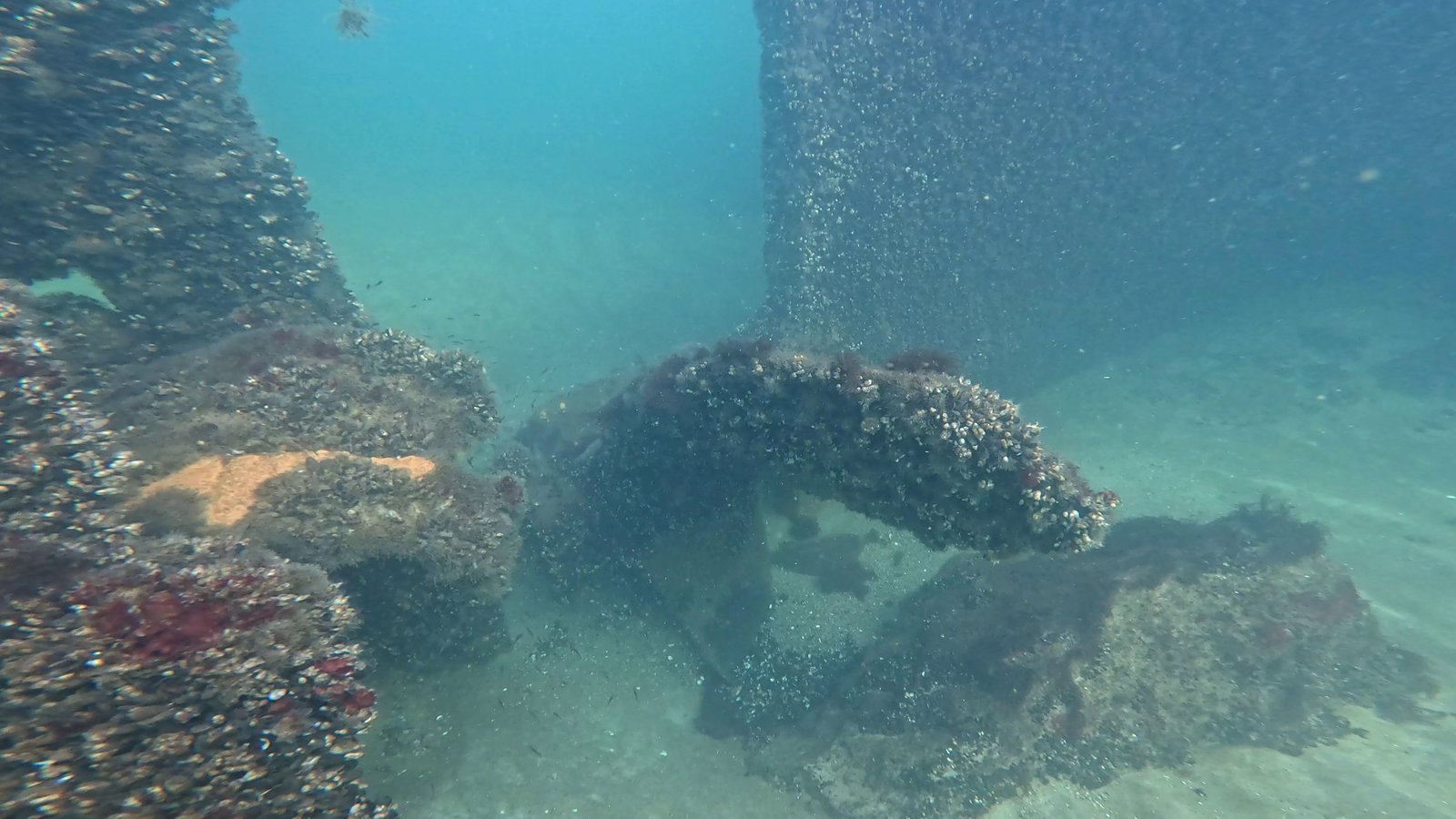
Julius's propeller. Partially buried but still visible.
SLIGHT CURRENT OVER THE WRECK
While diving over Julius you can also feel a slight current.
It is not something that prevents diving, but it must be taken into account, especially with such a shallow wreck located close to shore.
The Baltic continues to work on this site – both destroying the ship's remains and changing the conditions above the wreck.
JULIUS ENSNARED IN NETS
Unfortunately Julius also has a problem I know from many other Baltic wrecks.
The wreck was ensnared in nets.
Nets lying on the structure are a threat not only to animals but also to divers. On a wreck full of protruding and broken elements, any additional entanglement poses a problem.
That is why my dives on Julius were not limited solely to viewing the wreck.
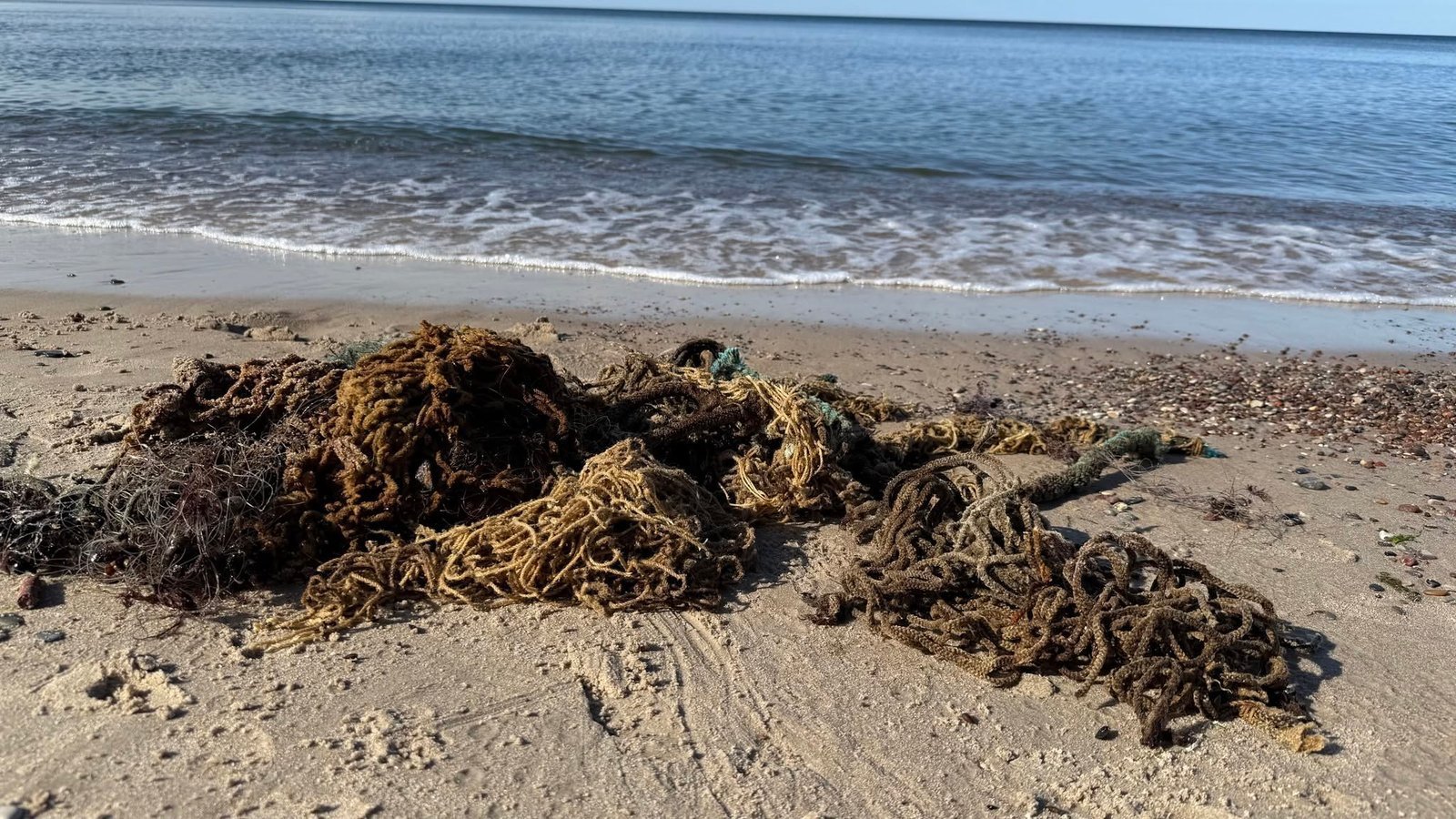
Nets removed from Julius during the second operation.
I CLEARED THE WRECK OF NETS TWICE
I cleared Julius of its accumulated nets twice.
Removing nets from a wreck requires great caution. You must be careful both with your own equipment and with the steel structural elements, which are heavily damaged after over a hundred years.
At the same time, each removed net means one fewer trap on the seabed.
This is precisely why such actions are for me an equally important part of diving as wreck exploration itself.
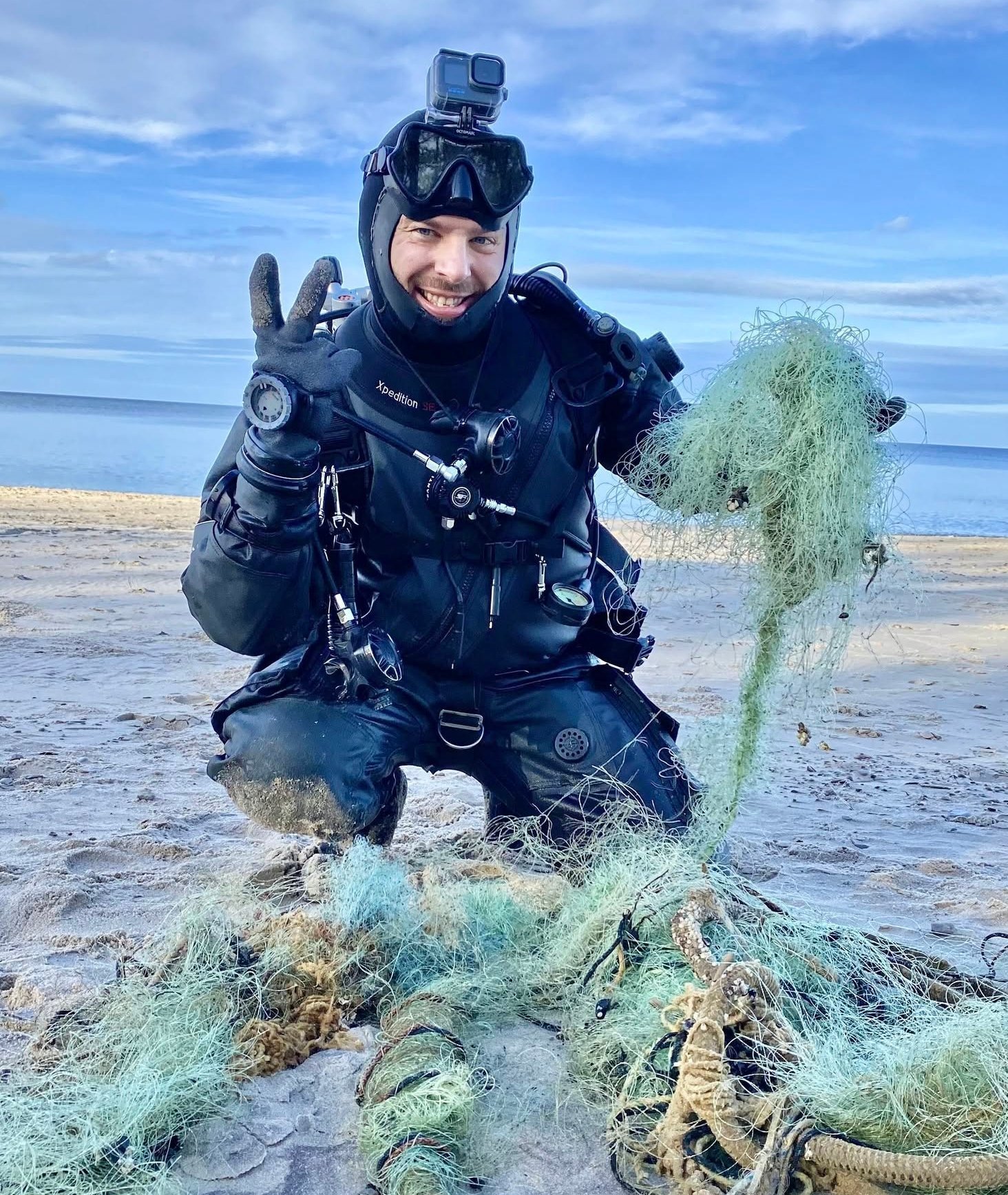
Nets removed from the first operation.
IS IT WORTH DIVING HERE?
Julius is not a complete, spectacular wreck. It is a steel structure heavily damaged and broken down by time, whose fragments lie on the seabed along with masts.
Despite this, it is definitely worth seeing.
Shallow depth, very close location relative to the shore, a clearly visible propeller, remains of the structure and history dating back to the 19th century create a truly interesting whole.
To this is added the opportunity to do something useful – Julius has been cleared of nets by me twice.
For me, this is exactly the best combination: wreck exploration and simultaneously ensuring that the next people can view it more safely, and animals do not perish in abandoned nets.
WRECK COORDINATES
54°12'22.0"N 15°41'08.0"E
Historical information regarding the ship and its sinking based on Underwater Heritage materials.
Materials from the wreck:
Support me on Suppi!
Support on Suppi →