
Our waters are full of hidden underwater traps that are invisible from the surface. Old pilings, crumbling pontoons, concrete elements, benches, rubbish, or protruding rods can at any moment become a threat to a diver, swimmer, or someone jumping into the water.
UNDERWATER OBSTACLES - AN INVISIBLE THREAT
Beneath the surface of our lakes, rivers and the Baltic Sea there are countless obstacles that simply cannot be seen from the shore. Old pilings, remains of crumbling pontoons, concrete elements, benches, rubbish or protruding rods can pose a serious threat to divers as well as swimmers, sailors or people jumping into the water.
YOU ARE DIVING AND SUDDENLY AN UNDERWATER PILLAR APPEARS IN FRONT OF YOU
For a diver such a place may look completely harmless. You are swimming peacefully over the bottom and suddenly, practically out of nowhere, a vertical concrete or wooden pillar appears in front of your mask.
Most often these are remains of old pontoons that fell apart long ago. On the surface there is practically no trace of them left, but their elements still remain underwater.
In good visibility you can notice them in time. The problem begins when visibility is poor and the obstacle is located at exactly the depth where the diver is swimming.
A collision with such an element can result in serious injury.
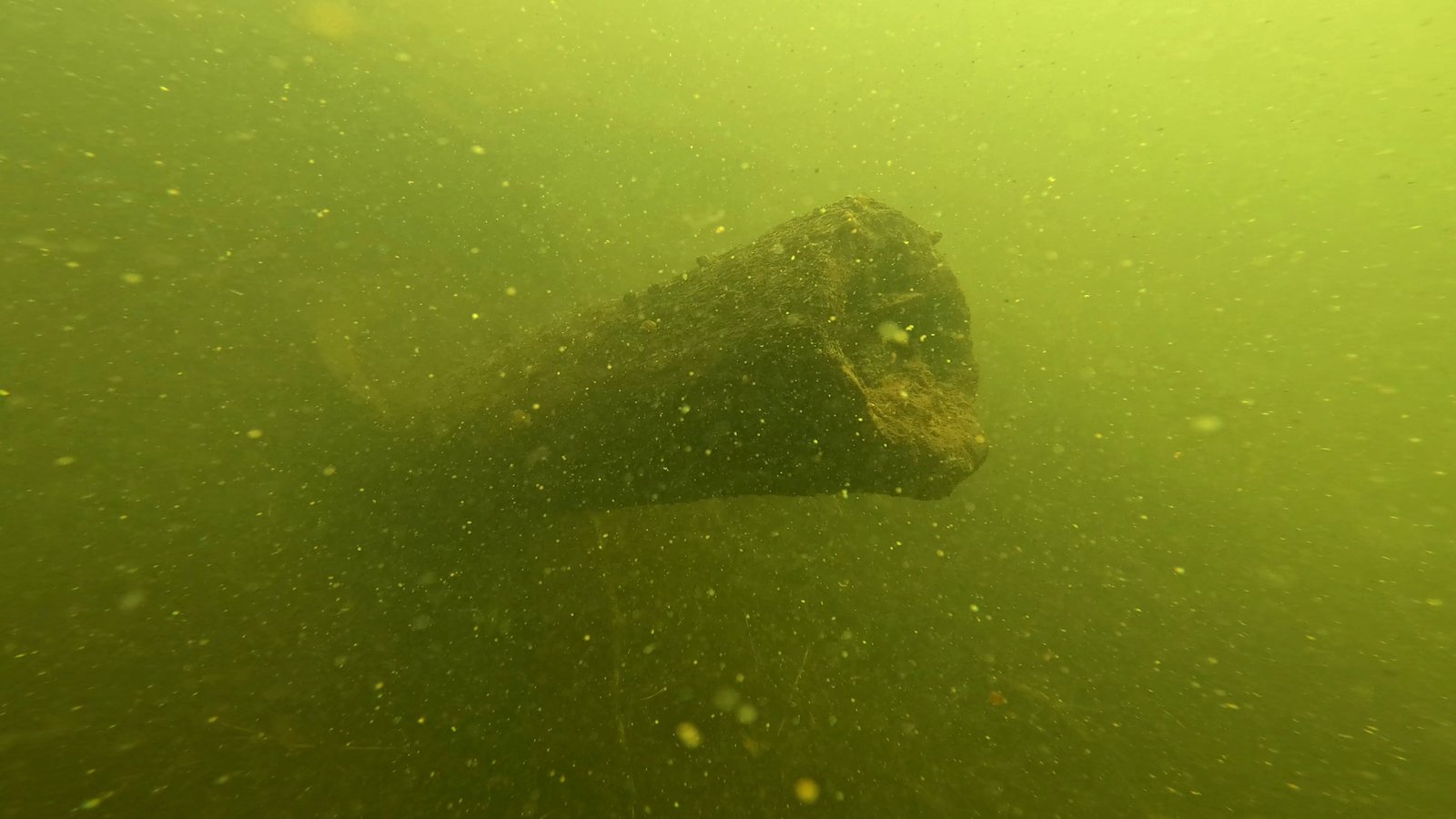
A wooden pillar, remains of a pontoon. Lake Drawsko.
OLD PONTOONS TURN INTO UNDERWATER TRAPS
Our waters are full of remains of old structures. Pilings protruding from the bottom, pieces of pontoons, concrete elements or metal parts of structures can remain in the water for years.
This is partly a result of how infrastructure over water has been built over the years. People built their own pontoons, often without proper permits and without adhering to any standards.
When such a pontoon begins to fall apart, its elements do not disappear with the structure.
The pontoon falls apart, but underwater the threat remains.
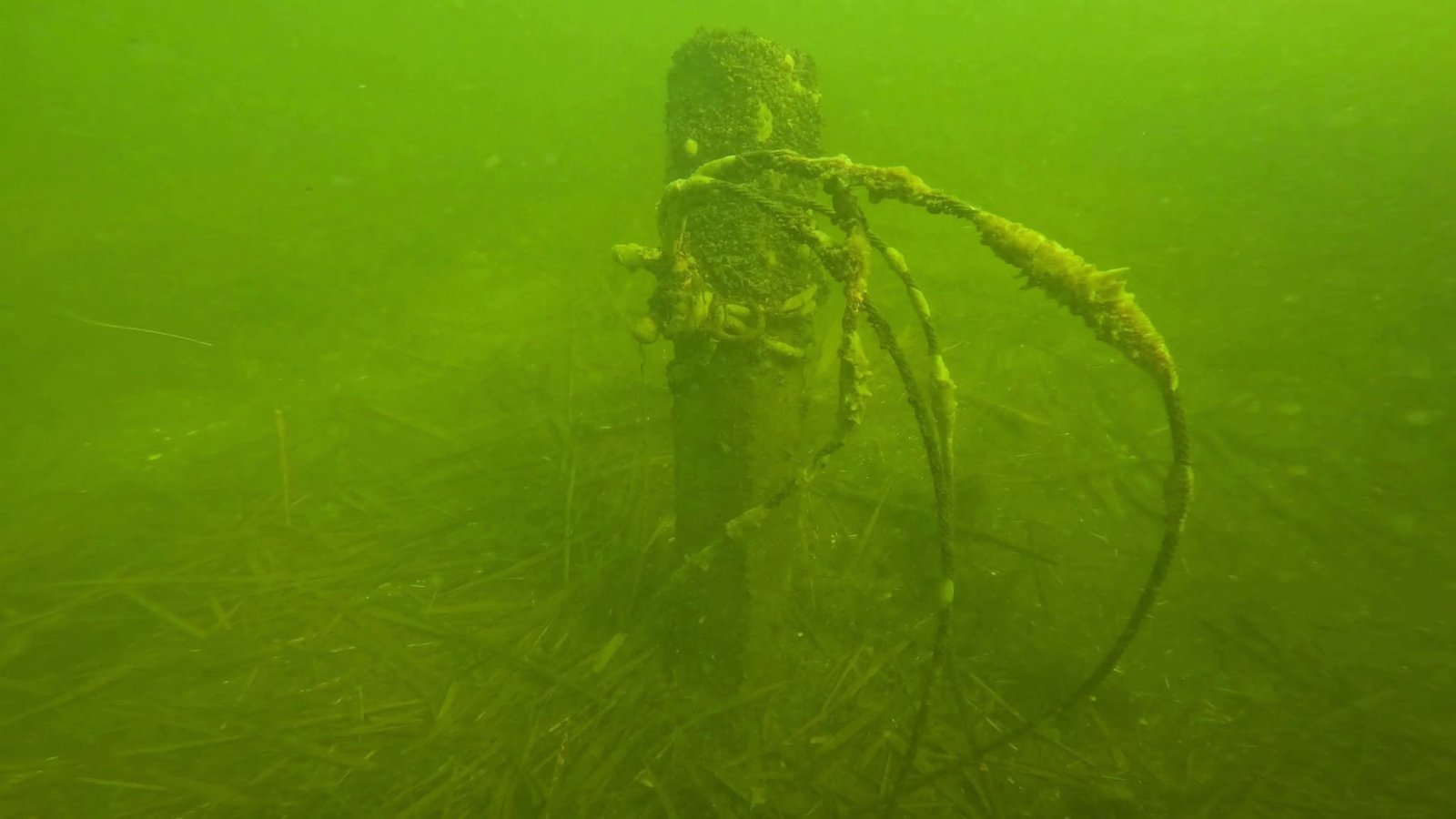
A concrete pillar wrapped in a steel cable. It stood on the area adjacent to a boat slip and marina. Removed. Lake Dąbie, Lubczyna.
ILLEGAL CONSTRUCTION REMAINS UNDERWATER
On our waters for years there has been and continues to be widespread illegal pontoon construction.
Homemade structures, random materials and lack of proper standards mean that when they are destroyed, elements remain in the water that can threaten other users of the water body.
From the surface it often looks like the problem has ceased to exist.
It hasn't. It simply became invisible.
And that is precisely why such places are particularly dangerous.
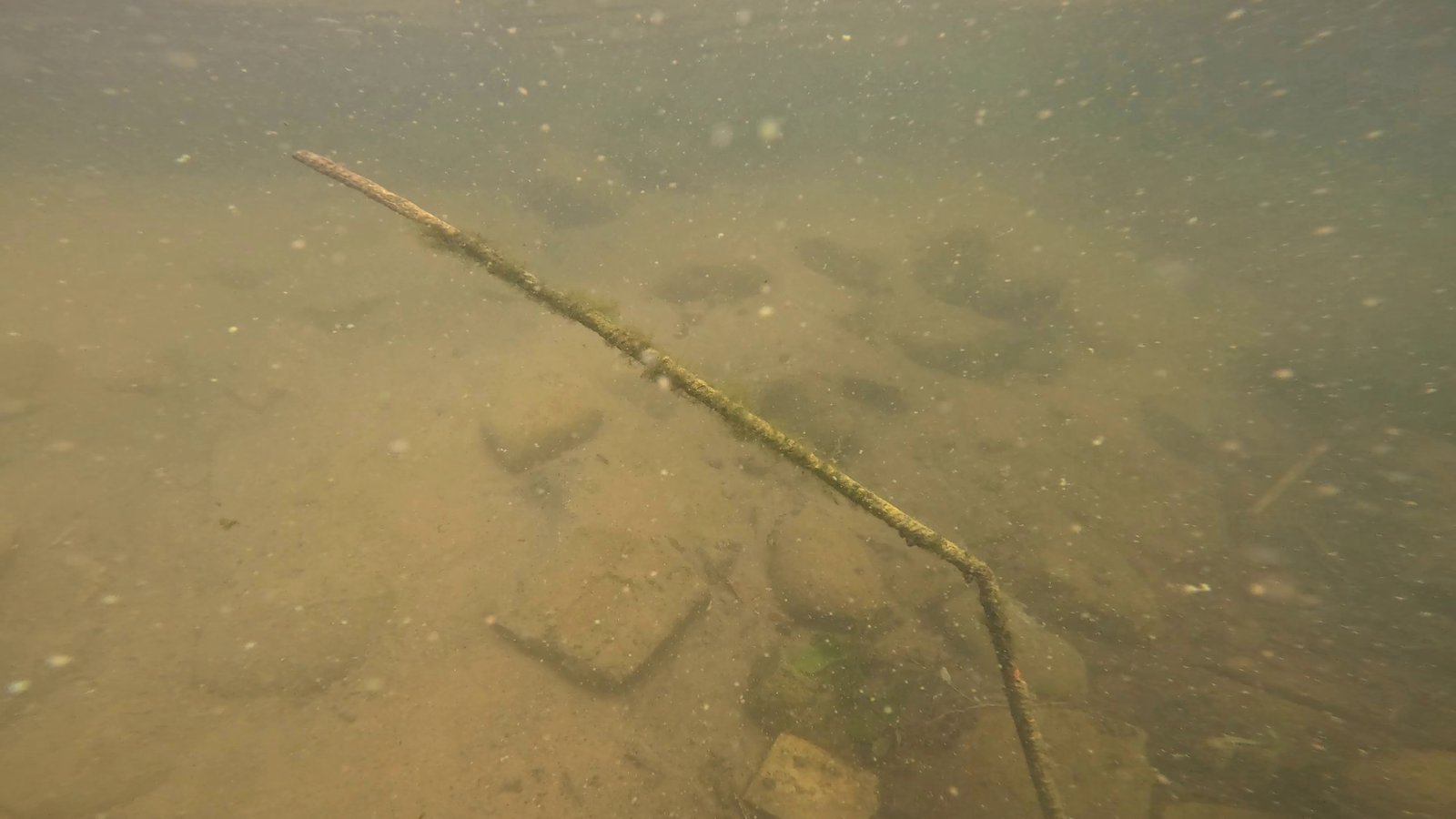
A metal rod protruding from the bottom. Depth 1.3 metres. Lake Drawsko.
WODY POLSKIE HAS IGNORED THE PROBLEM FOR YEARS
In my opinion part of the responsibility for this situation lies with Wody Polskie, which for years has failed to resolve the problem of structures and underwater obstacles left in the water. According to the law, building a pontoon requires obtaining a water permit and paying a lease. I think most pontoons are currently built illegally. Wody Polskie monitors pontoons insufficiently and illusorily.
If an old, crumbling pier poses a threat, the mere disappearance of its fragments from the surface does not mean the threat has vanished.
Quite the opposite – the worst part is precisely what you can no longer see.
Such places need to be monitored and dangerous remnants removed before an accident occurs.
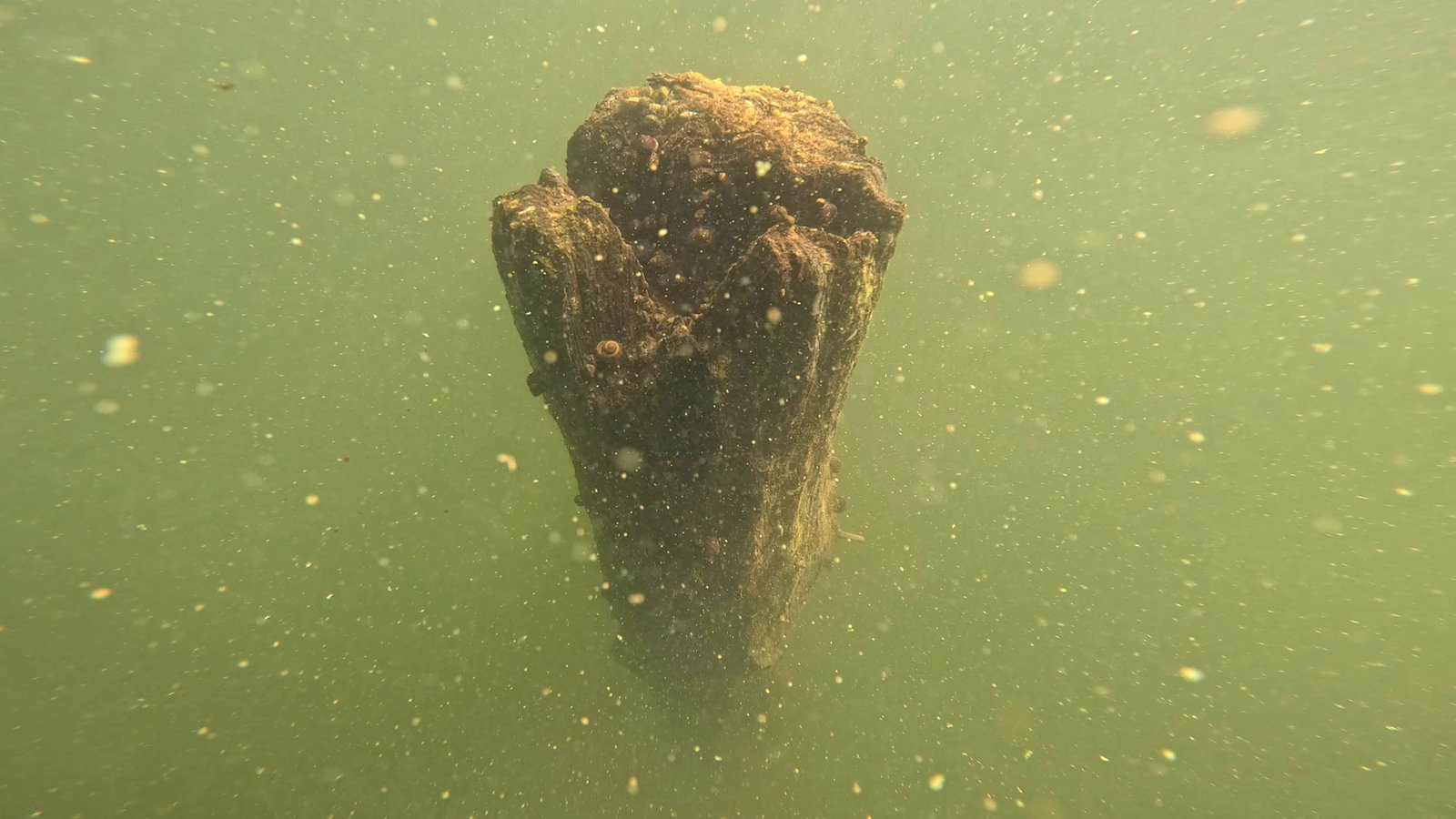
A pile from a collapsed pier, depth from the top of the pile to the water surface 1.2 metres. A collision with such a pile will end very badly for both the boat and the person jumping into the water.
NOT JUST PILES AND PIERS
Underwater traps are not just the remains of structures.
While diving, you can encounter concrete or metal bins, benches, rods, fragments of structures or other objects, which someone threw into the water or which ended up there as a result of infrastructure decay.
Sometimes the object lies on the bottom.
Sometimes only a fragment protrudes from it.
And sometimes it stands vertically and is located exactly at the height where a person is moving.
A protruding rod or piece of metal can be not only an obstacle, but a real threat to health.
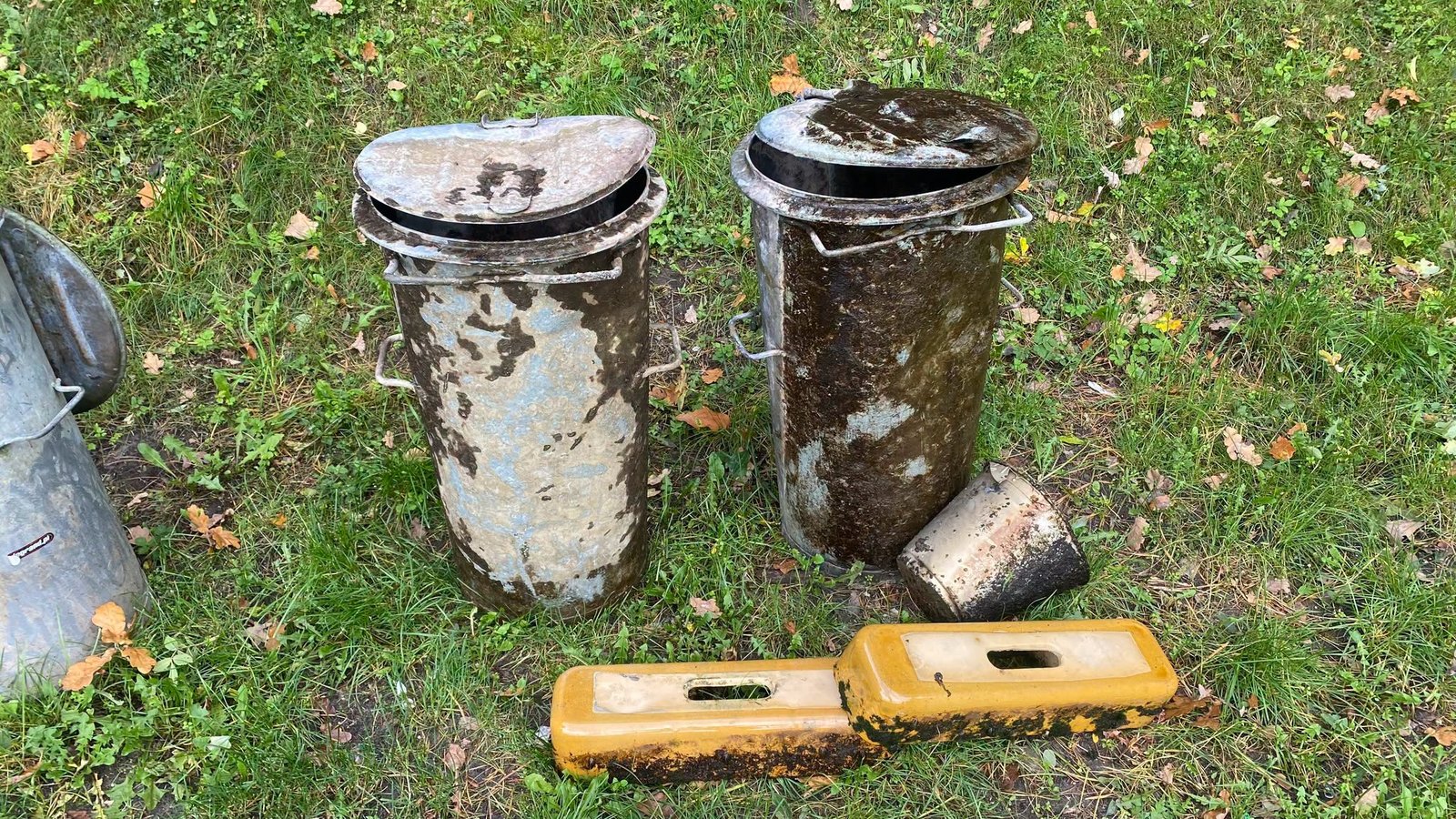
Metal bins pulled from the water. They stood in the water vertically right under the pier, in the place where people were jumping.
THOSE JUMPING INTO THE WATER HAVE IT EVEN WORSE
For a diver, an obstacle can be dangerous.
For someone who jumps into the water from a pier or boat, it can be an even greater threat.
A diver at least swims and has the ability to observe the space ahead of them. A person jumping often has no idea what is beneath the surface.
I myself have encountered places where there were objects under piers that someone could jump onto.
A concrete bin, bench, protruding rod or structural remnant could be located exactly where someone expects only clear water.
So let us never assume that because there is a pier, beach or place used for recreation, underwater it is automatically safe. It is not.
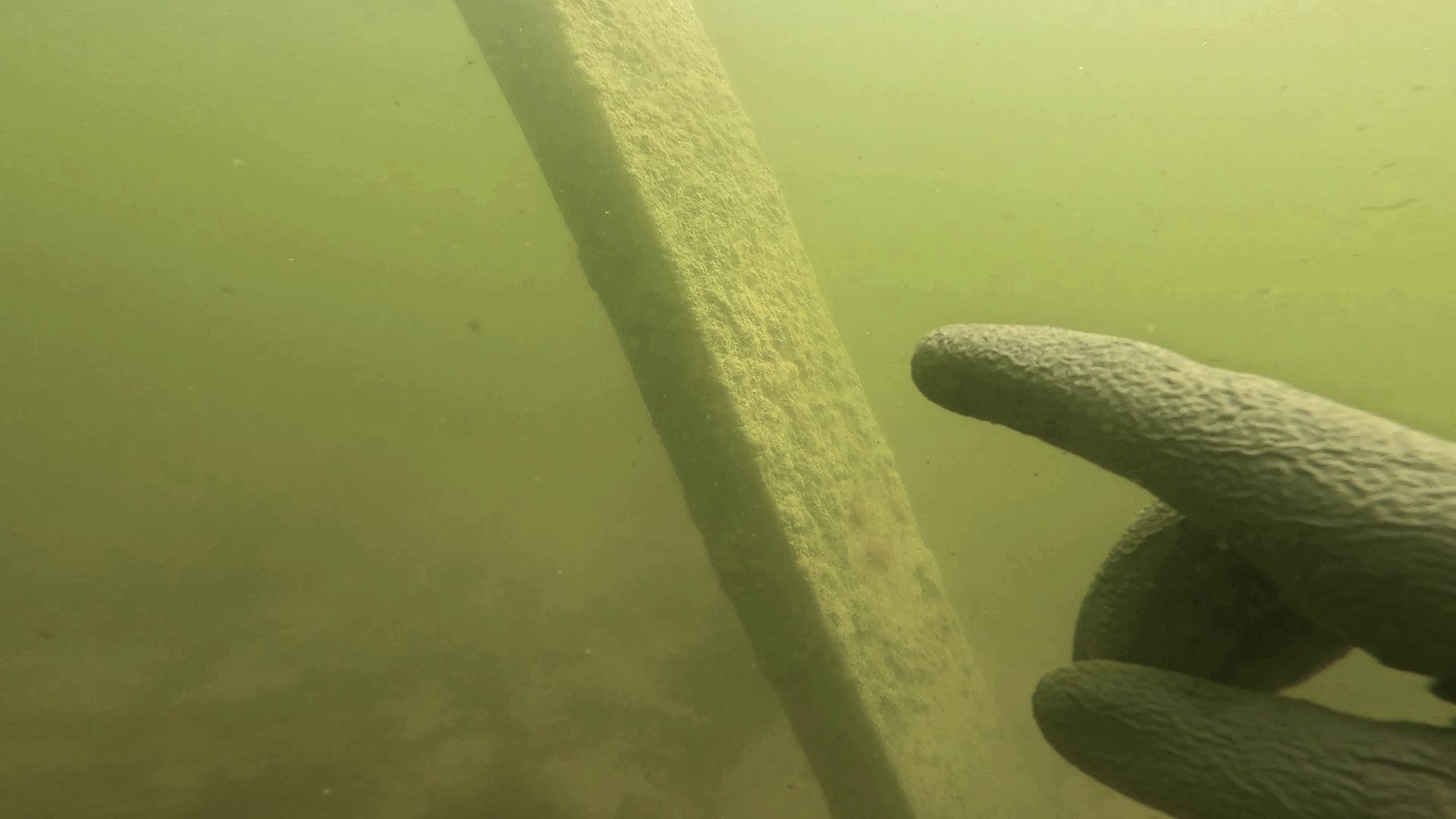
A concrete pillar right next to the shore. Depth 1.1 metre. Lake Głębokie.
BOATS ARE ALSO AT RISK
Underwater obstacles also pose a threat to waterborne vessels.
I have seen places where concrete elements hidden beneath the surface can be at the depth where boats pass through.
From the deck, it is often impossible to check what is under the water. In poor visibility or in an unfamiliar water body, you simply may not know that an obstacle exists a few metres ahead of the bow.
Contact with concrete or metal can result in damage to the vessel.
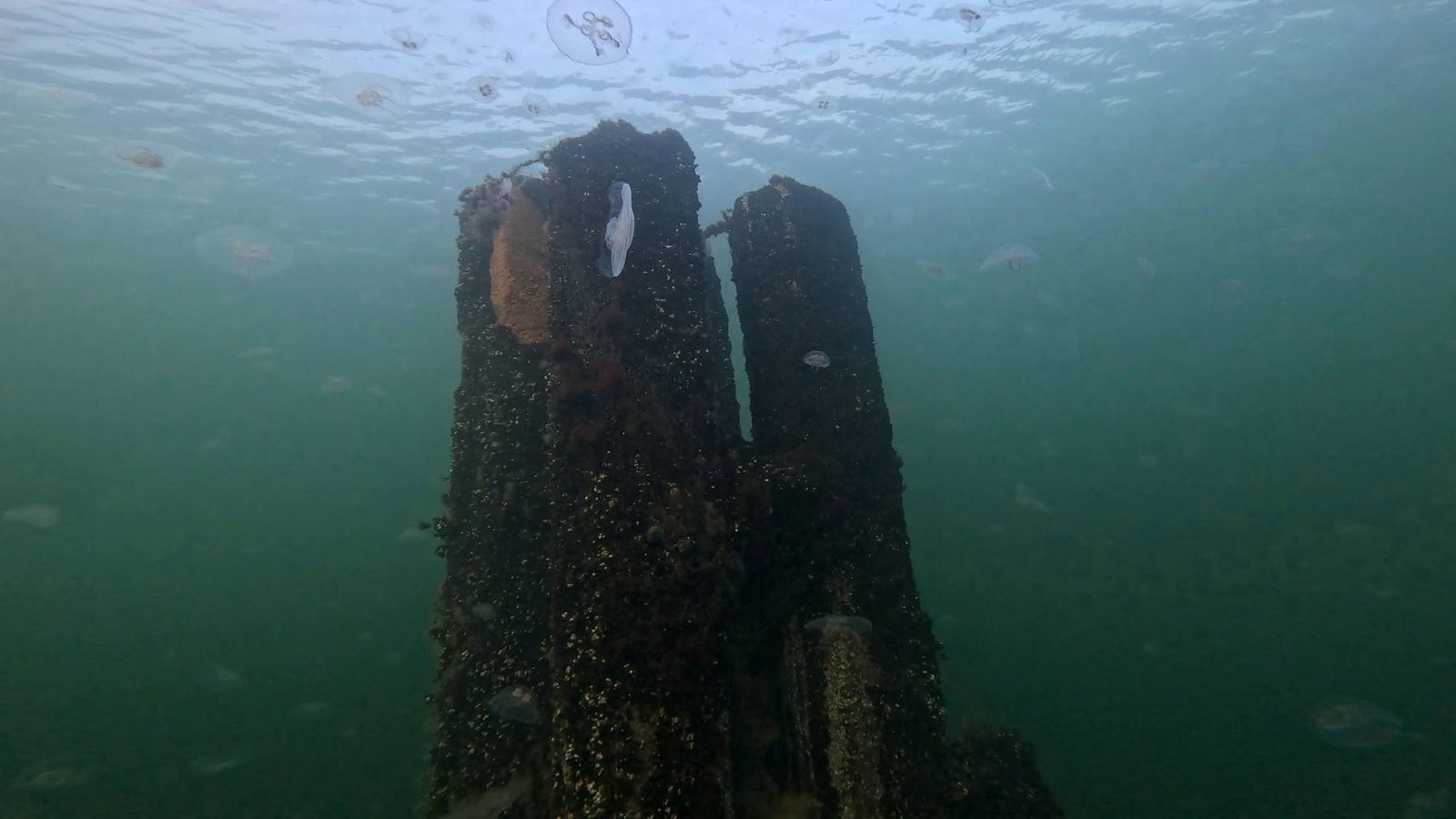
Baltic Sea, three concrete pillars extending from a depth of 9 metres to 1.3 metres from the water surface. Any vessel with a draft of 1.3 metres or greater will hit them.
A DIVER IS A PAIR OF EYES UNDERWATER
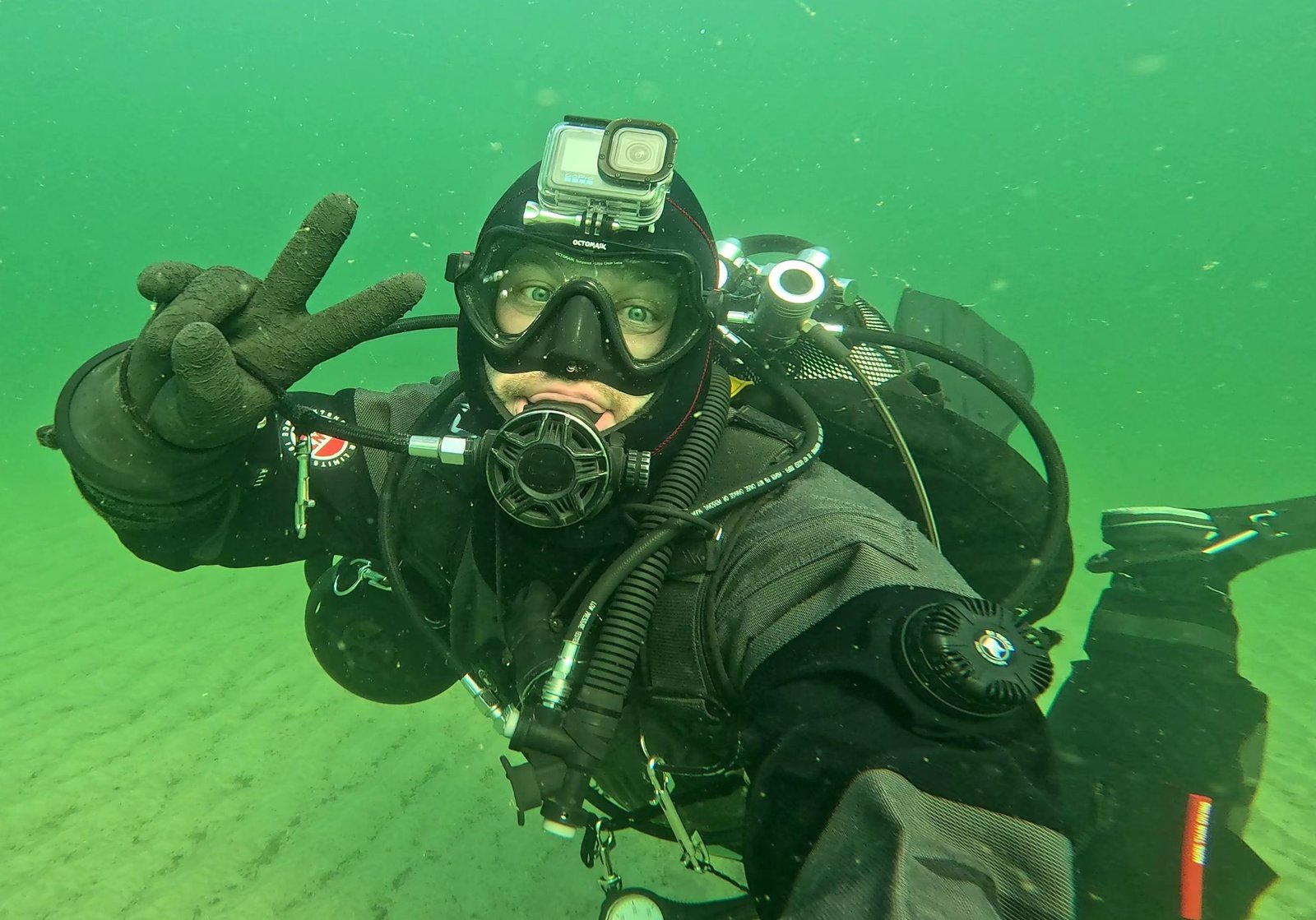
That's exactly why I believe divers can be real eyes underwater.
During regular diving, we can see things that a person standing on the shore or someone sailing a boat won't see.
If I can safely remove something myself – I do it.
If the obstacle is too large or its removal requires appropriate equipment, I document it and report it to the relevant institutions – including local governments, Polish Waters or maritime authorities.
Such a report can result in the hazard being removed, secured or at least properly marked.
SEE A THREAT? REPORT IT
You don't have to be a diver to help.
If while swimming, fishing or using a pier you notice a dangerous structure or obstacle in the water, it's worth reporting it.
A diver can take an underwater photo and indicate the exact location. A swimmer can spot a protruding element. A fisherman may know a place where a dangerous post has been for years.
The most important thing is not to pretend the problem doesn't exist.
Because underwater there may be something that can't be seen from the surface.
And sometimes one piece of information passed to the right person can be enough to make an underwater trap cease to be a threat to the next person.
Support me on Suppi!
Support on Suppi →