
While diving, I sometimes find unexploded ordnance that, despite the passage of years, still pose a threat. Some lie just 1.5 metres under water, near beaches and marinas, where they can endanger swimmers and people using boats. I show how to report such findings and why precise location is crucial for effective intervention.
UNEXPLODED ORDNANCE UNDERWATER – FIND, REPORT AND SECURE
While diving, one can come across unexploded ordnance that, despite the passage of years, still pose a threat. Some are located in places frequented by people, which is why reporting them and providing their location to the appropriate services is so important.
UNEXPLODED ORDNANCE IN RECREATION AREAS
I have found unexploded ordnance in marinas where boats were moored, and on guarded beaches along the Baltic. Some lay at a depth of just 1.5 metres. Swimmers could simply step on them without knowing they were just beneath the water.
The danger, however, is not limited to swimmers. Dropping an anchor near unexploded ordnance or boat engine vibrations affecting an object lying under the hull could have catastrophic consequences. In marinas where vessels are moored close together, the consequences could be particularly severe.
I report all unexploded ordnance I find, including those located far from beaches, marinas and other recreation areas. However, I prioritise findings in places where they can directly threaten people – where people swim, boats are moored or there is vessel traffic.
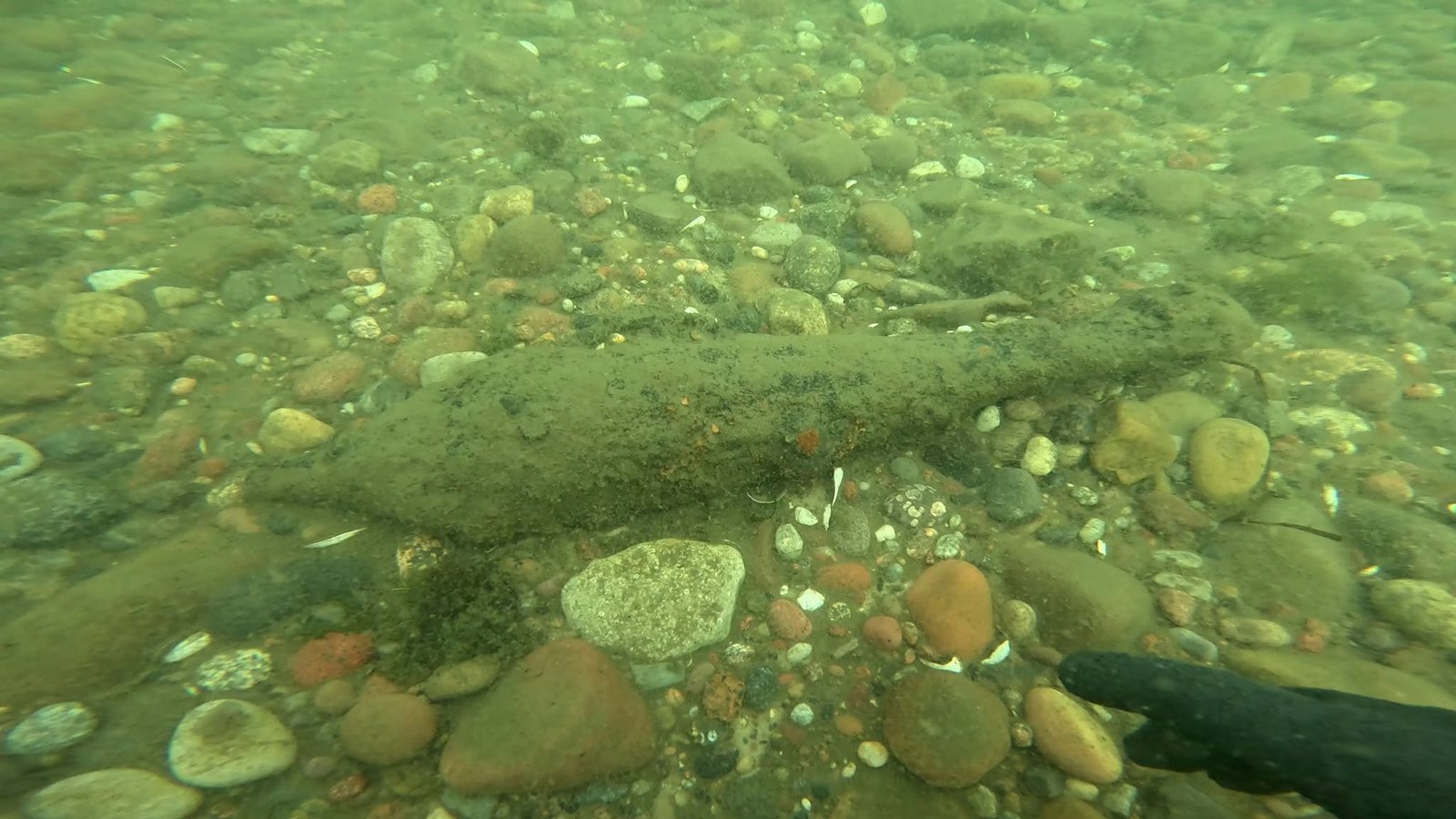
Soviet 120mm mortar round found at a depth of 1.5 metres in the Baltic in a beach area. Łukęcin.
WHY MIGHT A CALL TO 112 ALONE NOT BE ENOUGH?
On land, the procedure is relatively straightforward: you report finding unexploded ordnance, police secure the area, and then a bomb disposal team arrives. Underwater, the situation is different.
A simple call to 112 may have limited effect. Police officers cannot easily verify a report if the object is underwater. A standard land-based bomb disposal team may attempt to remove unexploded ordnance when it lies very shallow, for example at a depth of up to knee height. I have had such situations where we were able to remove the find that way.
However, if the unexploded ordnance lies deeper, intervention by naval combat diversmay be necessary, as they have appropriate training and equipment for working underwater.
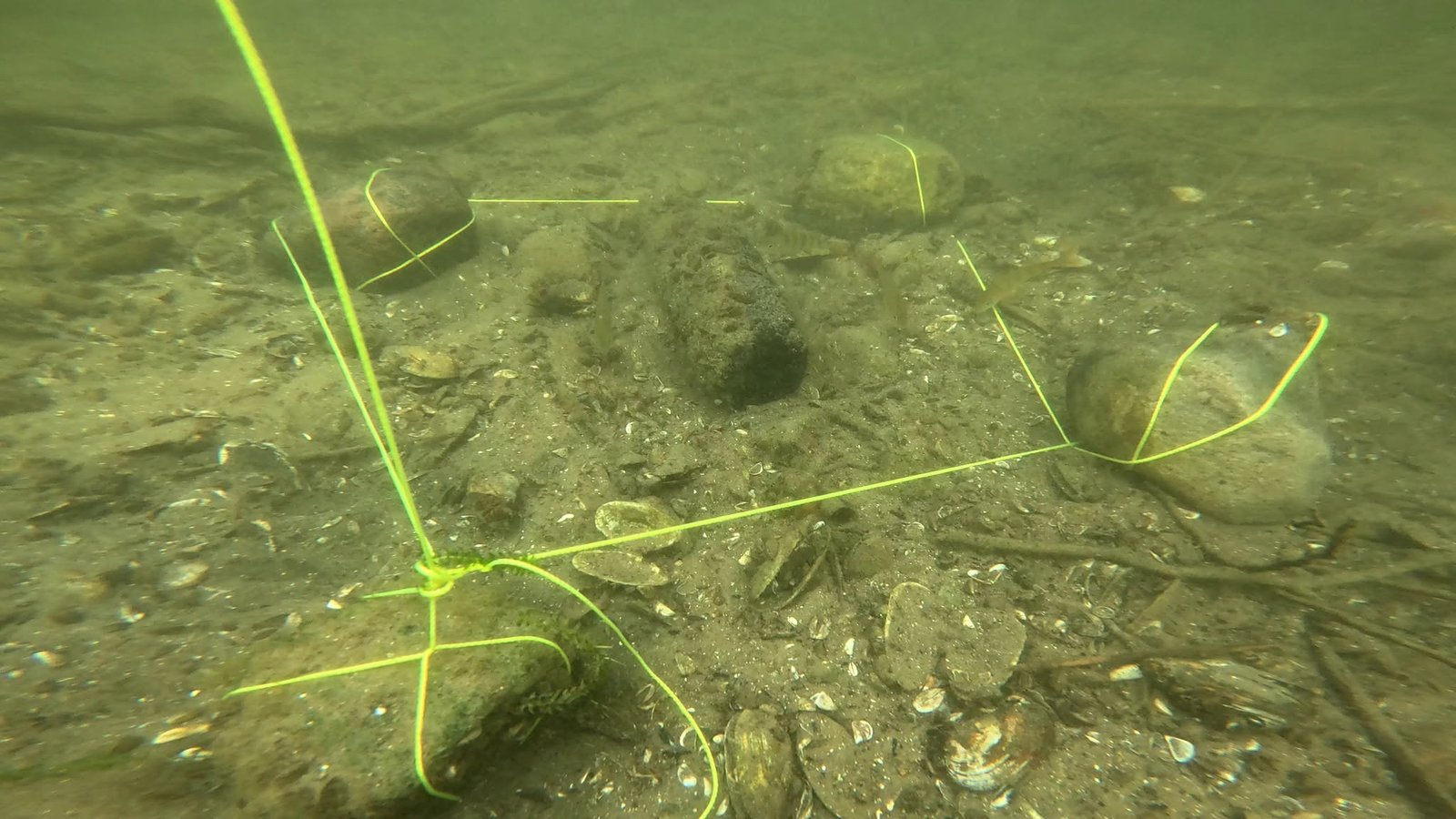
Marked with a buoy, a Soviet 85mm artillery round. Depth half a metre, removed by a land-based bomb disposal team. Lake Drawsko.
HOW TO REPORT UNEXPLODED ORDNANCE UNDERWATER?
I always mark unexploded ordnance underwater with a disposable buoy that I carry with me while diving. This makes it easier to locate the find later. I mark it only when I can do so safely, without touching or moving the unexploded ordnance.
I then report the find to the water body manager, for example Polish Waters or the Maritime Office. Such a report allows me to provide much more information than a simple telephone notification of a suspicious object.
Depending on the situation, I can provide:
-
GPS coordinates location of discovery,
-
a Google Maps pin indicating the exact location,
-
depth at which the object is located,
-
diving conditions, including underwater visibility,
-
photos or videos of the unexploded ordnance, if taken without compromising safety.
This information is very useful when planning an intervention. Photos and videos can help mine clearance divers identify the find even before entering the water, and accurate coordinates and condition information allow for better preparation of operations.
However, you should not approach the unexploded ordnance or take risks to obtain documentation. If it is not possible to safely take a photo, the most important thing is to provide the known location and report the hazard.
The report can be submitted by email, through ePUAP or the e-Doręczeń system. I particularly recommend the latter form, as it allows you to officially submit the matter to the office and keep confirmation of sending and delivery.
From my experience, Polish Waters and Maritime Offices usually respond very quickly – often within the next day. They accept the report and forward the matter to the relevant services that can deal with removing the hazard.
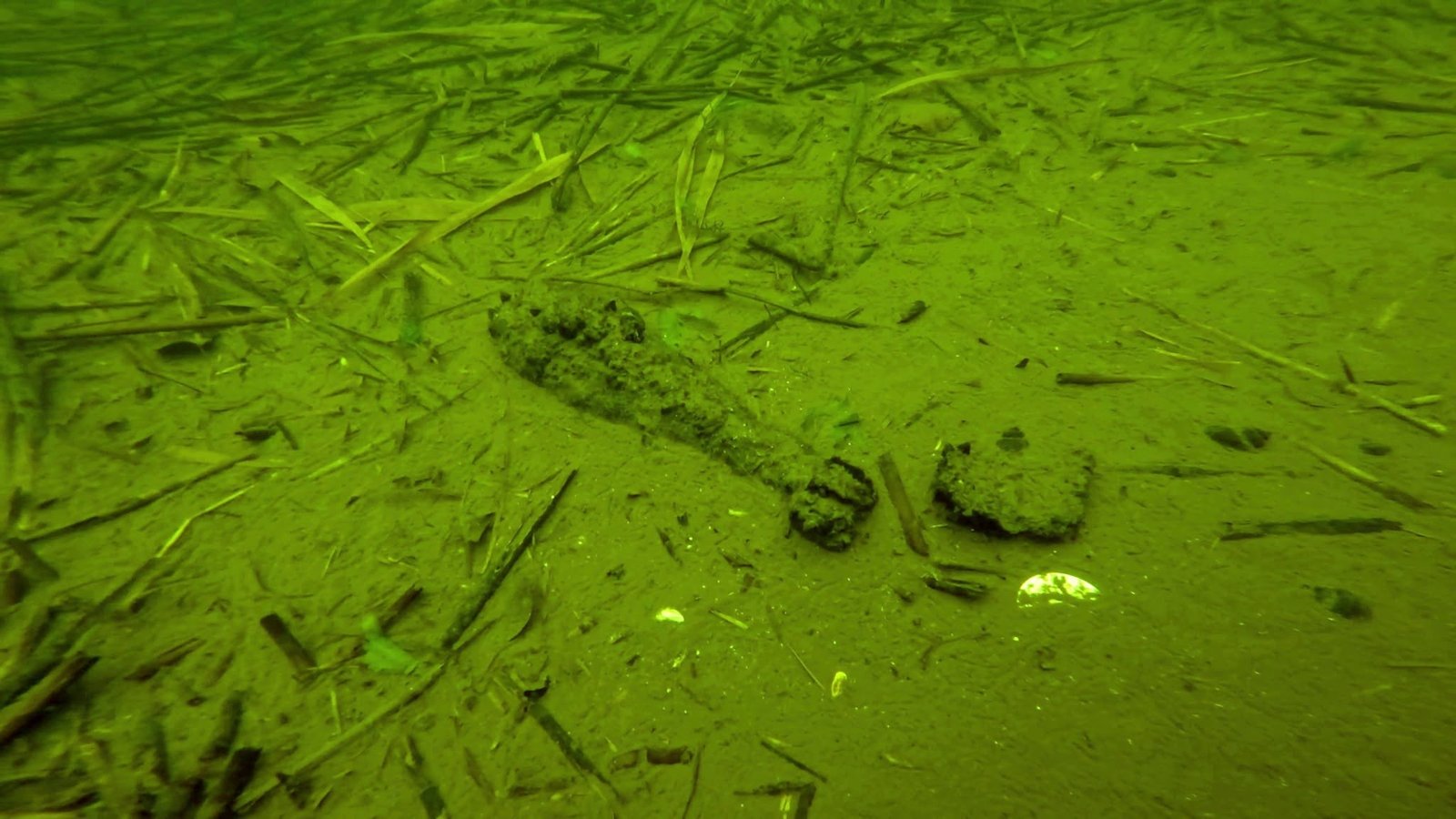
DIVING WITH A MISSION
For me, diving is not only exploration and searching for interesting objects. It is also responding to hazards that I find underwater.
If you notice unexploded ordnance, do not touch it, do not attempt to extract it, and do not ignore the find. Report the hazard, provide the most accurate location possible, and leave further action to the relevant authorities.
Support me on Suppi!
Support on Suppi →