
Nature diving is for me above all an opportunity to show what we don't see every day – the beauty of life underwater. Plants, fish, crabs, shrimp and hundreds of smaller organisms create a world whose existence most people don't even know about.
NATURE DIVING – THE MOST BEAUTIFUL SIDE OF THE UNDERWATER WORLD
Nature diving is for me above all about observing and documenting life underwater. Plants, fish, crabs, shrimp, tiny organisms and extraordinary animal behavior show that our waters are not as lifeless as they might seem.
CAMERA INSTEAD OF ACTION CAMERA
Nature diving requires a somewhat different approach to equipment than regular diving footage.
Action cameras are not the best choice here. They have a wide angle, but with small organisms it quickly turns out that they lack proper zoom and the ability to get a sharp image from a short distance.
However, you don't need to immediately buy a professional camera, a set of lights and equipment costing tens of thousands of zlotys.
I use a regular iPhone in a waterproof case and it works perfectly for me. It does well not only with fish and vegetation, but also with very small organisms.
What matters most is not how much the equipment costs, but the ability to approach an animal, find the right frame and make use of the conditions we have underwater.
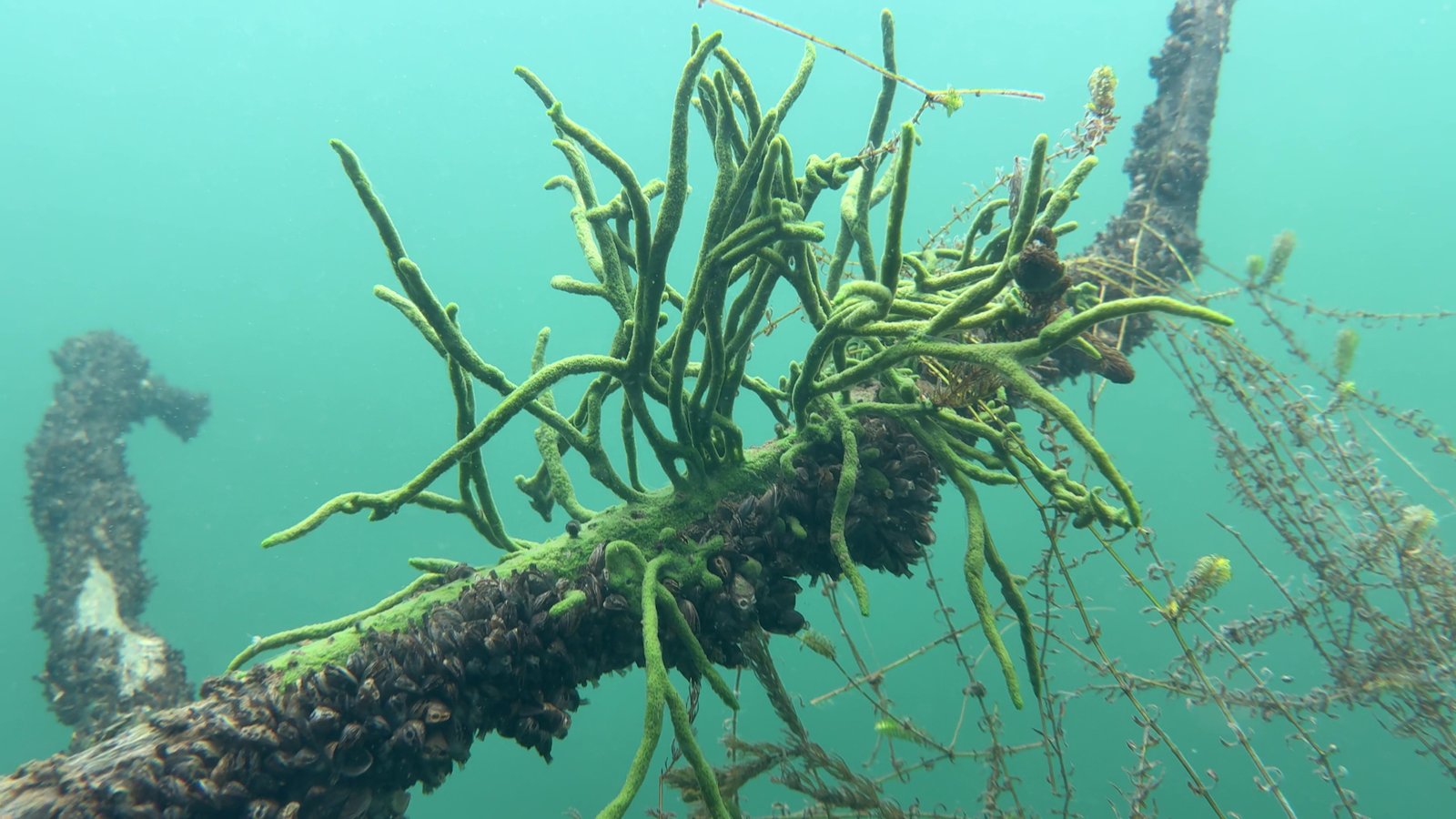
Freshwater sponge. This is an animal, not a plant. It can be various colors – green, brown, gray.
THE ICING ON THE CAKE
If we turn a blind eye for a moment to all the pathologies we encounter in our waters, nature diving becomes the icing on the cake.
Because underwater you can see truly beautiful things.
Vegetation creating underwater meadows, enormous schools of fish, individual pike lurking among the plants, perch, crayfish, crabs, shrimp and countless smaller organisms that we can't even see from the surface.
These are the dives that showcase the best side of our waters.
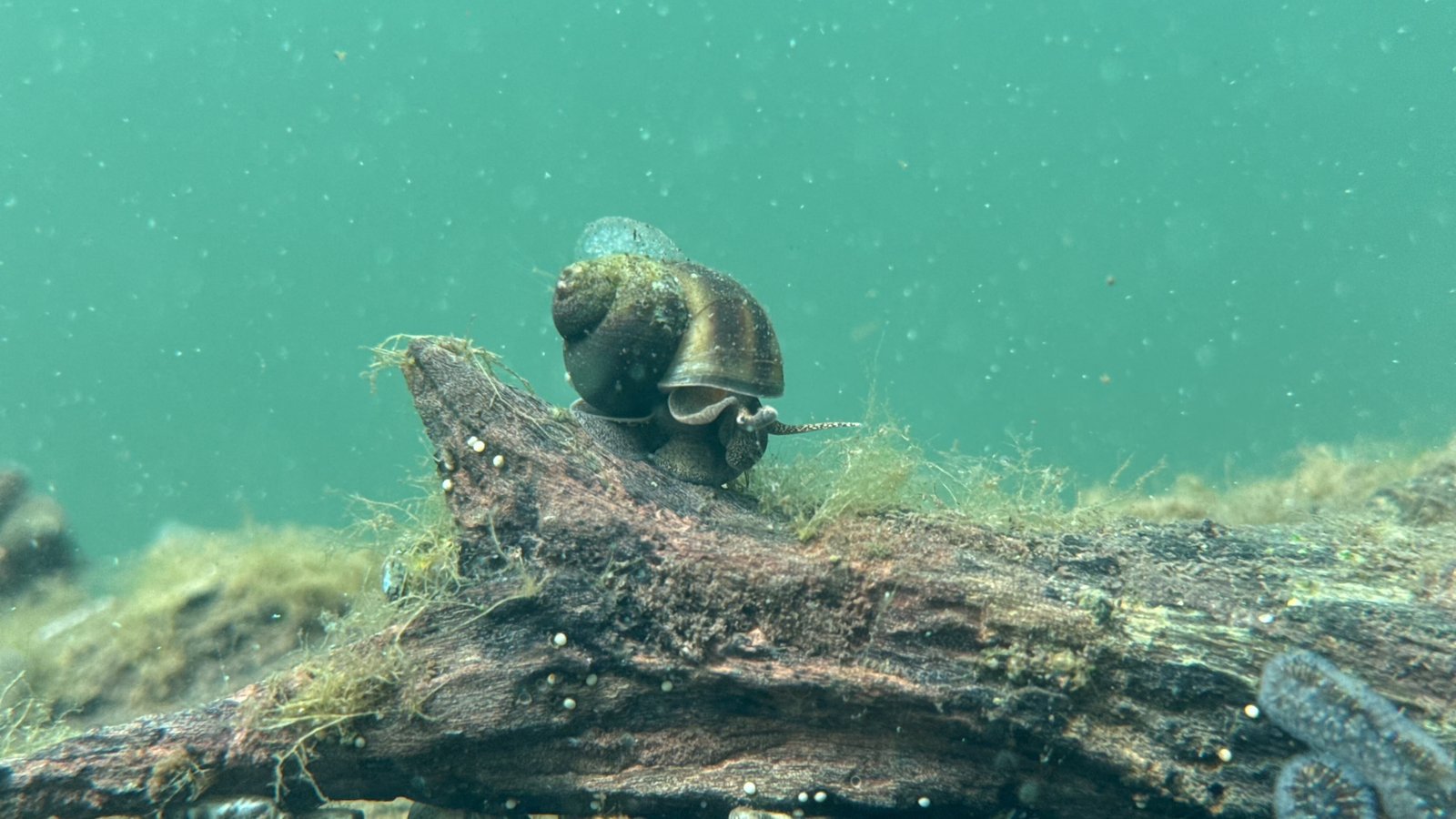
OUR WATERS ARE NOT LIFELESS
Many people believe that Polish lakes or the Baltic Sea are underwater almost devoid of life.
This is not true.
Of course much of our waters are heavily transformed, polluted or simply poor in life, but there are still places where everything underwater really teems with life.
There are lakes that look like underwater aquariums.
The water is clear, visibility can be very good, vegetation is incredibly lush, and among it there are lots of fish and other organisms.
There are not many such places, but still exist.
And that's precisely why my viewers are often so surprised by what I show in my recordings.
The average Pole simply has no idea what life can look like a few metres below the surface of our lake.
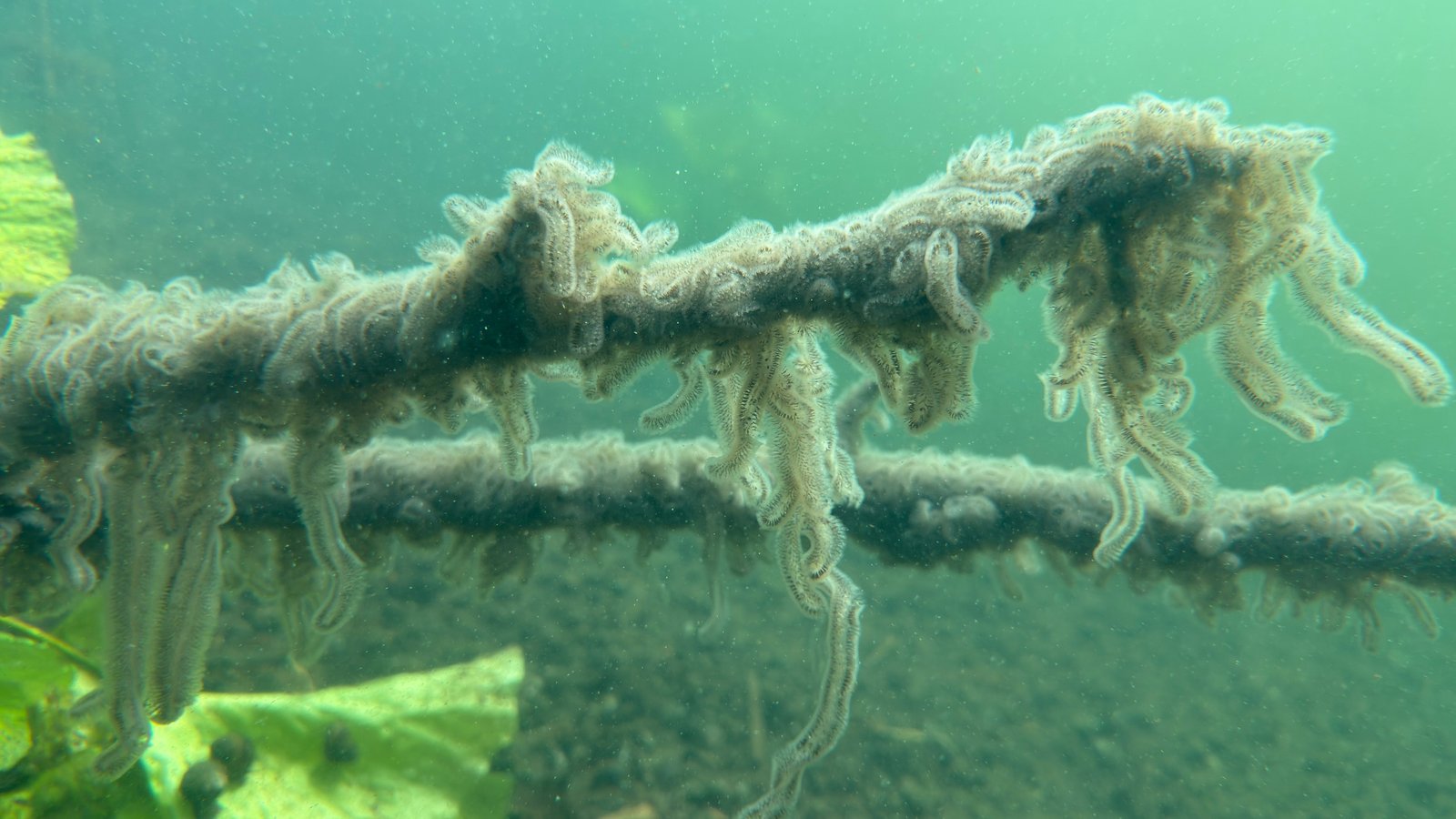
Bryozoans, colonies of microscopic organisms. They filter water and are an indicator of its good quality.
UNDERWATER AQUARIUMS
The greatest difference is visible between ordinary, heavily degraded water bodies and these exceptional pearls.
There are lakes barren, muddy, with poor vegetation and little life, where underwater not much really happens.
But there are also those that can be compared to underwater aquariums.
High water purity, no pollution and sewage, low fishing and angling pressure – all this means that life can develop there in a completely different way.
Fish are everywhere, vegetation creates entire underwater landscapes, and hundreds of smaller organisms function among them.
The problem is that you won't find such places by chance.
You need to have a lot of experience and practice, to know where to look for them.
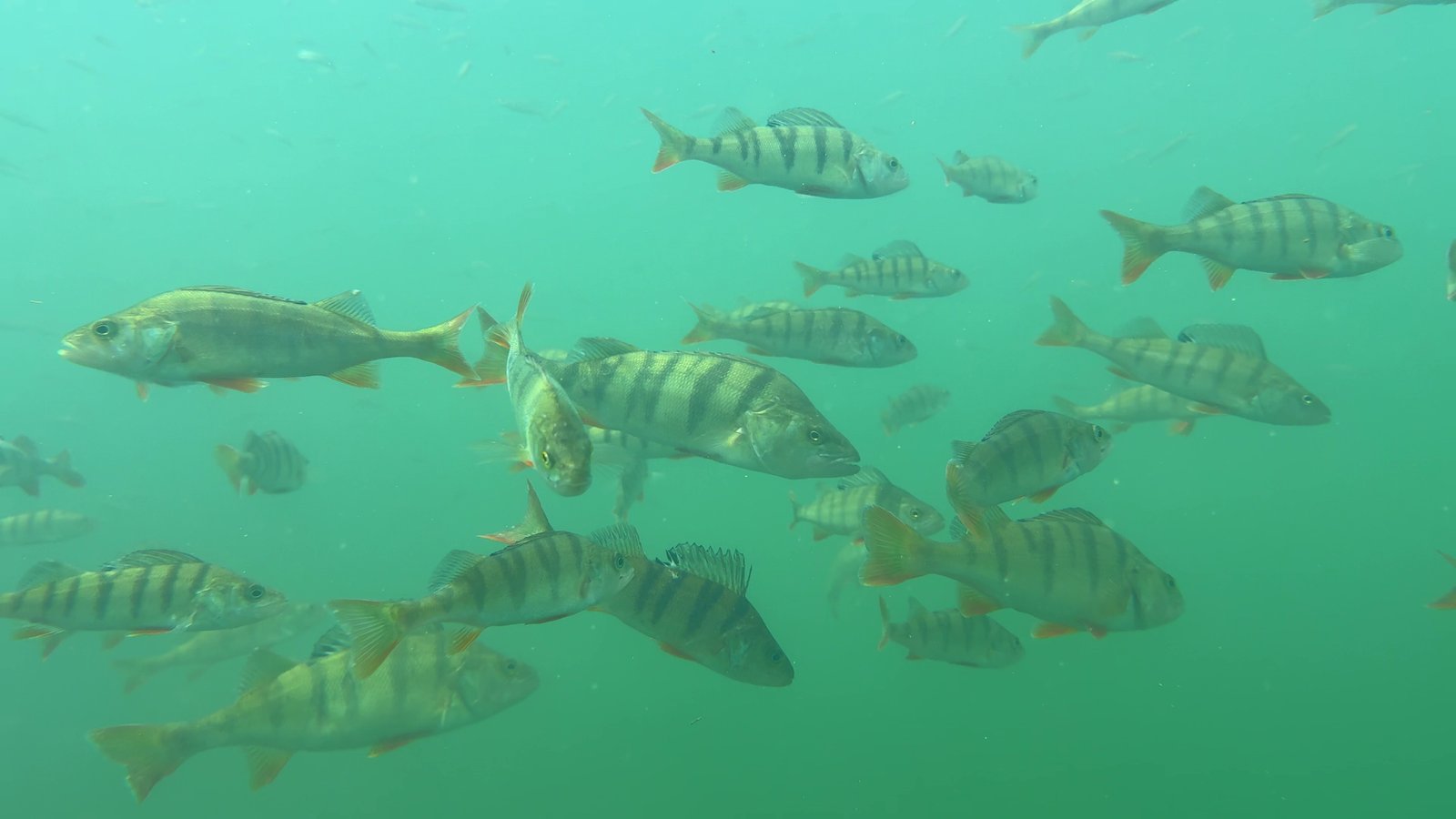 A school of perch. Perch are the most curious and sociable fish of all. They are not afraid of divers.
THE BEST TIME IS LATE SPRING AND SUMMER
If we want to photograph and film underwater nature, the best period is definitely late spring and summer.
That's when the most happens underwater.
Vegetation is developed, fish are active, and the whole lake is alive.
In winter the situation looks completely different. Vegetation dies off, lakes become more barren, and fish go deeper and are much less active.
That's why if I want to show the underwater world in its best light, I choose the warmer part of the year.
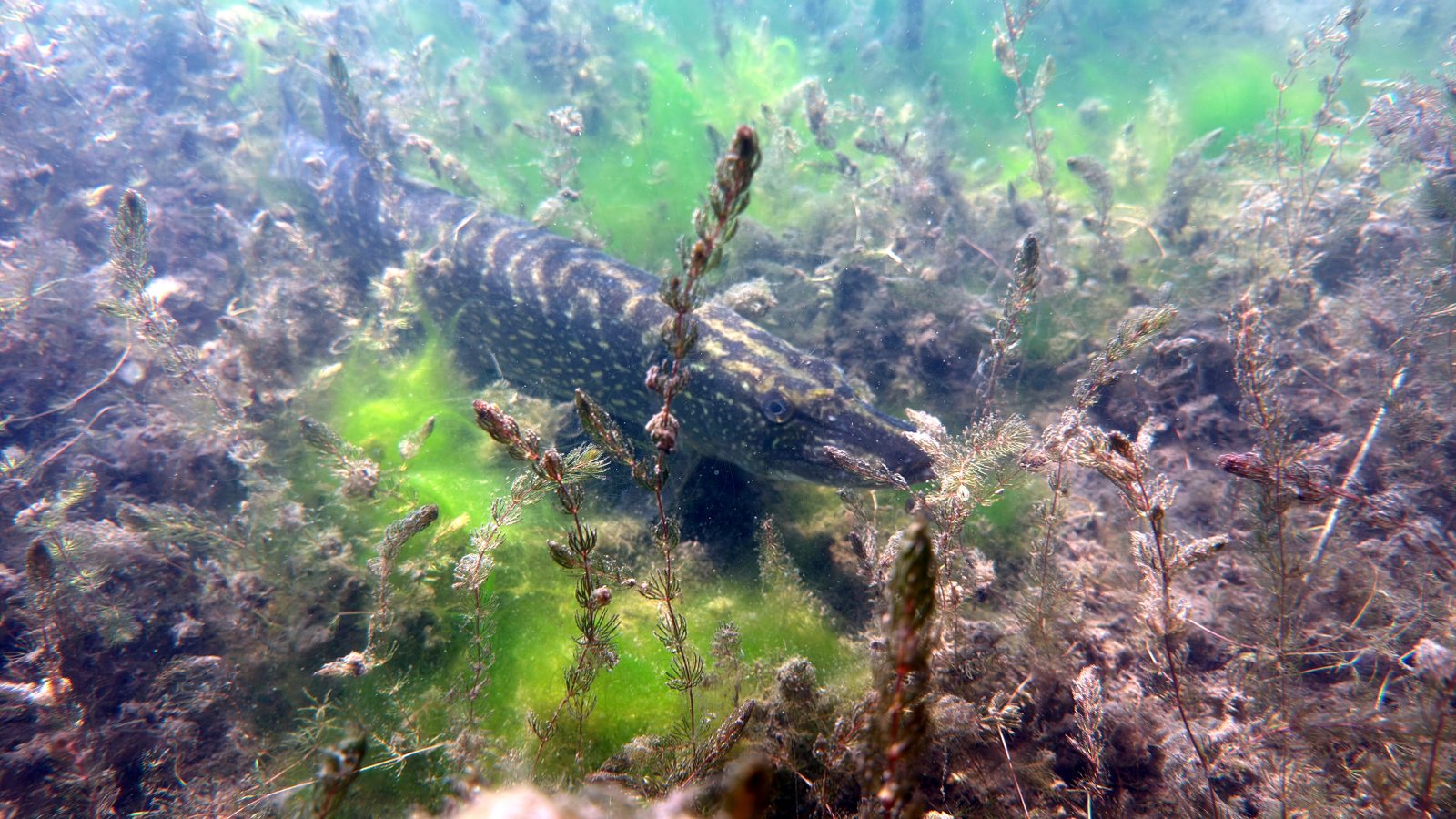
A pike hiding in vegetation.
THE BALTIC CAN SURPRISE
Footage from the Baltic causes particularly great surprise among my viewers.
Many people are not aware that beneath the surface of our sea you can encounter far more life than might be expected.
We have several species of shrimp, there are crabs, and in the coastal zone of the Baltic you can also encounter freshwater fish.
For someone who knows the Baltic only from the beach, such recordings can be a huge surprise.
Because the sea, which from above often looks like a uniform sheet of water, has its own, very diverse world beneath the surface.
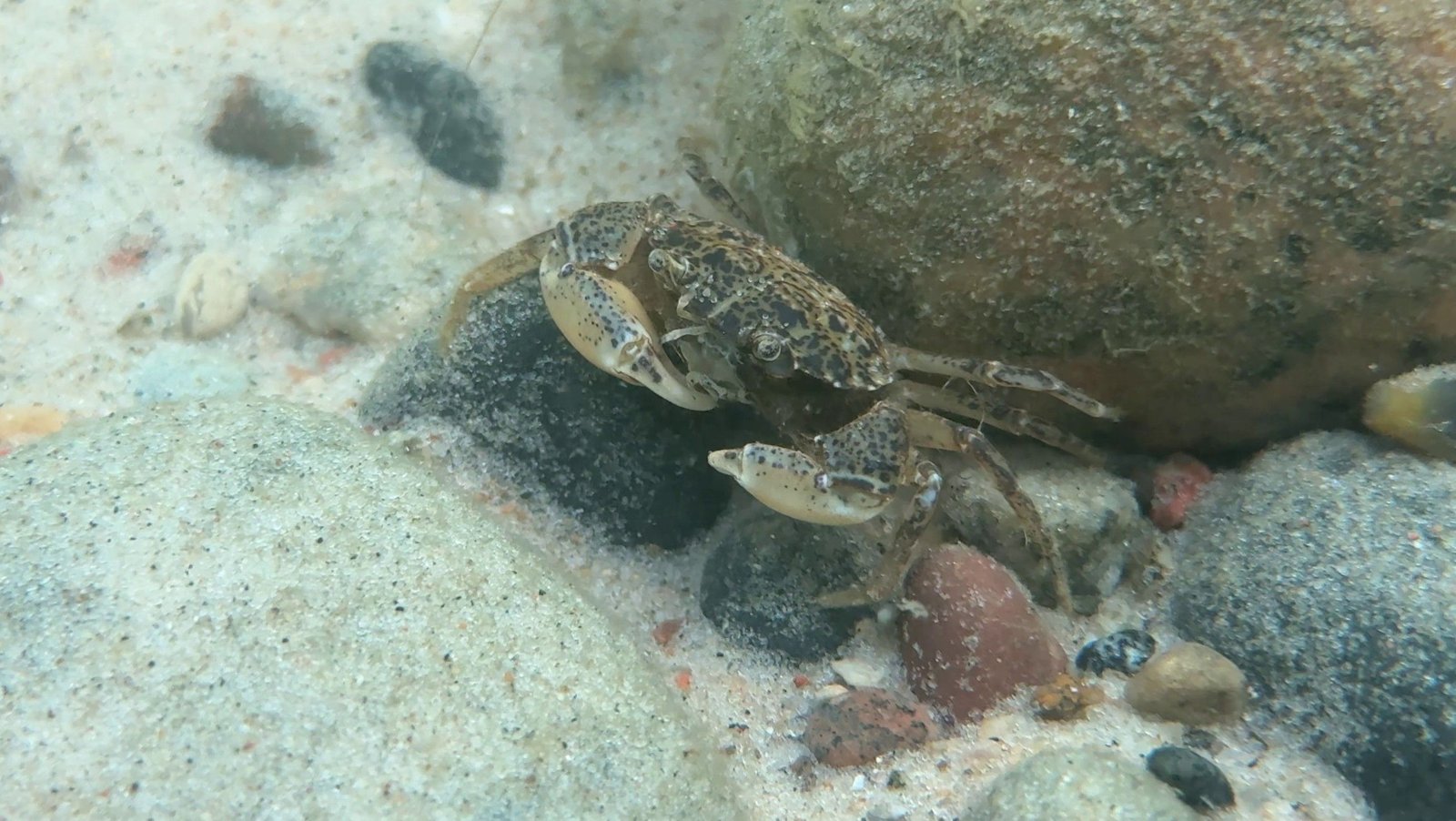
American crab, a tiny crab living close to the shore in shallow depths.
ENCOUNTERS ONE IN A MILLION
For me, however, what's most interesting isn't even the species themselves.
What fascinates me most are "encounters one in a million" – very specific situations and behaviours that are extremely difficult to predict and even harder to film.
Diving and filming nature for just a few minutes isn't enough to come across something like that.
Sometimes you have to spend hundreds of hours underwaterto be in exactly the right place at exactly the right moment.
It could be a bird diving underwater in search of food.
It could be the moment one fish attacks another.
It could be a fight between crayfish or their spawning.
And sometimes something completely different – swimming right into the middle of a huge school of fish and being able to observe it from within, as if we ourselves had become one of those fish.
Such moments cannot be planned.
You can only increase your chances by spending a lot of time underwater and knowing where and what to look for.
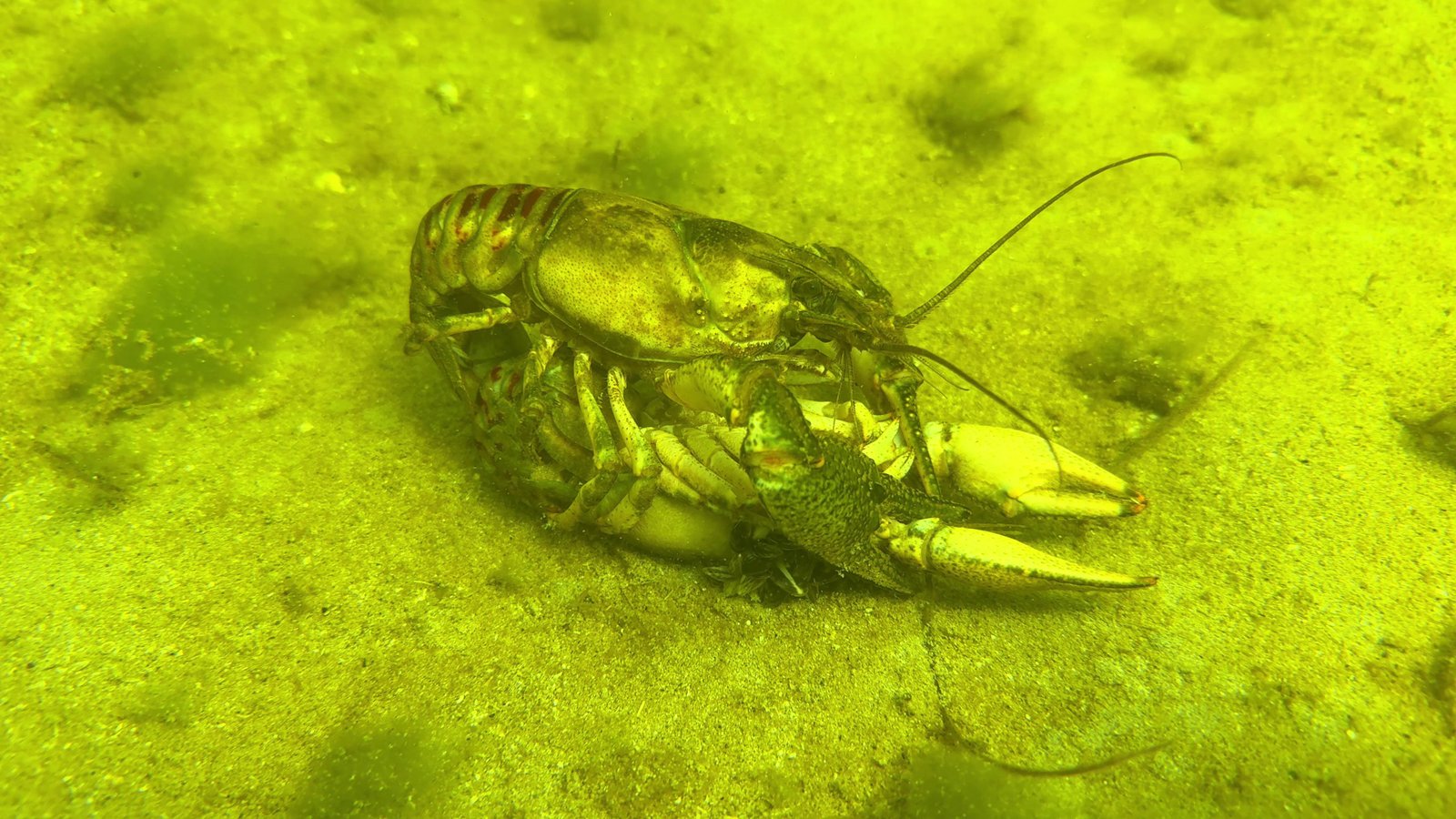
The reproductive process, or crayfish courtship displays.
PATIENCE IS KEY HERE
Nature diving requires a completely different kind of patience than diving aimed at finding a specific object.
Finding a good lake is not always enough.
You also have to know where to lookhow to approach an animal without startling it, and be ready precisely at the moment when something interesting happens.
The best footage often comes when we're not looking for anything specific.
We swim, observe and wait.
And suddenly something happens that we won't see again for the next hundred dives.
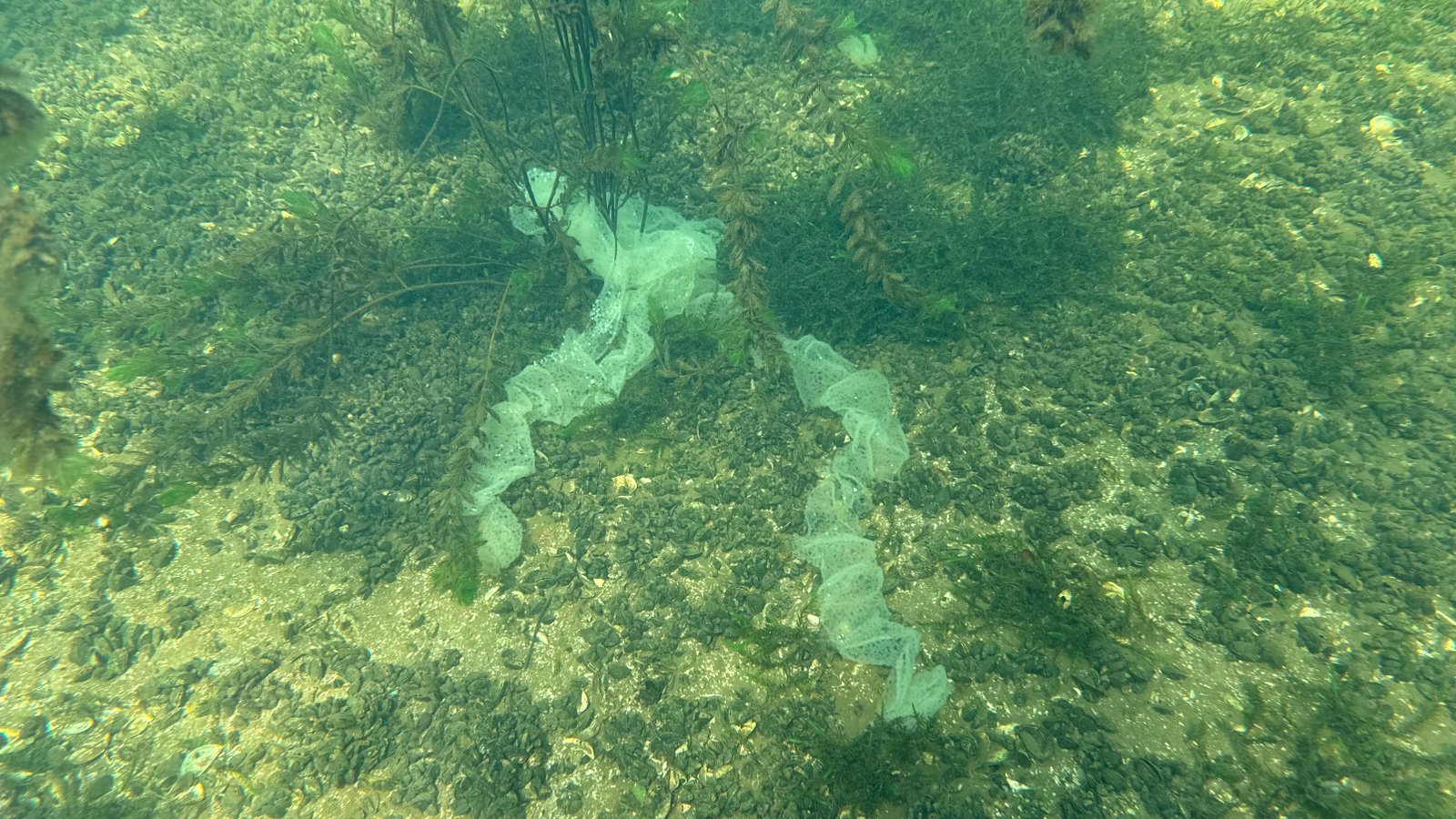
This white ribbon is perch eggs. Small fish will come from this.
DOCUMENTING WHAT YOU CAN'T SEE FROM THE SHORE
For me, nature diving has one more very important purpose.
Showing people what they normally don't have a chance to see.
Most people know a lake from the beach, a dock or a boat. They see the surface of the water and what's above it.
I can descend a few metres deeper and show you that beneath that same surface lies a completely different world.
Sometimes it is dirty, damaged and full of rubbish.
But sometimes I come across true underwater gems, where life is thriving.
And it is these places that I want to show.
Because our waters are not dead. You just need to know where to dive beneath the surface to see their most beautiful side.
Support me on Suppi!
Support on Suppi →