
Łukęcin Beach is a challenging but very interesting diving spot for those who enjoy underwater exploration. The rocky bottom conceals military remains, unexploded ordnance from World War II and other finds, and in good conditions you can also see enormous jellyfish swarms and flatfish.
Łukęcin Beach – the Baltic Full of History
Łukęcin Beach is one of the most interesting diving locations on the Polish coast, especially for those who enjoy exploring the bottom and searching for traces of history. The rocky bottom conceals military remains, scrap metal, old structures and unexploded ordnance from World War II, and in good conditions you can also encounter rich underwater life.
THE BIGGEST PROBLEM – GETTING TO THE BEACH
The biggest challenge at this location is not diving itself, but logistics.
The car park is quite far from the beach, so all equipment must be carried on foot. The path leads through a forest, and an additional difficulty is high stairs, which with full diving gear can really take their toll.
After reaching the beach you still need to prepare your equipment and enter the water. So when visiting here, it's worth remembering that just getting to the location is already part of the whole expedition.
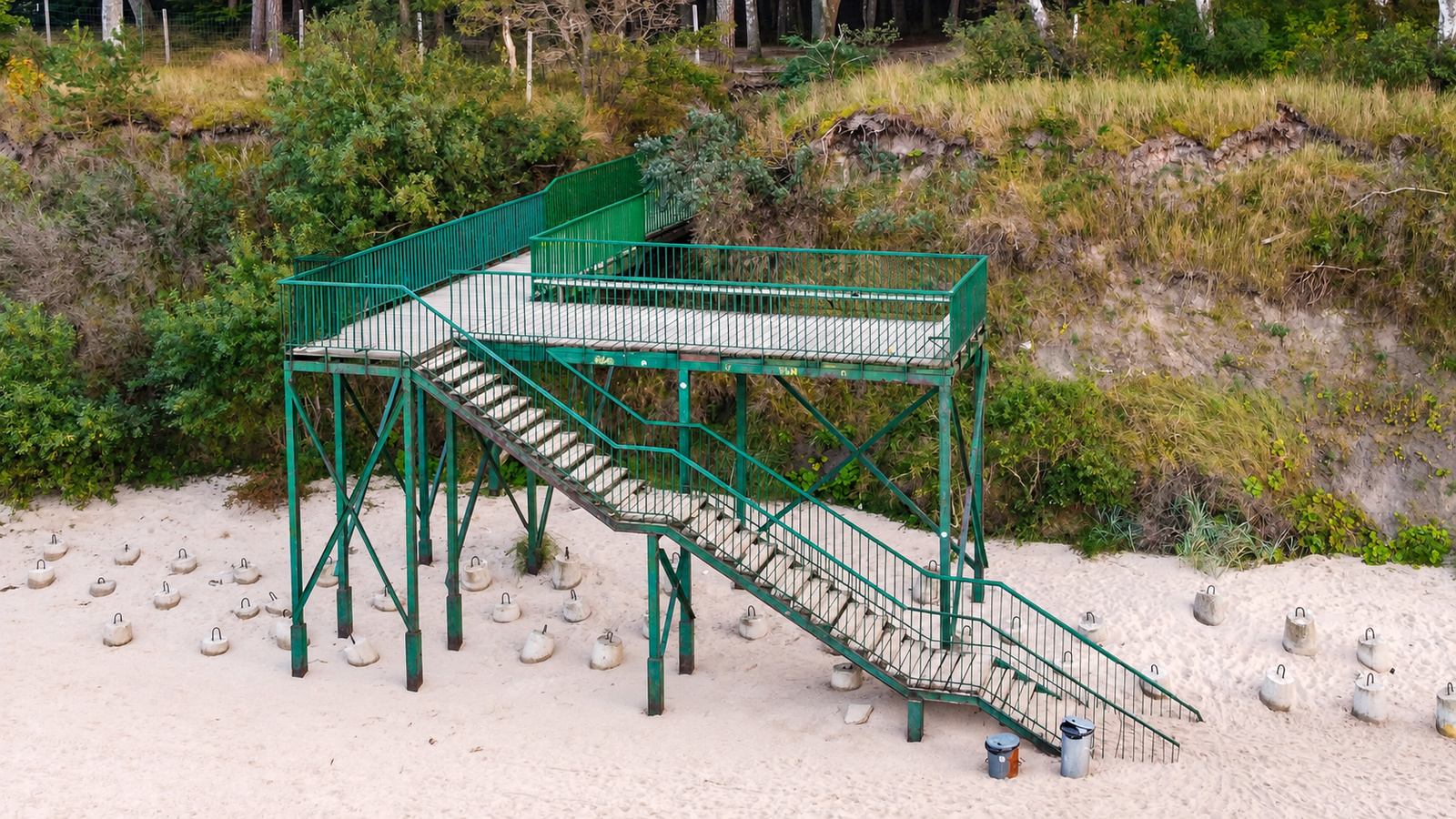
Stairs in Łukęcin. Climbing up and down stairs while carrying over 70kg is not easy.
ROCKY BOTTOM
Underwater the situation looks completely different.
The bottom in the Łukęcin area is very rocky. In proper conditions the Baltic reveals extensive rocky terrain, between which you can find various objects and remains connected to the history of this place.
It is precisely this kind of bottom that makes Łukęcin an interesting location for people who enjoy not only observing underwater nature but also thoroughly searching the seafloor.
HISTORY HIDDEN BENEATH THE WATER
On the bottom you can come across remains of old structures, including wheels from horse-drawn carts.
There is also plenty of various scrap metal and military remains. Some of them may be connected to events from World War II.
It is precisely such finds that make you never quite sure what you'll discover during the next dive.
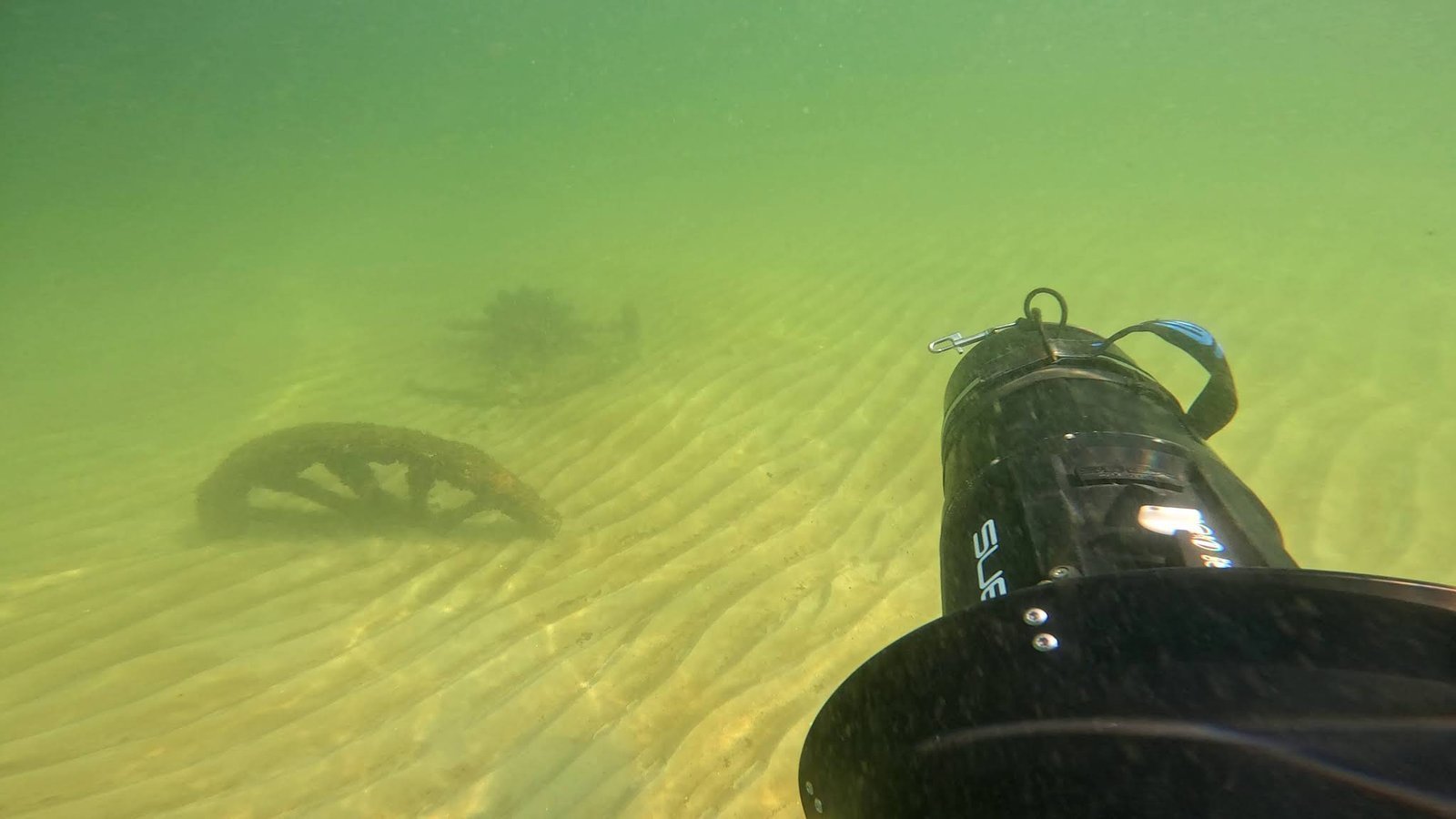
Wheels from a horse-drawn cart sticking out of the sand. After sand blasting they will be more visible.
UNEXPLODED ORDNANCE FROM WORLD WAR II
In Łukęcin you must exercise special caution also because of unexploded ordnance.
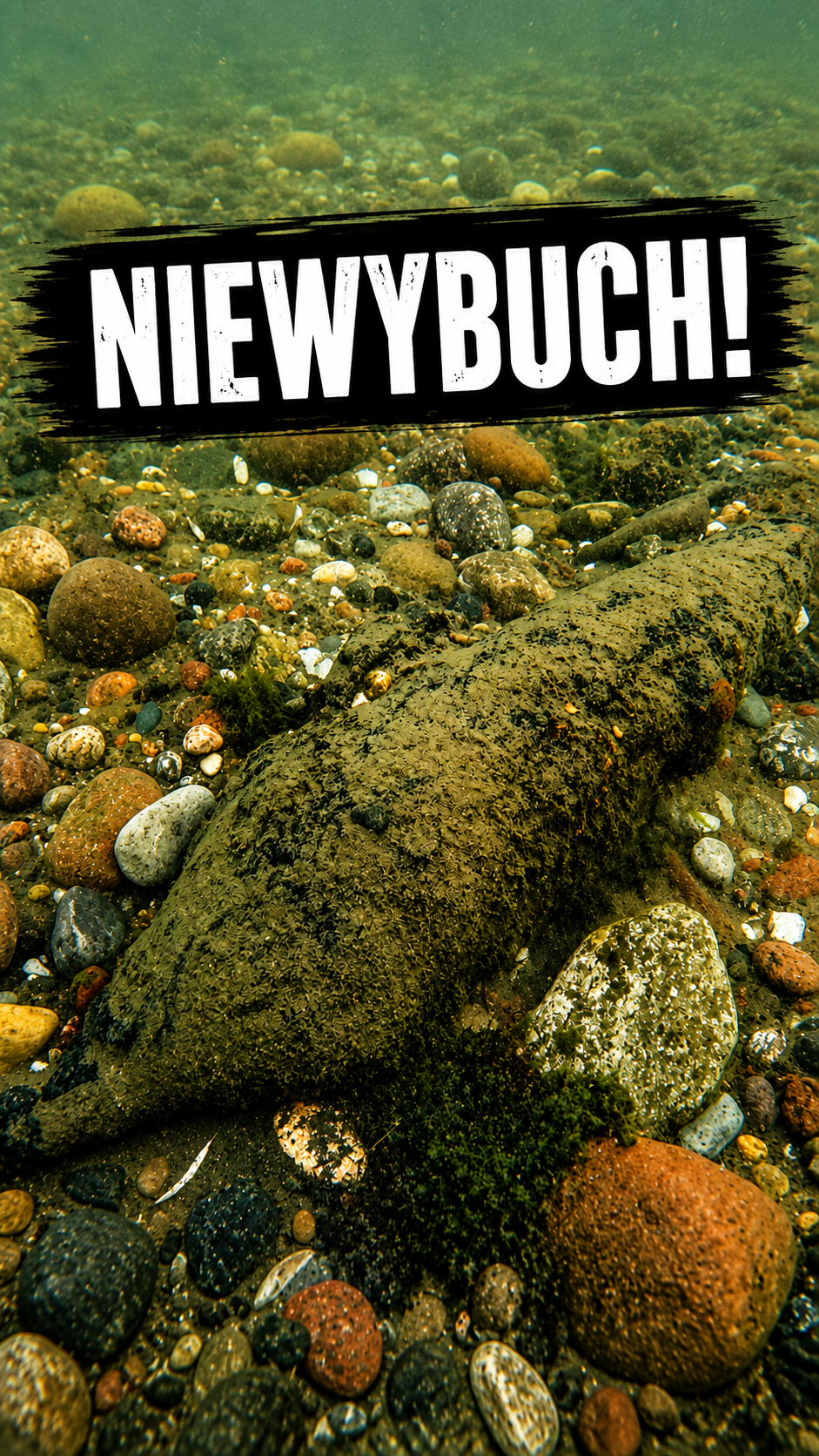
During my dives I found two Soviet mortar shells here from World War II.
Both were reported to the appropriate authorities and safely removed.
This is a good example of how dangerous war remnants can still be encountered underwater. Such objects should absolutely not be touched or anyone attempt to retrieve them independently.
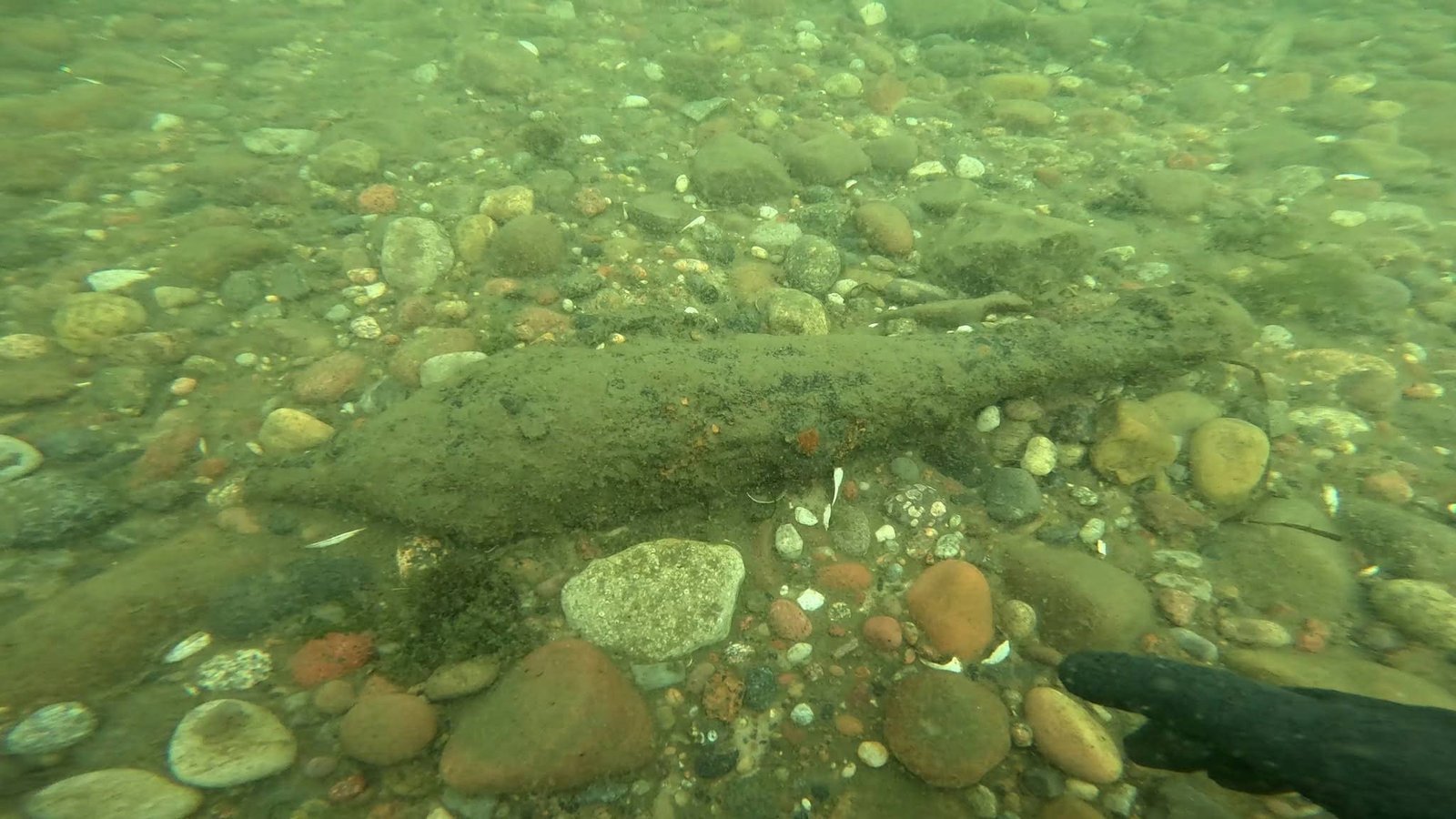
A large Soviet mortar shell. It lay at a depth of just 1.5 metres. Someone could have stepped on it.
DIVING WITH A METAL DETECTOR
I also visited Łukęcin with a metal detector.
I managed to find some gold here, though not much. The rocky bottom makes the search itself interesting, however, because between the stones you can come across various contemporary and older objects.
Besides gold, the bottom is home to plenty of scrap metal and military remains, which means every dive with a metal detector can bring something different.
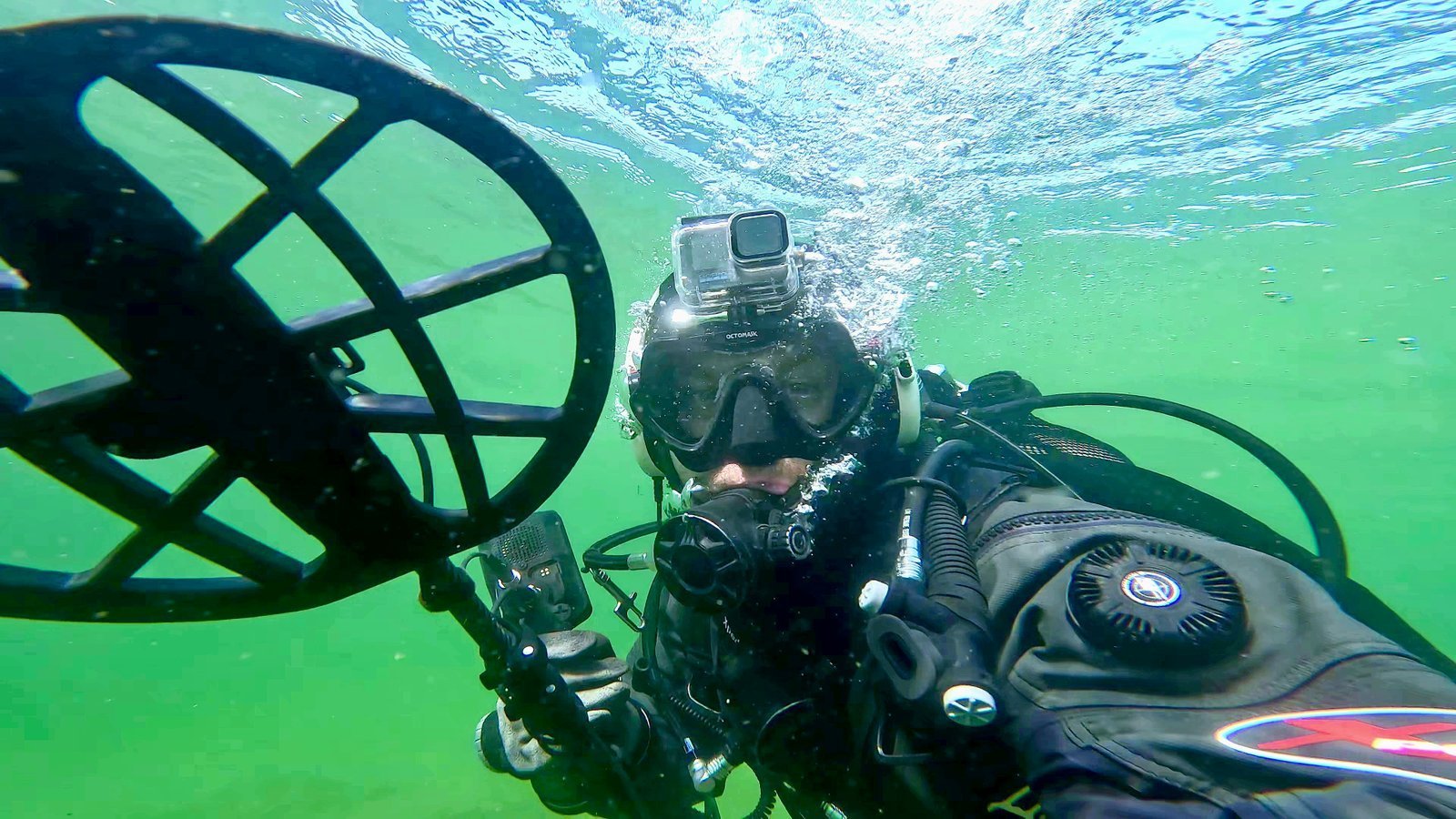
Diving with a Minelab Manticore metal detector.
JELLYFISH FILL THE DEPTHS
Łukęcin is not just history and underwater exploration.
At the right time of year you can see here entire shoals of lion's mane jellyfish. Sometimes there are so many that they practically fill the entire water column.
Underwater it looks truly amazing. Hundreds of jellyfish moving through the water create a completely different landscape than the one we see from the beach.
FLATFISH AMONG THE STONES
Between the stones you can also encounter flatfish, which thanks to their coloration blend in perfectly with the bottom.
You have to look closely to spot them. Often it takes a moment before you notice the fish, which just a second before looked like another piece of the seabed.
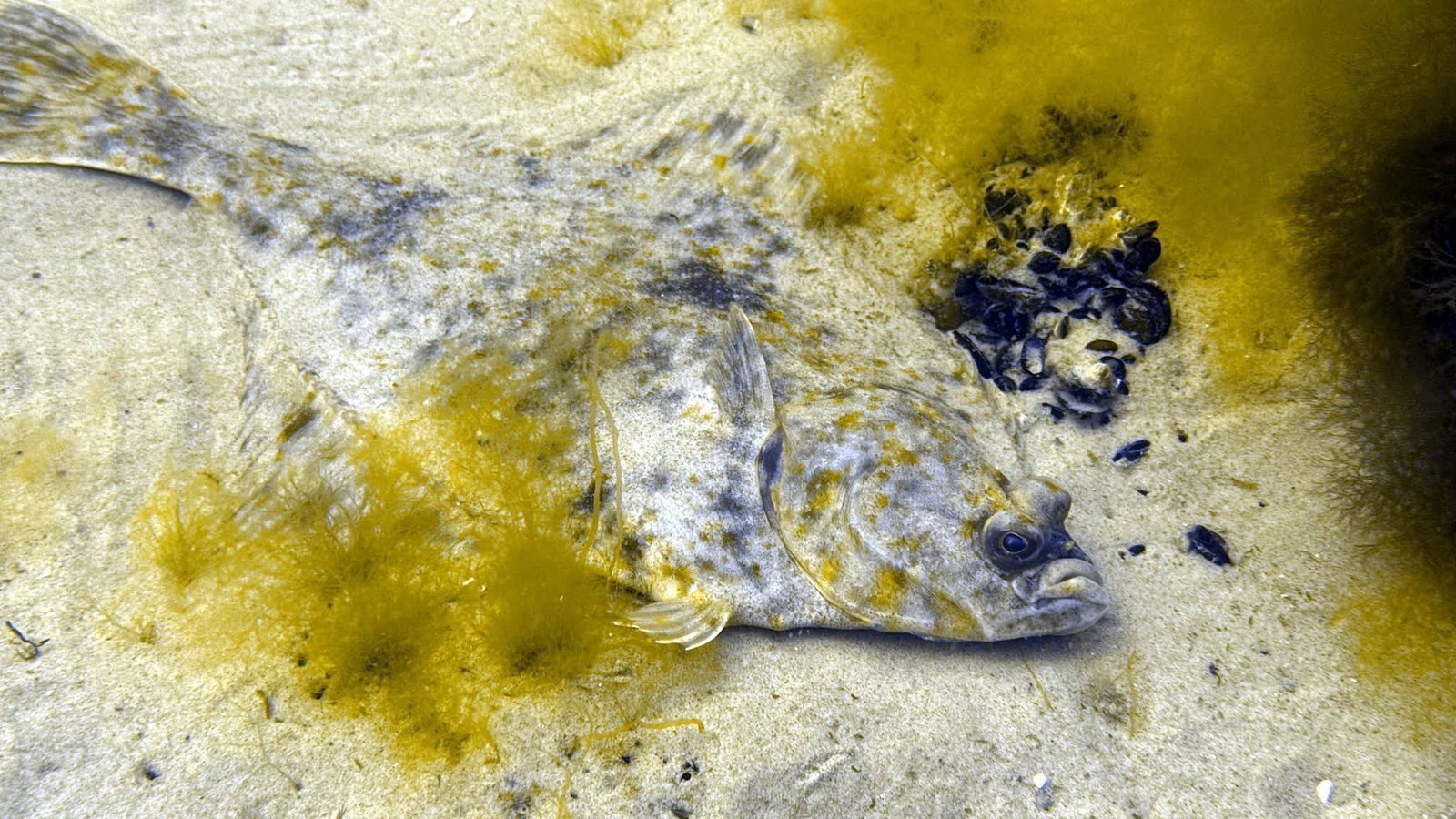
A flatfish hiding in the sand. It can blend completely with the substrate.
EVERYTHING DEPENDS ON CONDITIONS
As is the case with many places on the Polish coast, the current conditions in the Baltic are hugely important.
When the bottom is heavily silted up, visibility can be very poor. When the sea is calmer and the sand is cleared away or shifted, the rocky bottom reveals much more.
That's when Łukęcin can really surprise you.
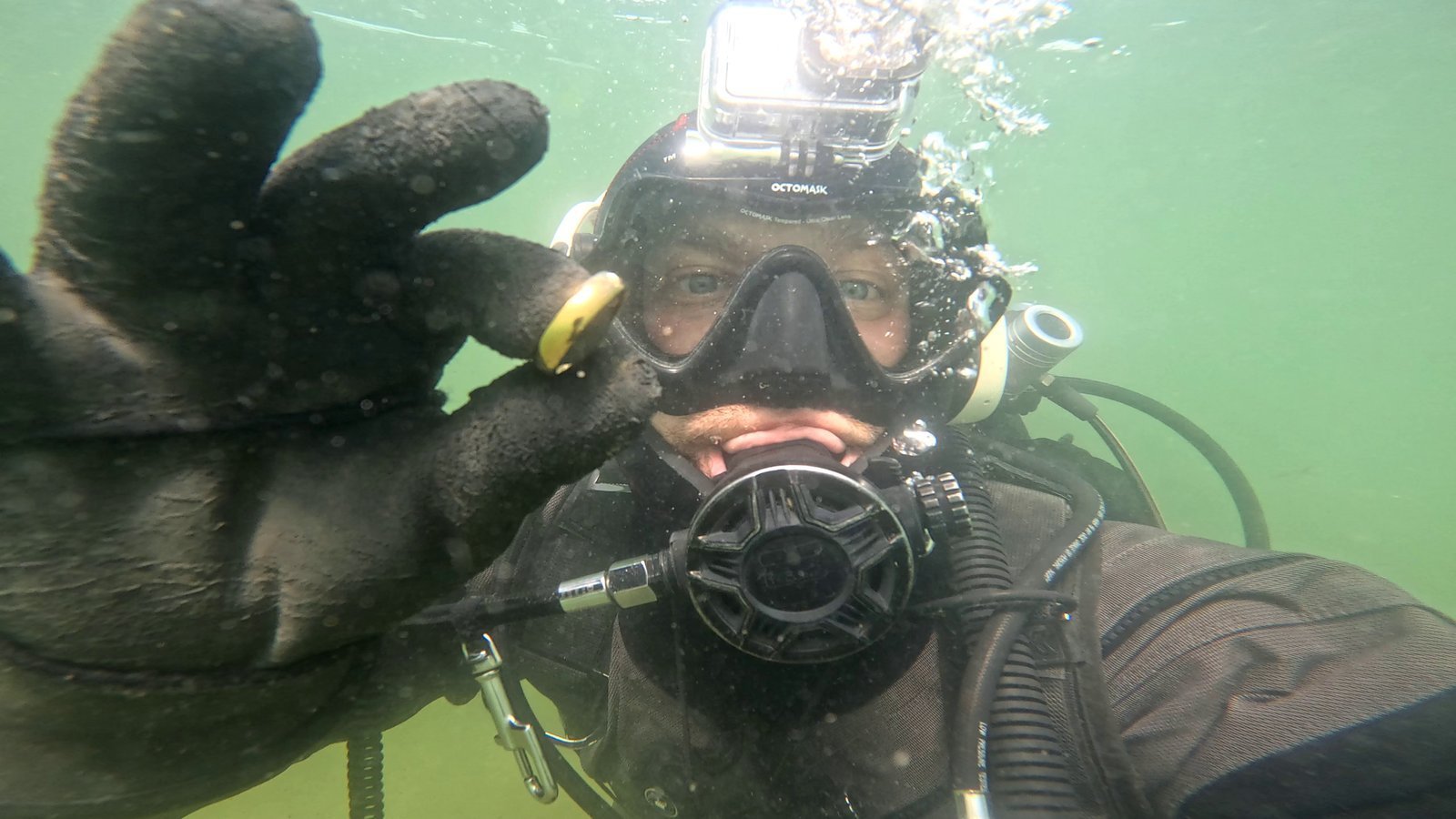
A gold ring found in the Baltic.
IS IT WORTH DIVING HERE?
In my opinion absolutely yes, especially if you enjoy exploratory diving.
However, it is not a place for those looking for an easy water entry. A long walk through the forest, high stairs and transporting all the equipment make this a logistically demanding dive site.
Underwater, however, awaits something that cannot be predicted before entering the water – a rocky bottom, scrap metal, military remains, old structures, unexploded ordnance, jellyfish and flatfish.
And above all, the awareness that beneath the surface of the Baltic you can still find objects that are witnesses to events from decades past.
Materials from Łukęcin:
Support me on Suppi!
Support on Suppi →